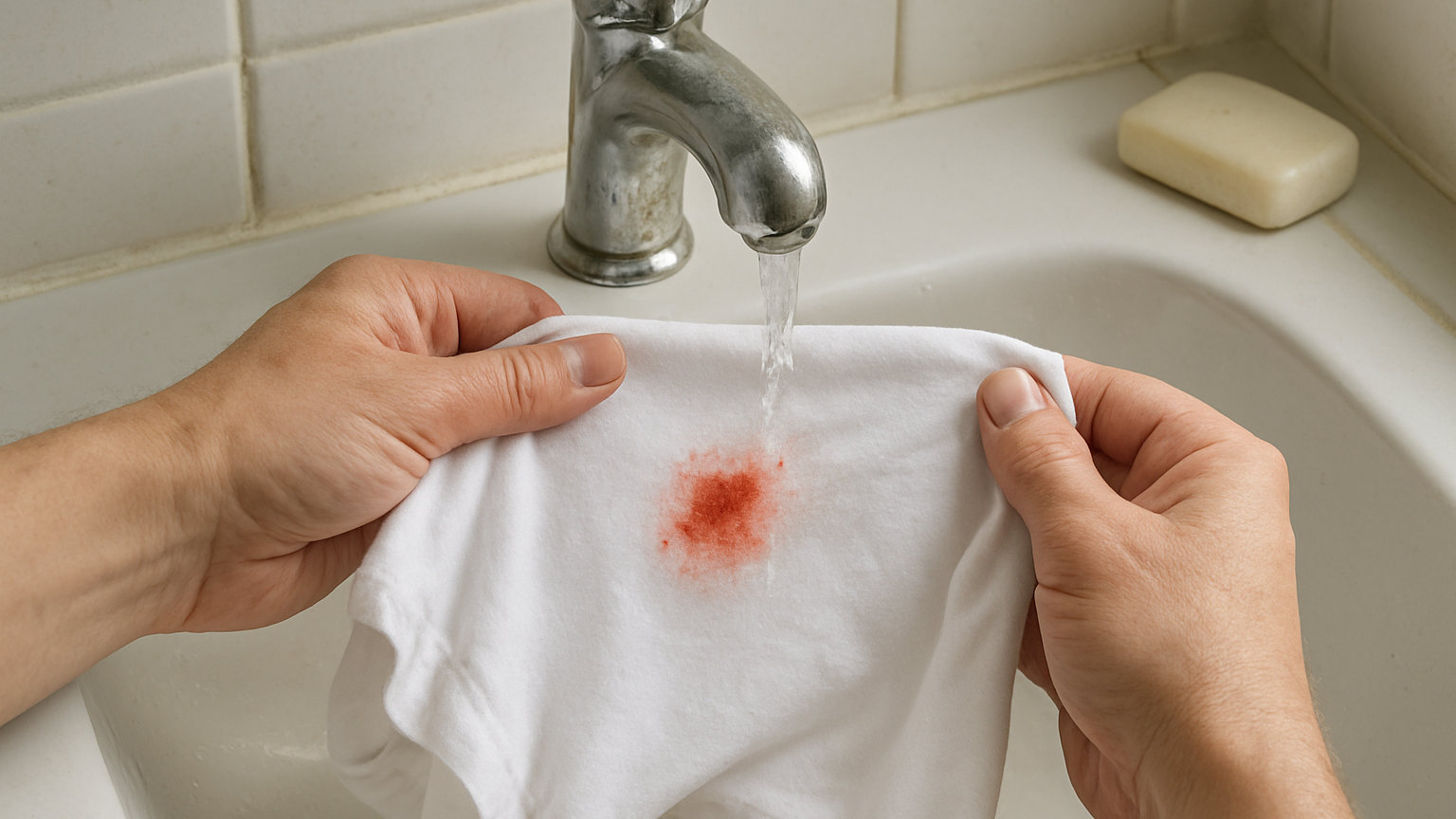
Fresh blood is one of the easiest stains to remove and one of the easiest to make permanent. Rinsed in cold water within a few minutes it usually disappears completely. Rinsed under a hot tap it coagulates into the fibre and becomes a brown mark that may never come out.
What is the immediate method?
- Act straight away. Every minute makes a difference.
- Hold the fabric with the stain face down and run cold water through the back of it.
- Keep flushing until the water runs clear, which may take a minute or two.
- If a mark remains, rub a little washing up liquid or detergent into it.
- Soak in cold water for thirty minutes.
- Wash at 30 degrees with a biological detergent.
- Check the area while damp before drying.
Flushing from the reverse pushes the blood back out the way it came in rather than driving it further through the weave. It is the single most effective technique for this stain.
Why must the water be cold?
Because blood contains haemoglobin, which is a protein, and protein coagulates when heated. The same process that turns an egg white solid in a pan happens inside the fibre, and once the protein has set it is bonded in place and cannot be dissolved out.
Cold water keeps it soluble. There is no stage at which warmth helps until the protein has been broken down.
What if you are away from a tap?
Keep the area wet with cold water and blot with a clean cloth, pressing rather than rubbing. Bottled water and a napkin will hold the situation until you can deal with it properly. Do not use a hand dryer or any heat on the damp patch.
A stain kept wet for a few hours is far more recoverable than one allowed to dry.
Does salt water help?
It is a traditional remedy with some basis. A solution of salt in cold water draws blood out of fabric reasonably well, and it is useful where no detergent is available. It is not better than cold water and a biological detergent, and it should be rinsed out thoroughly afterwards.
Cold water alone does most of the work in any case.
What if a mark remains after rinsing?
Soak in cold water with a biological detergent for an hour or two. The protease enzymes break the protein apart chemically, which is the only reliable route once simple rinsing has stopped working.
For white cotton, a solution of one part hydrogen peroxide to two parts water dabbed onto the mark works very well, tested first. Hydrogen peroxide fizzes on contact with blood, which is the reaction doing its job.
What about wool and silk?
These are protein fibres, so a biological detergent will attack the fabric as well as the stain. Use cold water, a wool or delicates detergent, and patience. Avoid hydrogen peroxide and oxygen bleach entirely.
For anything valuable, a professional cleaner is the safer option, and telling them what the mark is matters.
What should you avoid?
Hot water at any stage. Rubbing, which spreads the stain and damages the fibre surface. Soap bars, which can react with the protein on some fabrics. And putting the garment in a tumble dryer before you are certain the mark has gone entirely.
What about your own saliva?
It is an old remedy for a small fresh spot and it genuinely works, because saliva contains amylase and other enzymes that break down organic material. It is only practical for a very small mark on your own clothing, and cold water and a biological detergent do the same thing more thoroughly.
How quickly does it need doing?
Within minutes for the easiest result, within hours for a straightforward one, and within a day before it becomes a soaking job. Nothing irreversible happens simply through time, provided the garment stays away from heat. A stain found the next morning is still entirely recoverable; the same stain found after a hot wash frequently is not.