Blood on a mattress combines the two hardest constraints in stain removal. It must be treated cold, because heat sets the protein, and it must be treated with very little liquid, because a mattress cannot be rinsed and takes days to dry. Everything about the method follows from those two facts.
What should you do immediately?
- Strip the bed and get the sheets into cold water straight away.
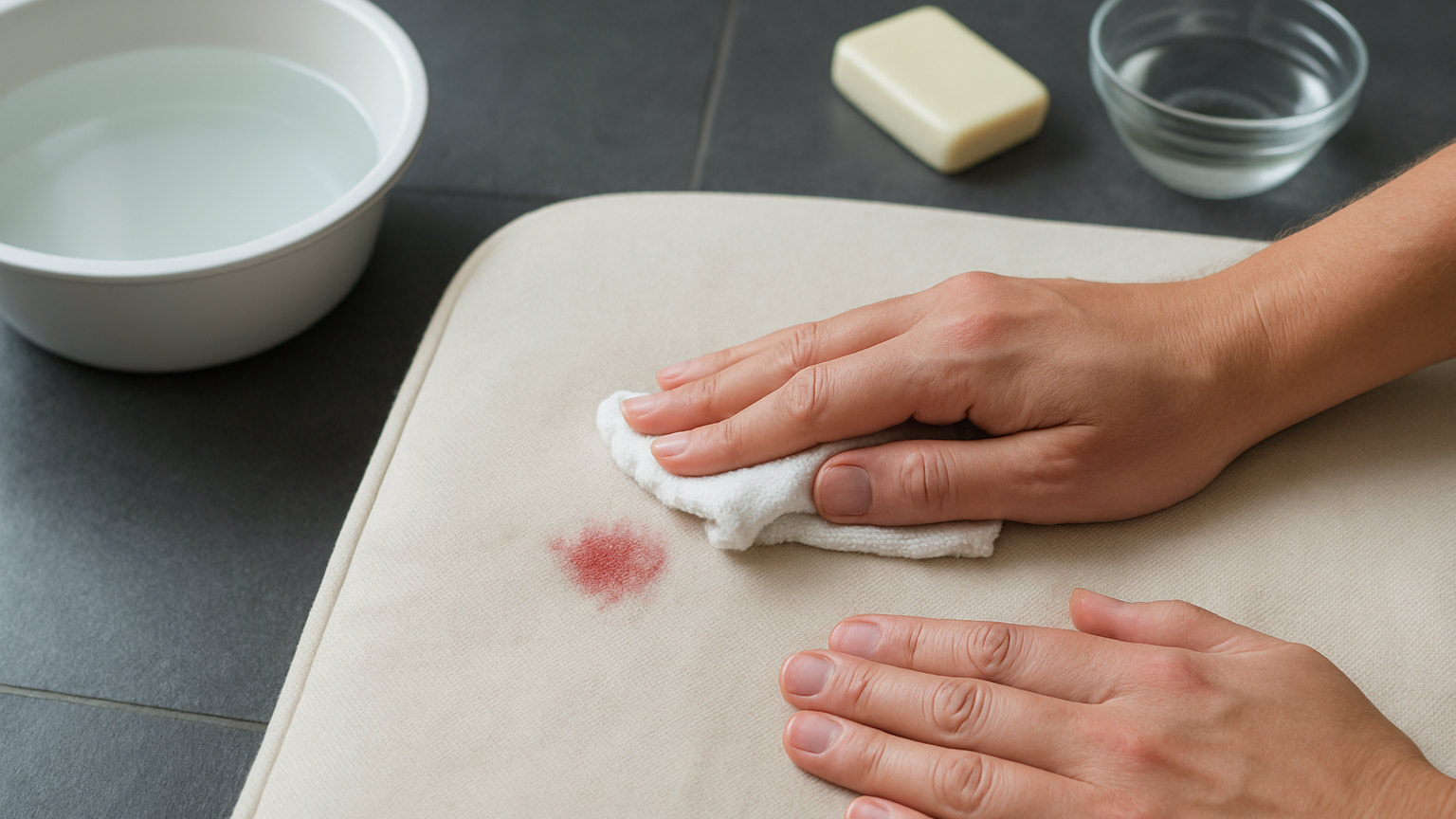
- Blot the mattress with a cloth dampened in cold water, pressing rather than rubbing.
- Keep moving to a clean section of cloth so you are lifting rather than spreading.
- Work from the outside of the mark inwards.
- Press a dry towel down hard afterwards to draw moisture back out.
- Repeat in short cycles rather than soaking the area once.
Cold water alone removes a great deal of a fresh mark, and it carries no risk of damage.
What is the bicarbonate method?
Mix bicarbonate of soda with a little cold water into a thick paste. Spread it over the stain, leave it for thirty minutes to an hour, then scrape it off and blot the area with a cloth dampened in cold water.
It works by drawing the blood up into the paste as it dries, and it introduces very little moisture, which makes it the safest first option on a mattress. Repeat rather than using more water.
What about hydrogen peroxide?
It is the most effective treatment and needs care. Use a three per cent solution, apply a small amount directly to the mark with a cloth or a cotton wool pad, and watch it fizz as it reacts with the blood.
Leave it a few minutes, then blot thoroughly with a dry cloth. Repeat two or three times rather than applying a large quantity at once.
Test on a hidden area at the edge of the mattress first, since peroxide will lighten some ticking fabrics. Keep it off any label or printed area.
What about enzyme cleaners?
An enzyme cleaner designed for protein stains is excellent here, since it breaks the blood down chemically and continues working as it dries. Spray or dab it on sparingly, leave for the time on the label, then blot.
It is particularly useful for a stain that has soaked in, because it keeps working below the surface where blotting cannot reach.
Why does drying matter so much?
Because a damp mattress grows mould inside the foam, and that is a considerably worse problem than a stain. Foam holds moisture below the surface long after the top feels dry.
Press dry towels down under weight, open the window, direct a fan across the surface, and leave it for several hours longer than you think necessary. Do not remake the bed until the area is completely dry to the touch and still dry an hour later.
What should never be used?
Hot water, a steam cleaner, chlorine bleach or a large volume of any liquid. Steam in particular is often suggested for mattresses and is a poor idea with blood, since it both sets the protein and introduces moisture that cannot be removed.
What about a mark that has been there for years?
Expect an improvement rather than a removal. Alternate the bicarbonate paste and a hydrogen peroxide treatment over several days, drying fully between each. Old blood on a mattress usually fades to a pale shadow.
Since the mattress is covered in use, a faded mark is a reasonable outcome, and continuing to soak it does more harm than good.
How do you avoid it next time?
A washable mattress protector, which takes the spill instead and goes in the machine at 60 degrees. It is inexpensive, it solves this problem entirely, and it also deals with sweat, spills and the general accumulation that shortens a mattress life.
What about memory foam specifically?
Memory foam is the least tolerant of moisture of any mattress type, and it must not be soaked under any circumstances. Use the bicarbonate paste method rather than a liquid treatment, keep the damp area as small as possible, and allow considerably longer for drying with a fan directed at the surface. A protector matters more on memory foam than on any other mattress.