The cloudy spots and streaks left on glass by hard water are mineral deposits, mostly calcium and magnesium, left behind when water evaporates. They are chemically bonded to the surface rather than sitting on it, which is why detergent does nothing and why scrubbing harder does not help.
What removes them?
An acid, given time to work.
- White vinegar, neat and warmed slightly, works well on light to moderate deposits.
- Citric acid, roughly two tablespoons in half a litre of warm water, is faster and less pungent.
- A proprietary limescale remover for heavy deposits, used with ventilation and care around frames and sealant.
The technique is the same for all three: get the acid onto the glass and keep it there long enough to do the work.
What is the method?
- Wash the glass first with soapy water to remove dirt, so the acid reaches the deposit.
- Soak kitchen paper or cloths in the acid and press them against the glass so they stay in place on a vertical surface.
- Leave for fifteen to thirty minutes for moderate marks, and up to an hour for heavy ones, re-wetting if the paper starts to dry.
- Work over the surface with a non-scratch pad, by which point the deposit should feel soft.
- Rinse thoroughly, more than once.
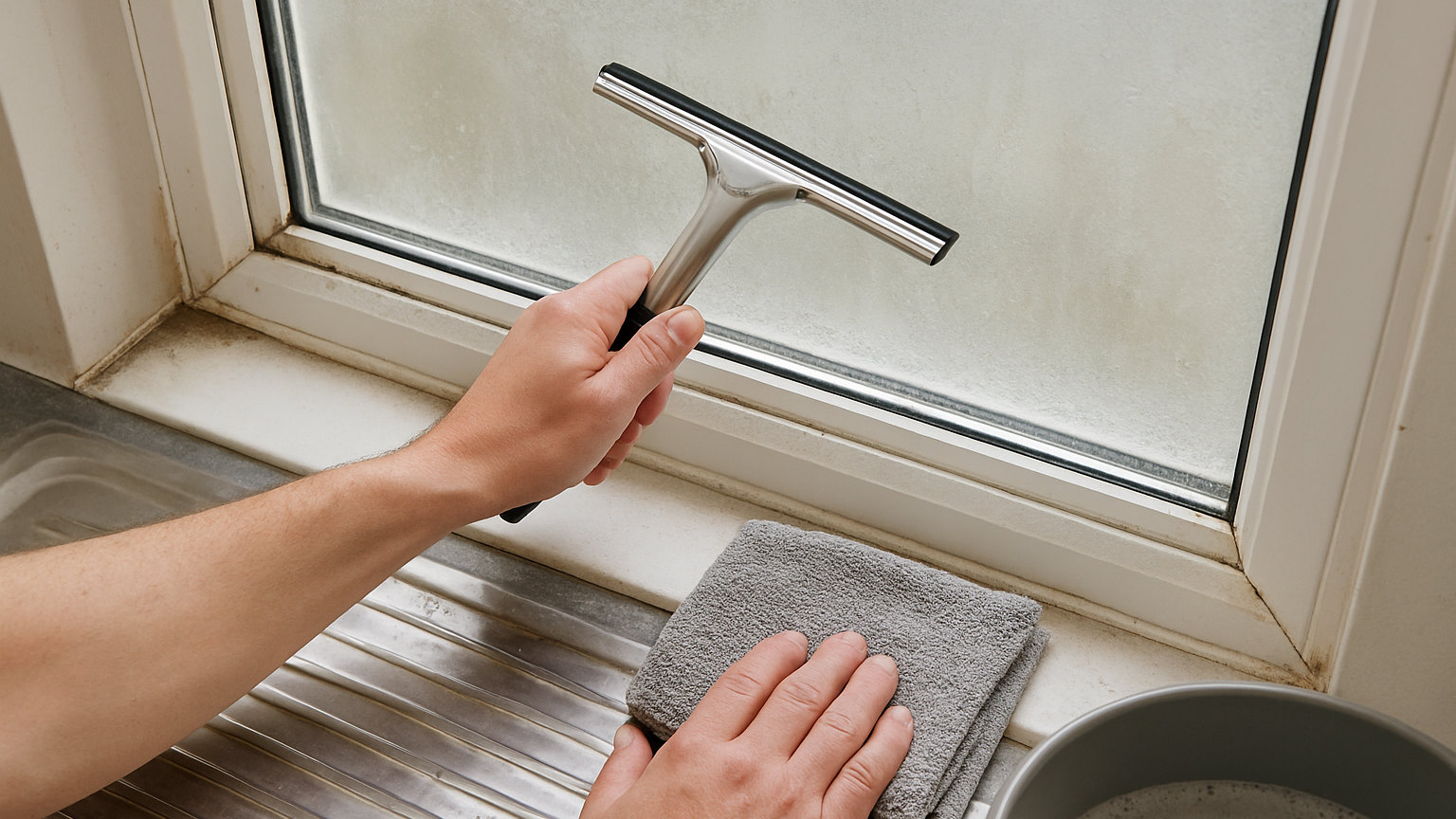
- Dry completely with a squeegee and a microfibre cloth.
Where do these marks come from?
Outside, usually from a garden sprinkler or a hose that reaches the window, from rainwater running off a limestone sill or a rendered wall, or from water dripping off a gutter. Inside, from shower spray, from a kitchen near a sink, or from condensation drying repeatedly in the same place.
Identifying the source is worth the effort, because a sprinkler hitting the same window every day will undo the work within a fortnight.
What must you keep the acid away from?
Almost everything around the glass. Acid damages chrome plating, strips coated and matt finishes on frames and handles, degrades silicone sealant with prolonged contact, and etches natural stone sills instantly. Rinse any splashes immediately and do not let the soaked paper rest against the frame.
On a stone sill in particular, one splash of limescale remover leaves a permanent dull patch.
How do you tell a deposit from etching?
Wet the glass and look at it while it is wet. A mineral deposit largely disappears when wet, because the water fills the irregular surface and light passes through evenly again. Etching stays visible when wet, because the damage is in the glass itself rather than sitting on top of it.
Etching happens when deposits are left for years and the minerals slowly attack the silica surface. It is permanent. A cerium oxide glass polishing compound can improve light etching with a good deal of effort, but a badly etched pane realistically needs replacing.
What should you never use?
Anything abrasive enough to scratch. Wire wool, scouring pads, scouring powder and melamine sponges all leave fine scratches that hold more deposit and make the glass permanently hazy. A razor blade held flat can be used by someone experienced on plain float glass, and will ruin any coated, toughened or self cleaning glass.
What prevents it recurring?
Drying glass rather than letting it air dry, which is the whole reason a squeegee on a shower screen works so well. Redirecting sprinklers away from the house. Fixing dripping gutters and overflows. And in very hard water areas, a water softener, which addresses the cause rather than the symptom throughout the house.
Do water repellent treatments help?
They do, for a while. A rain repellent coating applied to clean glass makes water bead and run off rather than sitting and evaporating in place, which reduces how much deposit forms. Expect a few months from a domestic product, less on a shower screen that is cleaned frequently, and reapply to glass that is genuinely clean rather than over an existing deposit.