Cleaning the glass and leaving the frame is a false economy. Dirt sitting in the frame and along the top of the sash runs down onto clean glass the first time it rains, and the parts of a window that actually fail over time are the frame, the seals and the drainage rather than the glass.
What is the order of work?
Frames before glass, always. Wash the frame, rinse it, and then clean the glass, so that anything dislodged from the frame is removed before the final finish. Doing it the other way round means dirty water running across glass you have just finished.
Open the window fully and clean the rebate, the edges of the sash and the parts of the frame that are only accessible when it is open. These surfaces are invisible when closed and are where most of the grime sits.
How do you clean uPVC frames?
Warm water with washing up liquid on a soft cloth or a soft brush, working from the top down, then rinse and dry. The textured grain on many uPVC frames holds dirt that a cloth glides over, so a soft brush works into it far better.
Never use abrasive creams, scouring pads, solvent cleaners or a melamine sponge on uPVC. The surface scratches easily, and once scratched it holds dirt permanently and there is no way to restore it. Specialist uPVC restorer creams exist for badly weathered frames and should be tested in a hidden area first.
What about aluminium and painted timber?
Aluminium frames are powder coated, and mild detergent is all they need. Avoid anything abrasive or strongly alkaline, which can dull or blotch the coating. Coastal properties benefit from rinsing aluminium frames with clean water a few times a year to remove salt.
Painted timber takes warm soapy water on a well wrung cloth, dried immediately. The area to inspect is the bottom rail and the joints at the bottom corners, which is where water collects and where rot always starts. Flaking paint or soft timber there needs attention promptly rather than at the next redecoration.
Why do the drainage slots matter so much?
Because a double glazed unit is designed to let a small amount of water into the frame and drain it back out through slots in the bottom outer edge. When those slots block with dirt, moss or insects, the water has nowhere to go. It sits in the frame, finds its way inside, and gets blamed on a failed seal.
Clear them twice a year with a cocktail stick or a thin brush, then pour a little water into the frame channel and check it runs out. It takes a minute per window and prevents a leak that looks like a serious fault.
What else should be cleaned while you are there?
- The rubber gaskets, wiped with a damp cloth and checked for splits or hardening.
- Hinges and friction stays, cleaned and given a drop of light oil once a year.
- Locks and handles, wiped and lubricated.
- The trickle vents, which clog with dust and are an important part of a home ventilation.
- The outside sill, including underneath the drip groove on its front edge.
How do you deal with black marks on the sealant?
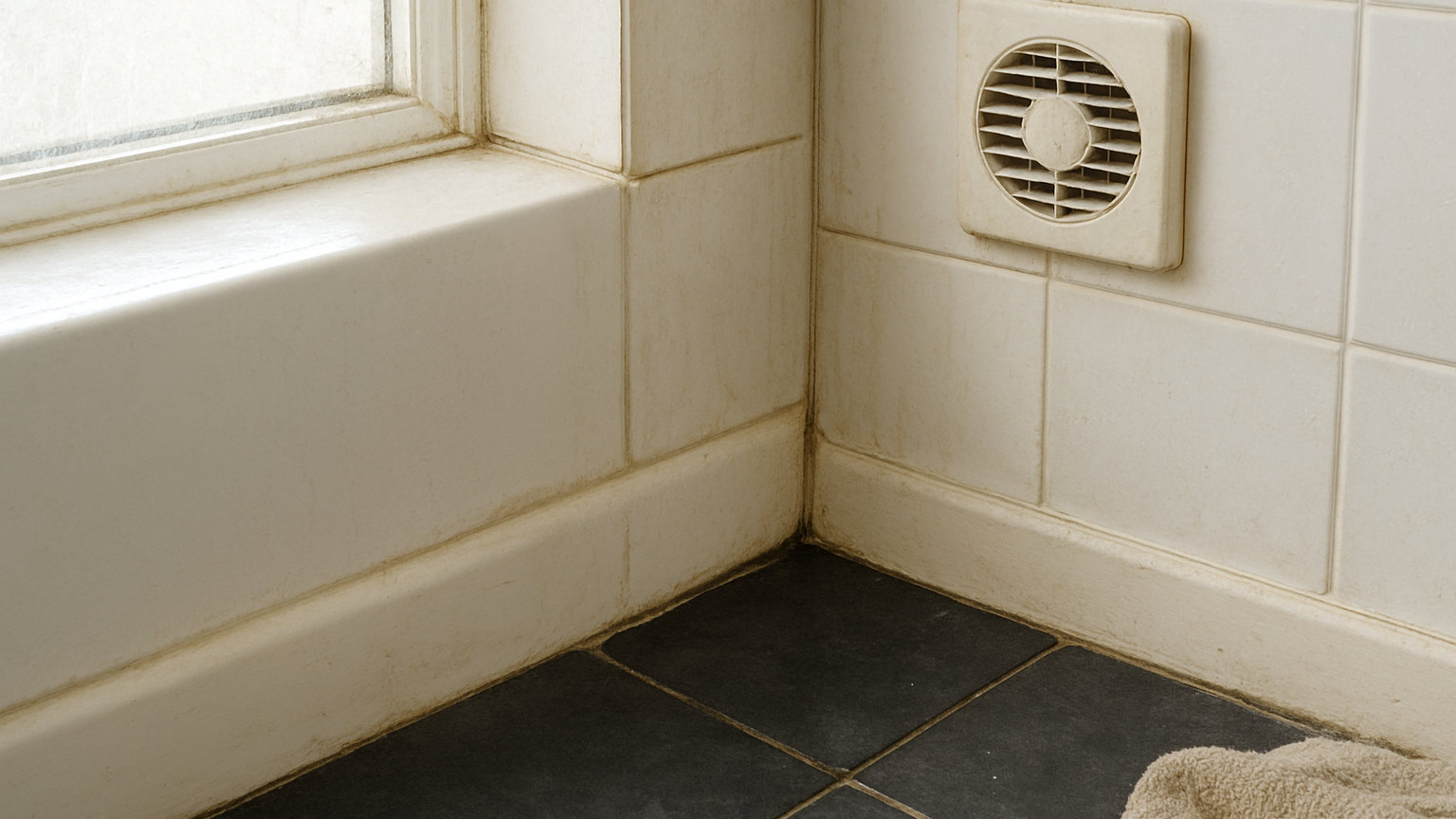
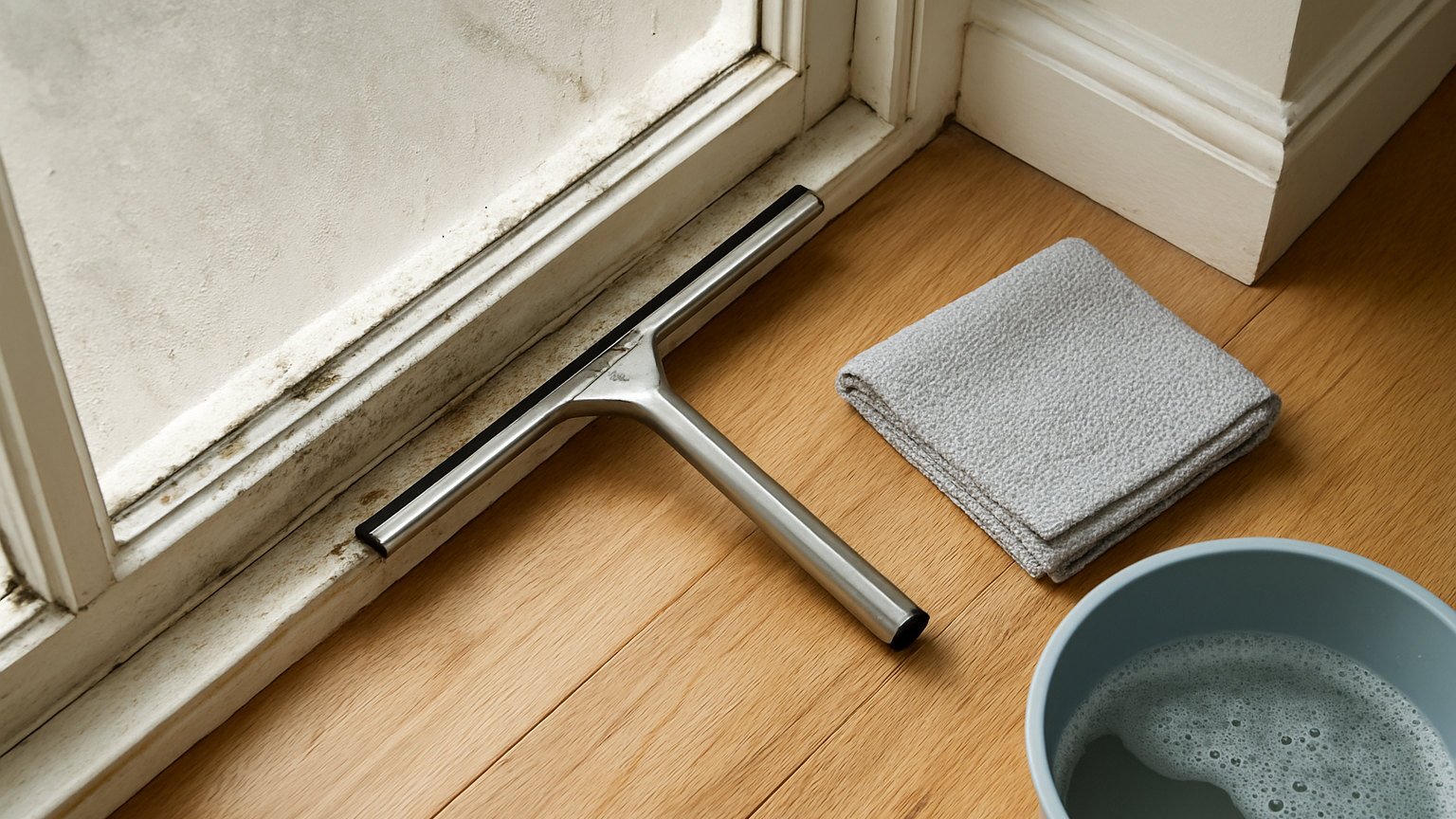
Black spotting on the silicone around a window is mould, caused by condensation. Wipe it with a dilute bleach solution or a fungicidal wash, leave it a few minutes and rinse. If the mould is growing inside the silicone rather than on it, cleaning will lighten it but not remove it, and the sealant needs cutting out and replacing.
Either way the condensation needs addressing, or it will be back within months.
How often should the frames be done?
Inside sills monthly, since they collect more dust than almost any other surface in a room. Outside frames and sills two or three times a year with the glass. Drainage, seals and hinges once a year, ideally in autumn before the weather turns.