Streaks on a splashback are almost always product residue rather than dirt, which is why cleaning harder makes them worse and cleaning with less makes them disappear. The reliable method is hot water, a very small amount of detergent, and a dry cloth as the final step.
Why do splashbacks streak so easily?
Because they are large, flat, vertical and usually shiny, which is the perfect combination for showing every mark. Anything left on the surface – detergent, the additives in a spray cleaner, minerals from hard water – dries into a visible film, and the light coming across the surface from a window or a downlight throws it into relief. On a dark or mirrored splashback the effect is dramatic.
Cooking splatter adds a second layer. Fat droplets land while they are hot, cool, and bond to the surface, so they need softening rather than rubbing.
What is the method that works?
- Deal with any splatter first. Lay a hot damp cloth over the marks for a minute so the fat softens.
- Wash the whole area with hot water and a single drop of washing up liquid on a microfibre cloth, working from the bottom upwards so drips fall onto wet surface rather than clean.
- Rinse with a second cloth wrung out in clean hot water. This step removes the detergent, and skipping it is the main cause of streaks.
- Dry immediately with a clean dry microfibre cloth or a piece of scrunched newspaper, using long overlapping strokes in one direction.
The whole thing takes about three minutes for the area behind a hob, and no proprietary product is needed for routine cleaning.
Which cloth makes the biggest difference?
A dry, clean, lint free microfibre cloth for the final pass. A cloth that has been washed with fabric conditioner will smear, because conditioner leaves a coating designed to be water repellent, and that is fatal for glass. Wash cleaning cloths without conditioner and without a heavy detergent dose, and keep one cloth exclusively for the final dry buff.
Does the material change the approach?
- Glass – the easiest to clean and the least forgiving of residue. Hot water, minimal detergent, dry buff. Avoid abrasive pads, which scratch the coating on coloured glass.
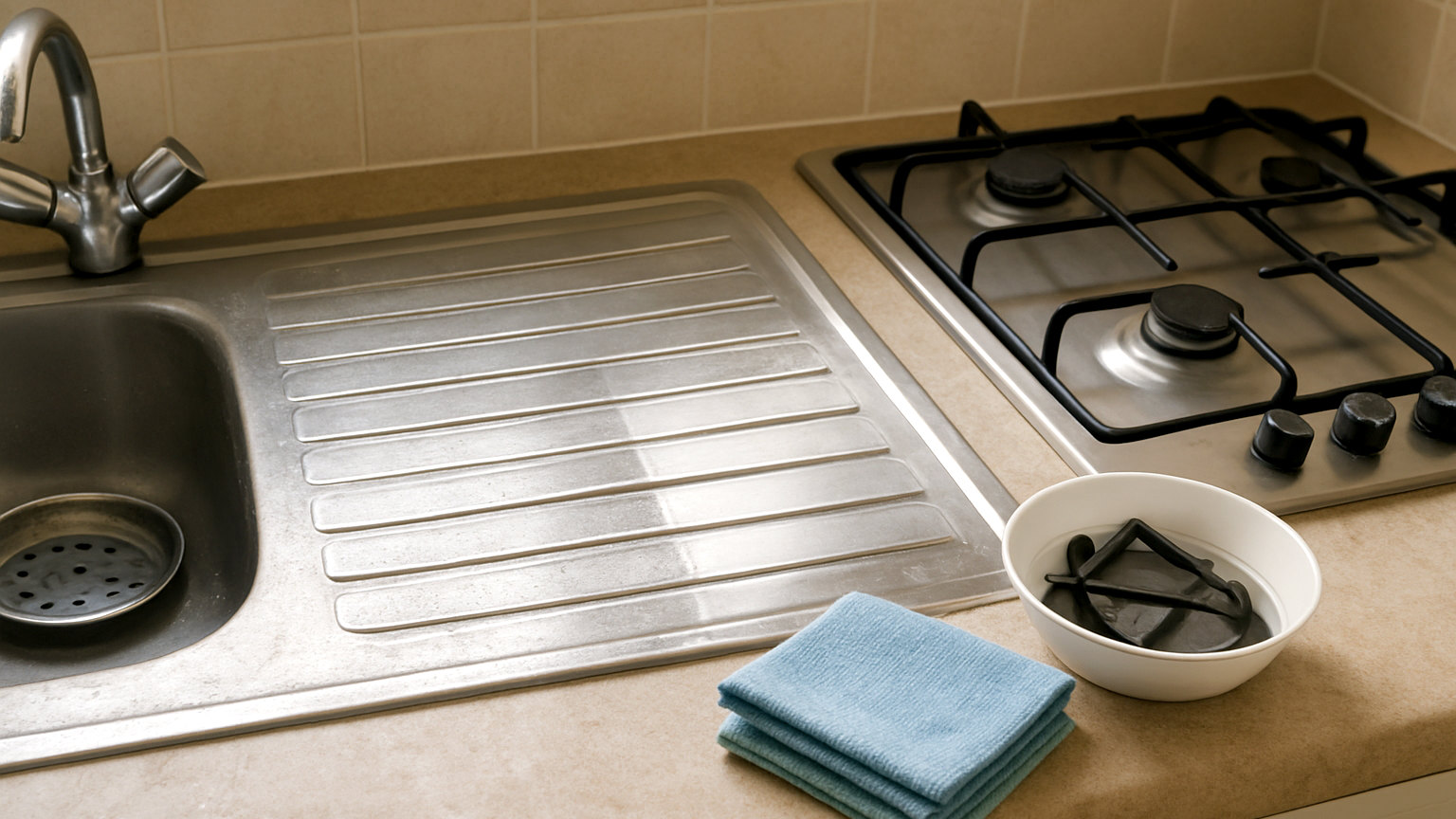
- Stainless steel – wipe in the direction of the grain, and finish with a barely oiled cloth if you want the showroom look. Never use bleach or a scouring pad.
- Ceramic tile – the tile itself is easy, but the grout holds grease. A soft brush and a bicarbonate paste along the joints deals with it, monthly rather than weekly.
- Acrylic and composite – soapy water only. Solvent based cleaners can craze the surface, and the damage looks like fine cracks and is permanent.
- Natural stone – no vinegar, no lemon, no descaler. Acid etches stone and leaves a dull mark that no amount of polishing removes.
What if the splashback is behind the hob and heavily baked on?
Heat has effectively cooked the deposit onto the surface, and softening is the only sensible route. A cloth soaked in hot soapy water laid against it for five to ten minutes will soften most of it. For the last traces on glass or tile, a plastic scraper or an old bank card held at a shallow angle lifts the deposit without scratching. Do not use a metal blade unless the manufacturer specifically allows it, and never on coated glass.
Should you use a glass cleaner or vinegar?
A proprietary glass cleaner works well on glass, but the vast majority of streaking complaints come from using too much of it. One or two sprays on a cloth, not on the surface, then dry. Diluted white vinegar is a good alternative on glass, tile and stainless steel, and a poor idea on stone, on any matt black finish, and anywhere near natural stone worktops.
How often does it need doing?
Behind the hob, weekly, and ideally a quick wipe after any session of frying while the residue is still soft. The rest of the run needs attention monthly. Splashbacks are one of the surfaces where frequent light cleaning is genuinely faster than occasional hard cleaning, because nothing ever gets the chance to bake on.