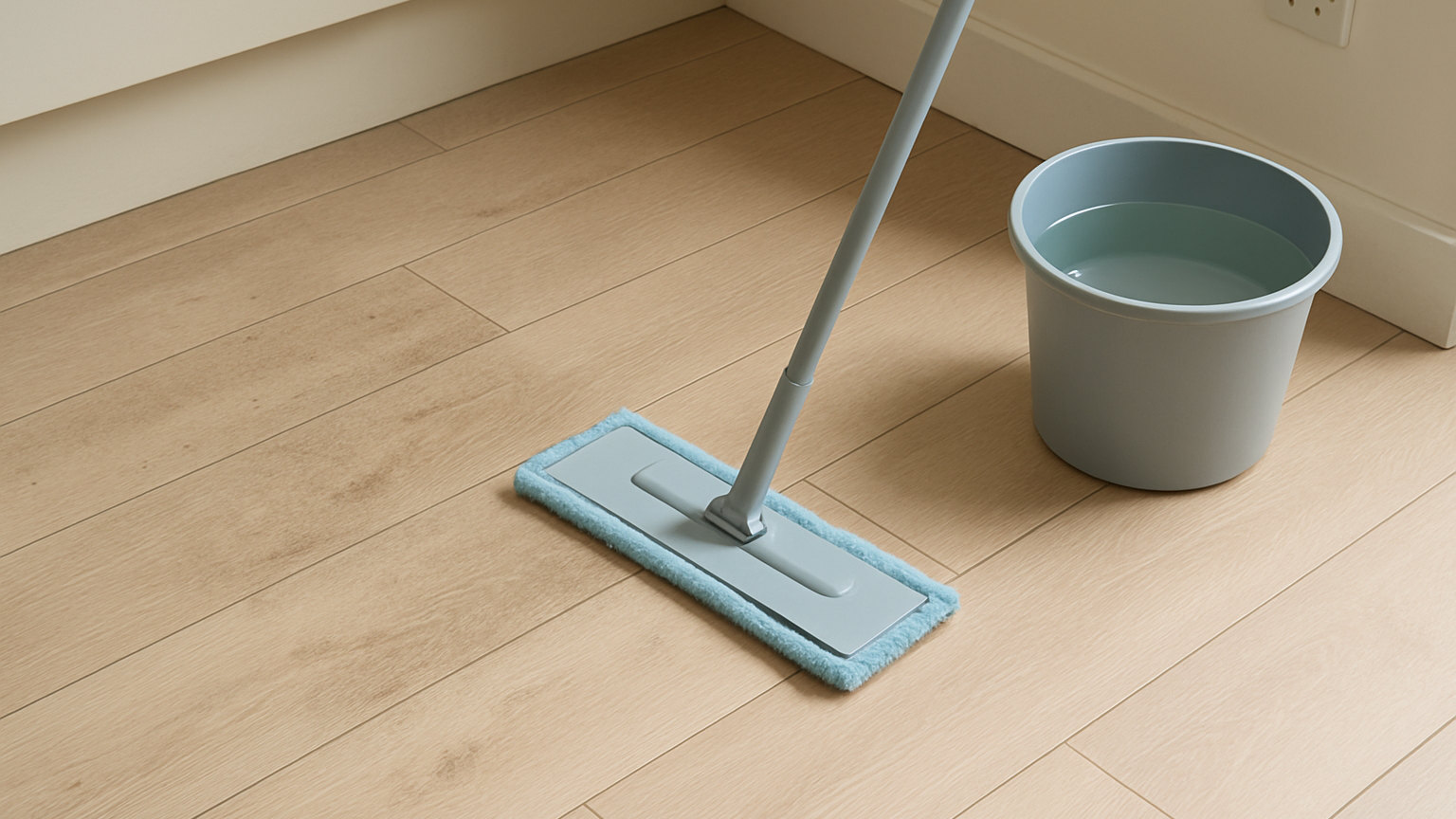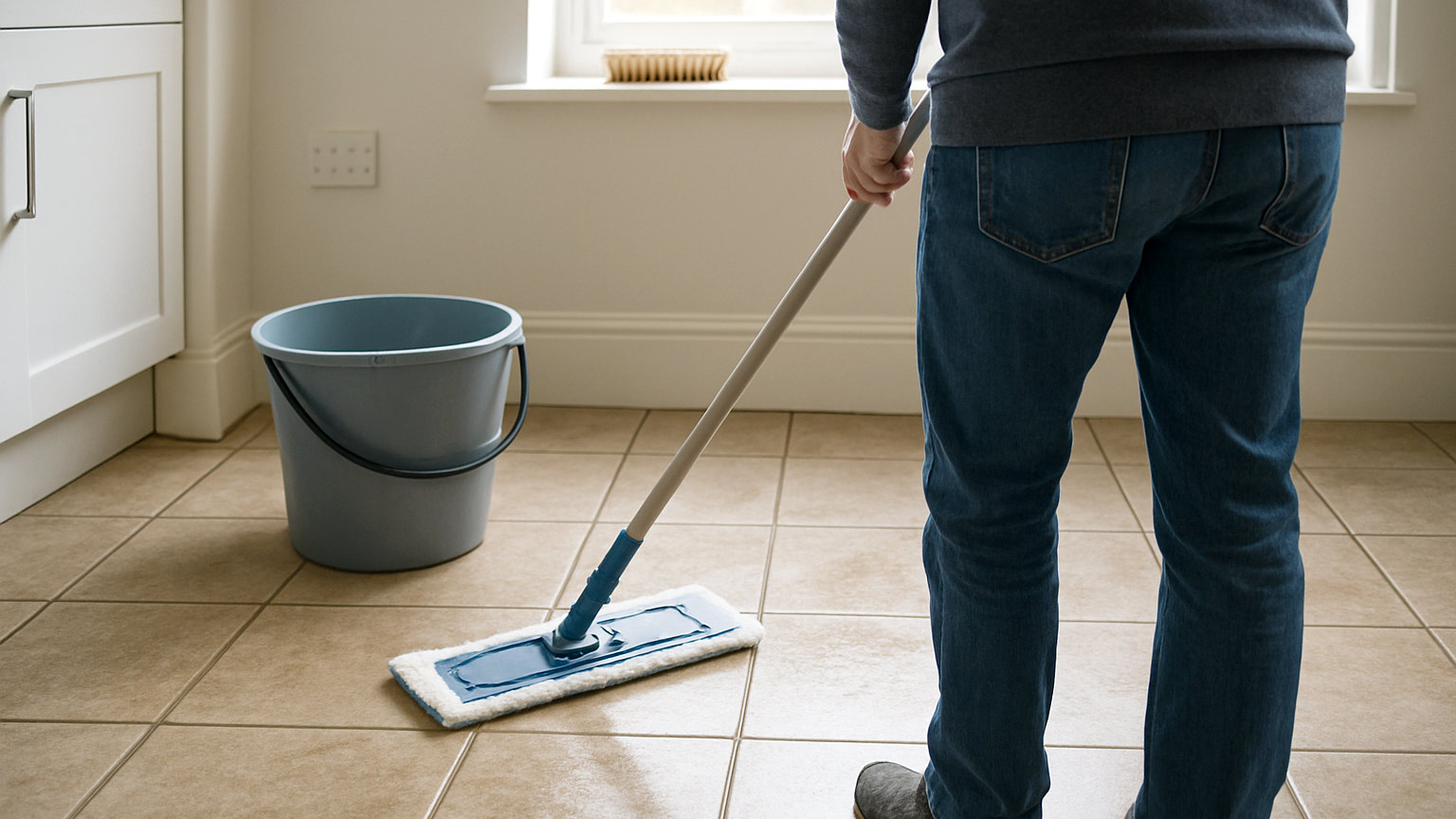
The useful answer separates two jobs that get treated as one. Vacuuming or sweeping removes grit, and grit is what physically wears a floor out. Mopping removes marks and residue, which is largely cosmetic. Most households mop more than they need to and vacuum less, which is the wrong way round for the long term condition of a floor.
How often should floors be vacuumed?
Two or three times a week in the rooms that get used, and daily in the entrance area and the kitchen if the household is busy. Bedrooms and rooms that see little traffic manage on weekly.
The reasoning is mechanical. Grit carried in on shoes acts like sandpaper underfoot, cutting carpet fibres and scratching hard floor finishes with every step. Once that damage is done it cannot be cleaned out, so removing the grit before it is walked on is the only thing that actually preserves a floor.
How often should floors be mopped?
- Kitchen – weekly, with spot cleaning of spills as they happen.
- Bathroom – weekly.
- Hallway – weekly, and more often in winter.
- Living areas with hard floors – every one to two weeks.
- Bedrooms with hard floors – every two to four weeks.
Mopping more often than this rarely improves anything and frequently makes floors worse, because each pass leaves a little more product residue behind. A floor that is getting stickier is usually being over-mopped rather than under-mopped.
Does the flooring type change the answer?
The vacuuming interval barely changes, since grit damages everything. The mopping interval varies more.
Laminate and engineered wood should be damp mopped as seldom as the marks allow, because water is their main enemy. Solid wood the same, with a dedicated wood cleaner rather than water. Vinyl and LVT are the most tolerant of frequent washing. Natural stone needs a pH neutral cleaner and suffers from acid rather than from frequency. Carpet is not mopped at all, but benefits from a deep clean once a year.
Which areas need more than the rest?
The first two metres inside the front door, the strip in front of the kitchen sink and hob, the area around a dining table, and the space in front of a pet feeding bowl. These four spots take a disproportionate share of the wear and the mess in almost every house.
Cleaning those areas more often, rather than cleaning the whole house more often, is a far better use of the time.
What about spills?
Immediately, every time, regardless of schedule. Almost every floor stain is trivially easy in the first two minutes and difficult after an hour. On laminate and wood, a spill left to sit can penetrate a joint and cause swelling that no cleaning will reverse.
Keeping a cloth accessible in the kitchen rather than under the sink behind the bin makes this far more likely to happen.
How often does carpet need a deep clean?
Once a year for a hall or a busy living room, and every two to three years for a bedroom. More often in a house with pets or small children. Regular vacuuming does most of the work, and deep cleaning is there to remove what has bonded into the fibres rather than what is sitting on top.
Does more cleaning ever damage a floor?
Yes, in three specific ways. Excess water on wood and laminate swells the boards and lifts the edges. Excess product on any hard floor builds a residue that dulls the finish and attracts dirt. And repeated aggressive scrubbing wears through a sealant or a lacquer, after which the floor is exposed and marks far more easily.
The pattern that preserves floors is frequent dry cleaning, occasional damp cleaning, and the minimum dose of the right product for the material. It is also the pattern that takes least effort, which is unusual among cleaning questions, since here the thorough approach and the easy approach happen to be the same one.