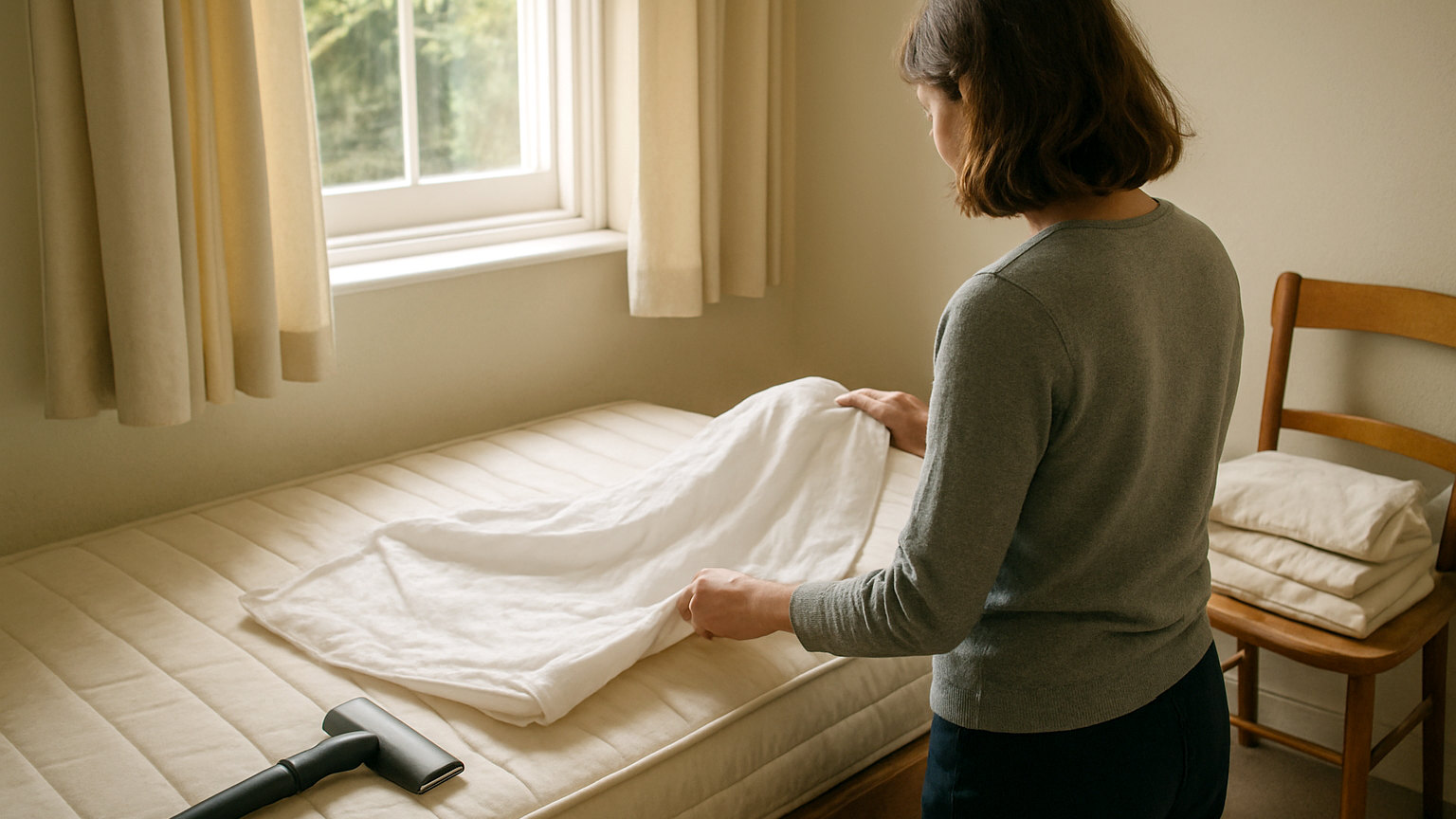
Sheets and pillowcases should be washed once a week, and duvet covers every one to two weeks. That is the standard advice, and the reasoning has little to do with whether the bedding looks dirty. It is about what accumulates in it, which is invisible until there is a lot of it.
What actually builds up in bedding?
Four things. Skin cells, shed continuously and in large quantities. Sweat, since most people lose a noticeable amount of moisture overnight even in cool weather. Body oils, transferred from skin and hair. And whatever is applied to skin and hair before bed, including moisturiser, hair product and makeup.
That mixture feeds dust mites, which live in bedding and mattresses and are the main reason bedding hygiene is discussed at all. They need warmth and humidity, both of which a slept-in bed supplies every night.
Does everything need washing at the same interval?
No, and separating them saves a lot of laundry.
- Pillowcases – weekly at least, and twice a week if you have oily skin, use hair products or are prone to spots.
- Sheets – weekly.
- Duvet covers – every one to two weeks, since they have less direct skin contact.
- Mattress protectors – monthly, or immediately after any spill or illness.
- Pillows and duvets themselves – two to four times a year.
- Blankets and throws – every month or two, depending on use.
When should it be more often than weekly?
In hot weather, when sheets absorb noticeably more sweat and can feel stale within three or four nights. If you share the bed with a pet, which adds hair, dander and whatever the animal has walked through outside. After any illness, where changing the bedding once the person is better makes a real difference to how the room feels. If you go to bed without showering after exercise. And if anyone in the household has eczema or a dust allergy, where more frequent washing is often recommended as part of managing symptoms.
What temperature should bedding be washed at?
Sixty degrees is the useful number, because it is the point at which dust mites are reliably killed and most bacteria are dealt with. Cotton sheets, pillowcases and duvet covers generally handle it without difficulty.
Not everything can take it. Coloured cotton may fade faster, linen and bamboo usually specify lower temperatures, and anything with elastane in a fitted sheet will degrade at high heat. Where 60 degrees is not an option, washing at 40 and tumble drying hot achieves a similar result, since the heat of the dryer does the work instead.
Does the bedding need airing before washing?
Airing is worth doing daily rather than as a pre-wash step. Pulling the duvet back and opening the window for ten to twenty minutes in the morning lets the moisture absorbed overnight evaporate rather than sitting in the mattress and the bedding for the rest of the day. A bed made immediately on waking traps that moisture underneath, which is the main reason sheets can smell stale well before the week is up.
This one habit does more for how fresh bedding feels between washes than any fabric spray.
How many sets of bedding do you need?
Two per bed as a minimum and three if you can, because the difficulty with weekly changes is usually logistical rather than motivational. With a spare set in the cupboard the bed can be remade immediately and the wash can happen whenever it suits. With only one set, the change has to be timed around drying, which is why it gets postponed.
What if sheets smell before the week is up?
Usually one of three causes: going to bed damp from a shower, a room with poor ventilation where nothing dries out, or a washing machine that is leaving residue in the fabric. The third is more common than people think, and running a hot maintenance wash on the machine and reducing the detergent dose often fixes bedding that smells within days of being changed.