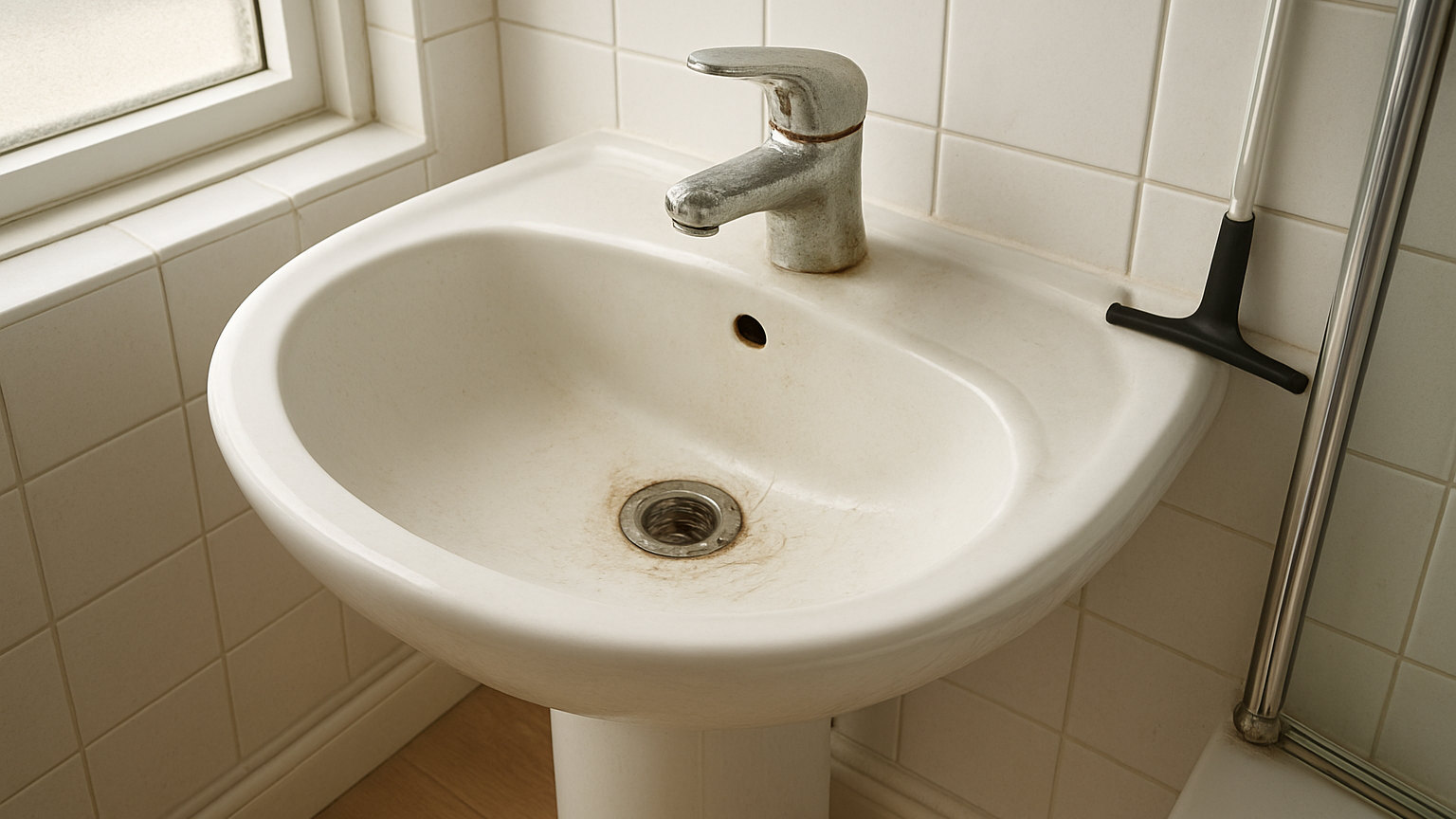
A bathroom basin collects an unusual mixture: toothpaste, soap, hair, shaving residue and limescale, all of it in a small bowl that is rinsed with cold water. The bowl itself is easy. The plughole, the overflow and the trap underneath are where the actual problems are, and they need attention two or three times a year rather than weekly.
What is the routine clean?
Run the hot tap for a moment to warm the basin, then wash it with hot water and washing up liquid or a cream cleaner on a cloth. Cover the whole bowl, the rim, the area behind the taps and the base of each tap, which is where scale and toothpaste collect together into a hard grey ring. Rinse, then dry with a cloth.
Drying is what stops water marks and scale forming, and in a hard water area it makes more difference than which product you use.
How do you remove toothpaste and limescale?
Dried toothpaste softens in seconds under a hot wet cloth, so laying one over the marks for a minute removes the need to scrub. Limescale needs acid: white vinegar on a cloth laid over the affected area for fifteen minutes, followed by a rinse.
Where the two have combined around the tap base, do the hot cloth first and the vinegar second, since the toothpaste layer otherwise protects the scale underneath.
Why does the basin drain slowly?
Almost always because of hair wrapped around the plug mechanism just below the plughole, bound together with soap residue. It is rarely a blockage further down the pipe, and it is rarely anything a chemical unblocker will help with, because the plug rod holds the mass in place.
The quick test is to look down the plughole with a torch. If you can see a dark mass, that is the problem.
How do you clear it?
- For a pop-up plug, look under the basin for a horizontal rod clipped to a pivot at the back of the waste. Unclip it or unscrew the retaining nut, and the plug will lift straight out with most of the hair attached.
- Clean the plug and the rod, and use a plastic drain strip or a bent wire to pull out anything left inside the waste.
- Refit the plug and the rod, and check that the plug still seats and lifts properly.
- Flush with a kettle of hot water and a squeeze of washing up liquid.
If the flow is still slow, the bottle trap underneath needs emptying. Put a bowl under it, unscrew the bottom section by hand, tip out the contents, rinse it and screw it back finger tight. Run the tap and check for drips.
What about the overflow?
The overflow slot fills with a black slime made of soap, skin and bacteria, and it is a common source of a smell in a bathroom that appears perfectly clean. It is invisible from outside, which is why it is so often missed.
Clean it with a narrow bottle brush pushed into the slot and worked back and forth, then flush it by pouring a jug of hot soapy water into the overflow opening rather than into the basin. Doing this two or three times a year is enough.
Are chemical drain unblockers worth using?
Rarely, for a basin. Caustic unblockers are harsh on older pipework and on the plastic components of a pop-up waste, and they do very little against a plug of hair held on a rod. Removing the plug takes five minutes and solves the actual problem. Keep chemical unblockers for genuine grease blockages further down a system.
What stops the problems recurring?
Rinsing the basin properly after brushing teeth or shaving rather than leaving residue to dry, wiping the taps dry, and pulling the plug out every couple of months to clear the hair before it accumulates. Five minutes twice a year on the plug and the overflow prevents both the slow drain and the smell that usually arrives with it.