Gloves serve two purposes in household cleaning. With a small number of products they prevent chemical burns and are genuinely essential. With everything else they prevent the dry, cracked hands that repeated exposure to detergents and hot water causes over time.
When are they essential?
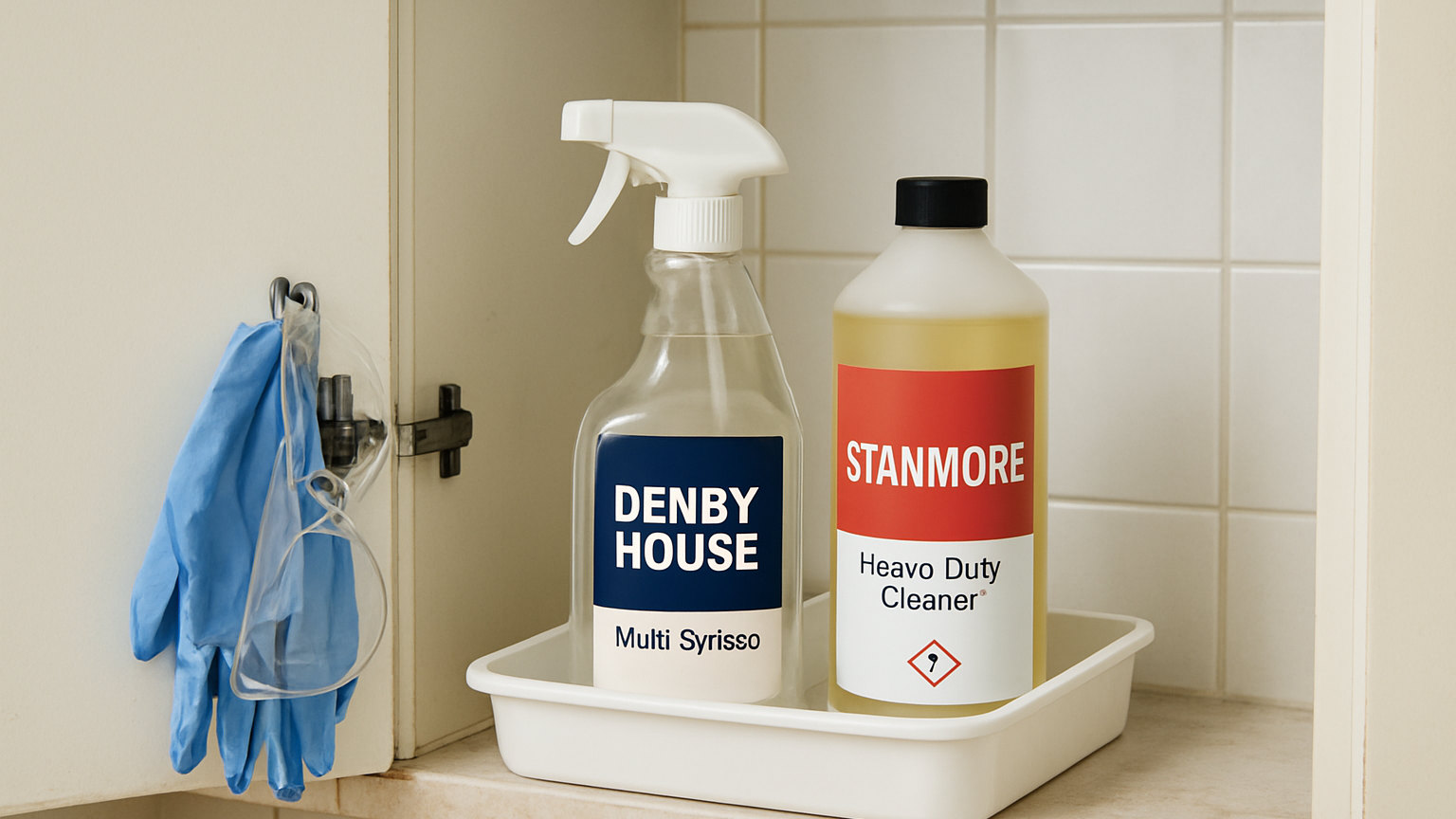
- Anything marked corrosive – oven cleaner, drain unblocker, strong descalers.
- Bleach, undiluted or in strong solution.
- Soda crystals in solution, which are strongly alkaline.
- Dishwasher detergent and salt, particularly powder.
- Any product whose label says to wear them.
- Cleaning anything biologically contaminated.
Why do hands suffer without them?
Because detergents remove the natural oils from skin, and hot water accelerates it. Repeated exposure leads to dryness, cracking and in some cases contact dermatitis, which becomes progressively harder to resolve.
People who clean regularly without gloves frequently develop hand problems that would have been avoided entirely.
Which type should you choose?
Household rubber gloves – reusable, long cuffed, good general protection. Usually latex, which is a problem for anyone with a latex allergy.
Nitrile gloves – latex free, better chemical resistance, available reusable or disposable. The better choice for most people.
Vinyl disposables – cheap, weaker chemical resistance, suitable for light tasks.
For anything corrosive, check that the glove material is rated for it, since thin disposables offer limited protection against strong chemicals.
What about latex allergy?
Latex sensitivity can develop with repeated exposure and is a recognised occupational issue. Symptoms range from skin irritation to more serious reactions.
Nitrile gloves avoid the question entirely and perform at least as well, which makes them the sensible default.
When do you need eye protection?
More often than people use it. Any product marked corrosive, anything sprayed above head height such as an extractor hood or a ceiling, and anything being poured or decanted.
Eye injuries from cleaning products are among the more serious domestic accidents and are entirely preventable with cheap safety glasses.
What about a mask?
Rarely necessary for normal domestic cleaning with adequate ventilation. Worth considering for prolonged work with strong products in a confined space, when disturbing a lot of dust, or when treating extensive mould.
Opening a window does more than a basic dust mask for chemical vapours, which most masks do not filter.
How should gloves be looked after?
- Rinse the outside before taking them off.
- Peel them off without touching the outside with bare skin.
- Rinse the inside occasionally and let them dry fully.
- Store them somewhere they can air rather than balled up.
- Replace them when they perish, split or become sticky.
Damp gloves left inside out in a cupboard grow bacteria and eventually smell.
Should they be colour coded?
Yes, on the same principle as cloths. A pair used to clean a toilet should not then be used for washing up. Keeping separate pairs for kitchen and bathroom costs very little.
What if gloves are uncomfortable?
Usually a sizing issue. Gloves that are too large are clumsy and too small are hot and tear. Cotton liners help with sweating and make longer jobs tolerable.
Thin nitrile gloves give far better dexterity than thick household rubber ones for detailed work.
What should you do if a product contacts skin?
Rinse immediately with plenty of running water for at least ten minutes, removing anything contaminated. Check the label for specific advice.
Seek medical attention for anything corrosive, for any burn or blistering, or where irritation persists after rinsing.
Do gloves have a downside?
Two small ones. They reduce sensation, so it is easier to miss a splash running down a cuff, and sweat inside a glove worn for a long period can itself irritate skin. Long cuffs folded back into a turn-up catch drips, and taking a break to air your hands on a long job solves the second.
What about hand care afterwards?
Dry hands thoroughly and use a moisturiser, which does more than people expect for preventing cracking. Skin that is already damaged absorbs chemicals more readily, so keeping hands in good condition is itself a safety measure rather than a cosmetic one.