The homemade oven cleaner that works is bicarbonate of soda made into a paste and left overnight. It is slower than a caustic gel and safe to use with children and pets in the house, and on an oven that has not been neglected for years it produces a comparable result.
What is the method?
- Take out the shelves and any removable fittings.
- Scrape off loose debris from the base.
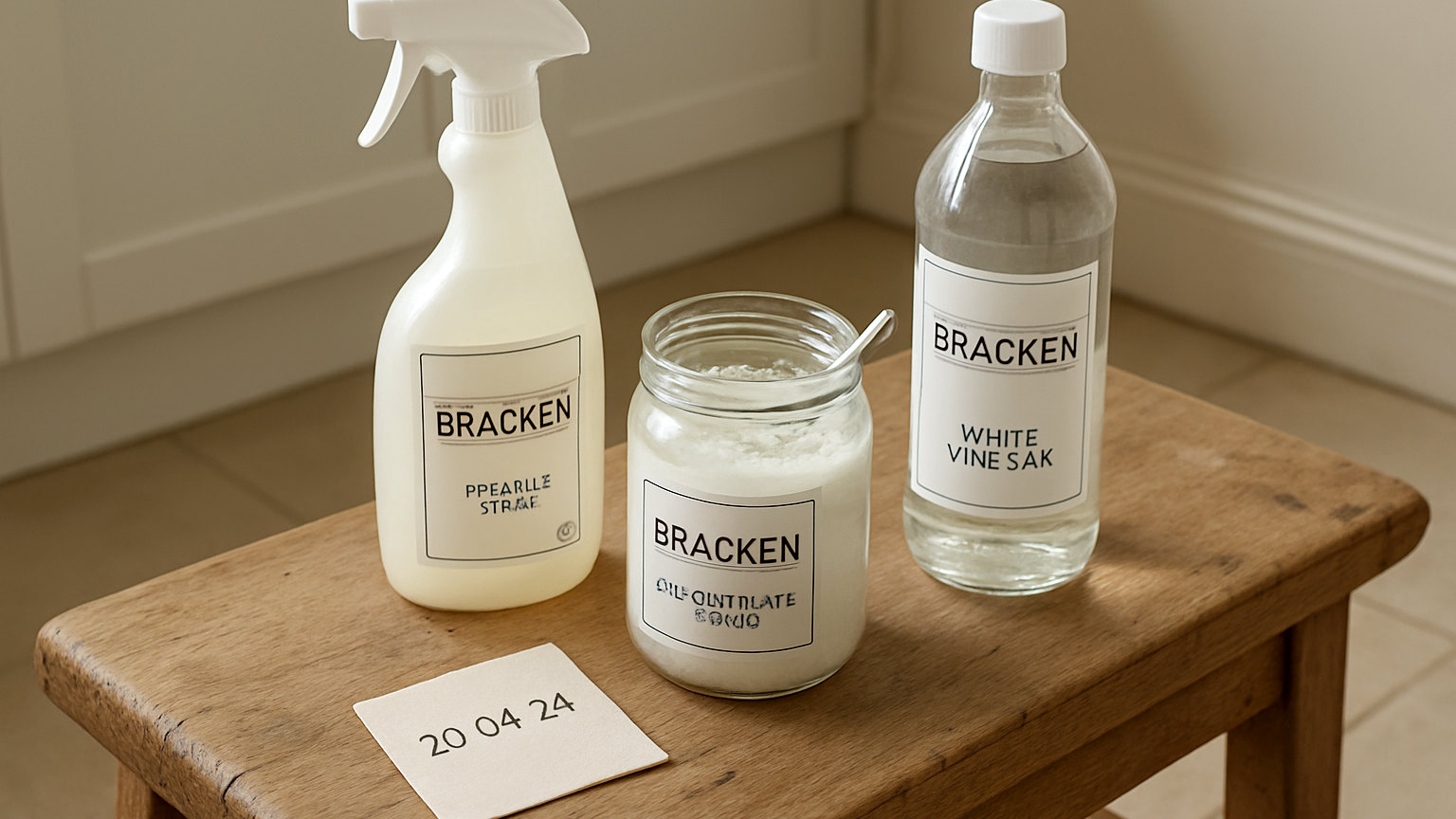
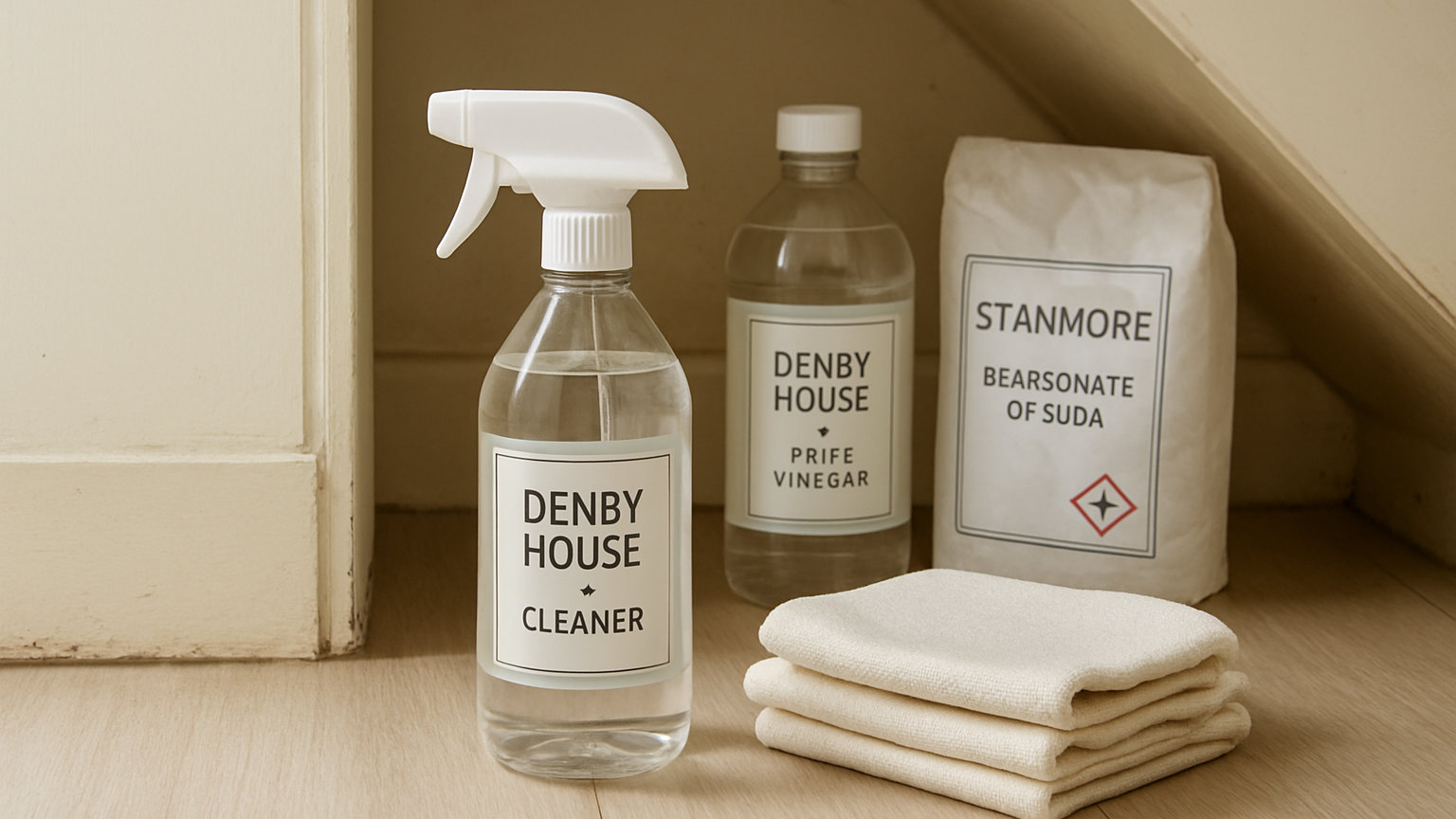
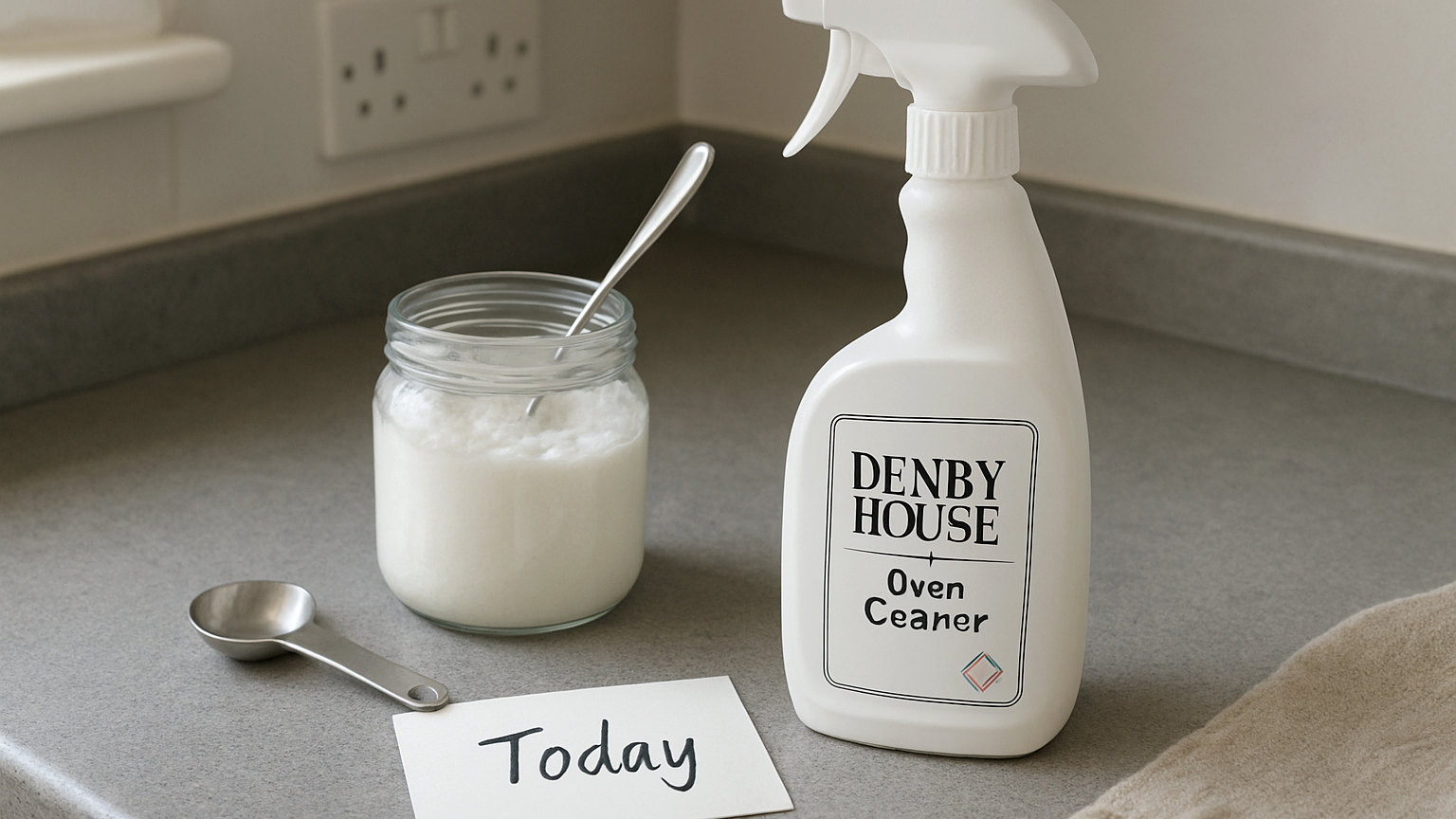
- Mix around 150g of bicarbonate of soda with enough water to make a spreadable paste.
- Spread it over every interior surface, avoiding the element, the fan and the thermostat probe.
- Leave it overnight, or at least eight hours.
- Wipe away with a damp cloth, which should lift most of the softened deposit.
- Spray any remaining residue with white vinegar, which fizzes and helps lift it.
- Wipe out with clean water and dry.
Why does it need so long?
Because bicarbonate is mildly alkaline and works by slowly converting baked fat into something water soluble. That reaction is not fast. Two hours produces a poor result and ten hours a good one, which is why this is an evening job.
What is the vinegar actually doing?
Reacting with the remaining bicarbonate to produce gas, which lifts the residue mechanically and makes the powder easier to wipe away. It is not cleaning; the bicarbonate did that overnight.
Mixing vinegar into the paste at the start neutralises both and achieves nothing.
How do you do the shelves?
Soak them, which does nearly all the work. Lay them in a bath lined with an old towel to protect the enamel, cover with hot water, add a generous scoop of soda crystals or biological washing powder, and leave overnight.
Most of the deposit wipes off in the morning with a nylon brush. Keep soda crystals off aluminium shelves and trays, which they pit and discolour.
What about the door glass?
The same bicarbonate paste, spread on and left for at least thirty minutes or overnight for a heavy deposit. Work it with a damp non-scratch pad, and use a glass safe scraper held at a shallow angle on anything stubborn, keeping the glass wet.
Never use a scraper on printed markings or on the outer decorative panel.
What about steam first?
A useful and easy first step. Put an ovenproof dish of water with a sliced lemon in it, heat the oven to around 120 degrees for thirty minutes, then switch off and let it cool to warm. The steam softens deposits and a great deal wipes away before any paste is needed.
Many ovens have a steam clean function that does exactly this.
What must be avoided?
- Catalytic liners, which are rough self cleaning panels ruined by any paste or product.
- The heating elements, which should never be wetted or coated.
- The fan and the thermostat probe.
- The door seal, which takes a damp cloth only.
- Metal scrapers and wire wool, which chip enamel.
What will it not shift?
Hard carbonised deposit built up over years. Bicarbonate softens fat and does not dissolve carbon, so a black glassy layer on the base will improve rather than clear.
Repeating the treatment over two or three nights gets considerably further, and a plastic scraper after each soak removes more each time.
Is it as good as a caustic cleaner?
For an oven cleaned two or three times a year, yes, and it is cheaper, produces no fumes and needs no protective equipment. For a genuinely neglected oven it falls short, and that is the honest limit.
How do you keep it that way?
Wipe spills while the oven is still warm, which takes seconds and prevents everything that follows. An oven wiped after spills never needs anything stronger than bicarbonate.
What about lemon and water?
Heating a dish of water with lemon halves in it for half an hour softens light deposits with steam and leaves the oven smelling considerably better than vinegar does. It is a useful first step on a lightly soiled oven and will not touch anything baked hard, where the overnight paste is still needed.