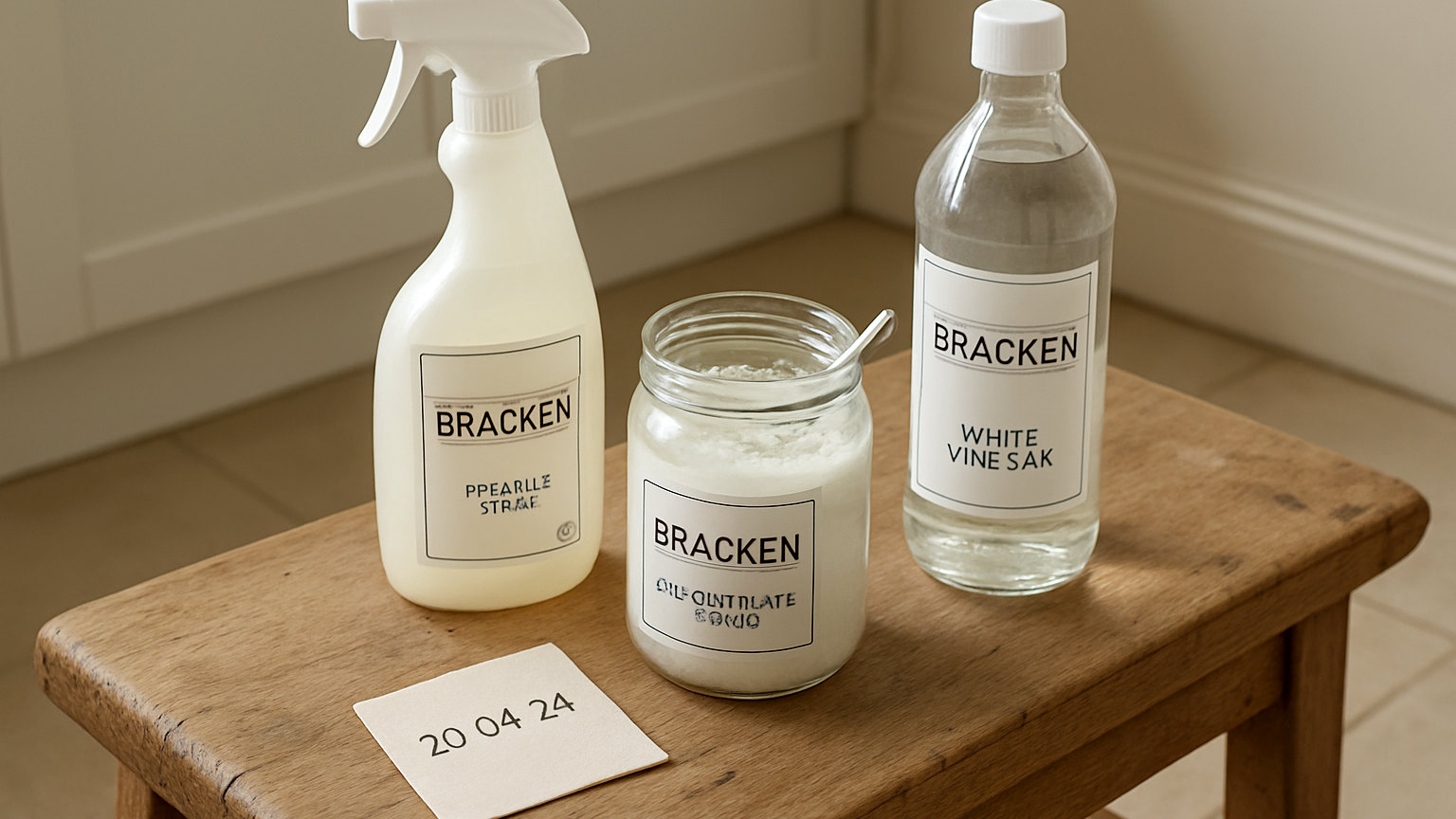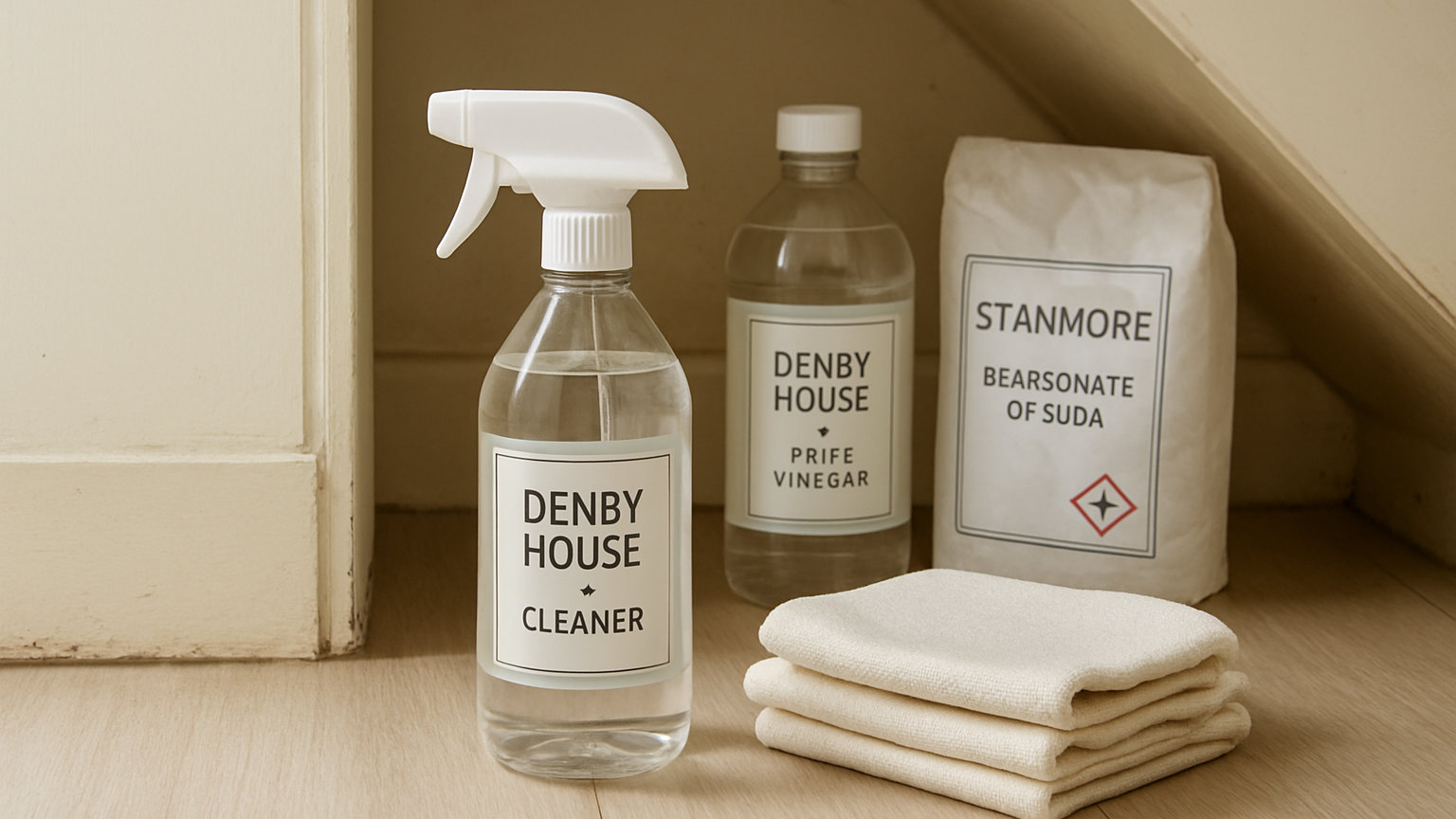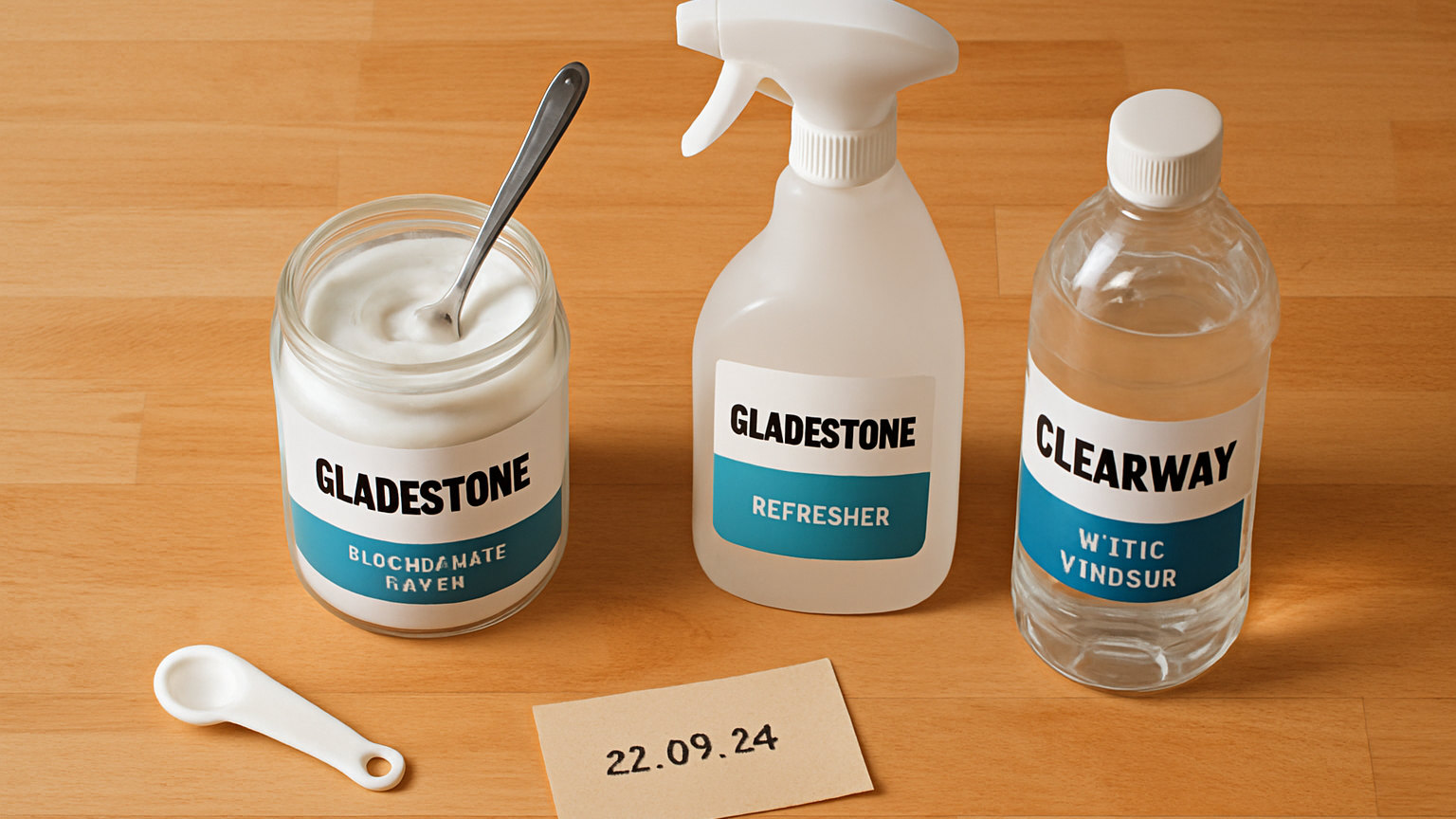
A cream cleaner is a mild abrasive suspended in a detergent base. The homemade version is bicarbonate of soda mixed with washing up liquid, which gives the same two actions: gentle physical scouring and a surfactant to lift what has been loosened.
What is the recipe?
- Put four tablespoons of bicarbonate of soda into a bowl or a small jar.
- Add washing up liquid a teaspoon at a time, stirring.
- Stop when it forms a thick paste, roughly the consistency of icing.
- Add a few drops of water if it is too stiff to spread.
- Store in a sealed jar and label it.
Make small amounts, since it dries out and stiffens over a few weeks.
Why does the consistency matter?
Because too thin and it runs off a vertical surface without working; too thick and it does not spread or rinse away cleanly. A spreadable paste that stays where it is put is what you want.
For a surface that needs a soak, mix it slightly wetter and leave it in place for fifteen minutes before working it.
Where does it work well?
- Stainless steel sinks, worked along the grain.
- Ceramic sinks and baths, for tide marks and general dullness.
- Enamel, including pans and cooker surrounds.
- Worktops, for marks detergent will not shift.
- Mugs and teapots, for tannin staining.
- Oven doors and hobs, alongside a soak.
How should it be used?
Apply it to a damp non-scratch pad or cloth rather than to a dry surface. Work it over the area with light pressure, leave it for a few minutes on anything stubborn, then rinse thoroughly.
Rinsing matters, since bicarbonate residue dries to a white powdery film. Follow with a clean damp cloth and buff dry.
Where should it not be used?
- Glass ceramic and induction hobs, which need a dedicated hob cream.
- Polished stone, quartz and marble, which dull.
- Gloss laminate and painted surfaces.
- Acrylic baths and shower trays, which scratch easily.
- Aluminium, which bicarbonate discolours.
- Anything with a printed or lacquered finish.
Test on a hidden area on any glossy surface, since dulling is permanent.
Can you add anything else?
A tablespoon of white vinegar can be added at the point of use for extra lift on limescale, applied over the paste rather than mixed into it. Mixed into the jar it neutralises the bicarbonate and the paste goes flat.
A little hydrogen peroxide instead of water makes a whitening paste for grout and white surfaces, mixed fresh each time since it degrades.
How does it compare with a bought cream?
Close, with two differences. Commercial creams use a finer and more consistent abrasive, which is gentler on polished surfaces. They also usually include something for limescale and soap scum, which bicarbonate alone does not address.
For a sink, a bath or a worktop the homemade version is comparable. For heavy bathroom scum a bought cream is better.
What about a scouring powder version?
Bicarbonate used dry from a jar with a shaker top works as a light scouring powder, sprinkled onto a damp surface and worked with a pad. It is gentler than commercial scouring powders and safer on more surfaces.
How long does it keep?
A few weeks in a sealed jar before it stiffens. It is still usable at that point with a little water stirred in. Making a small batch when needed takes two minutes and avoids the question.
What does it cost?
Almost nothing. A large bag of bicarbonate makes many jars, and the washing up liquid is a teaspoon at a time. It is one of the clearest cases where making it yourself is simply better value.
What pad should you use with it?
A white non-scratch pad or a soft cloth, never a green scouring pad or wire wool. The pad matters as much as the paste, and most damage attributed to a cream cleaner is actually caused by what it was applied with. Keep a separate white pad for anything polished.