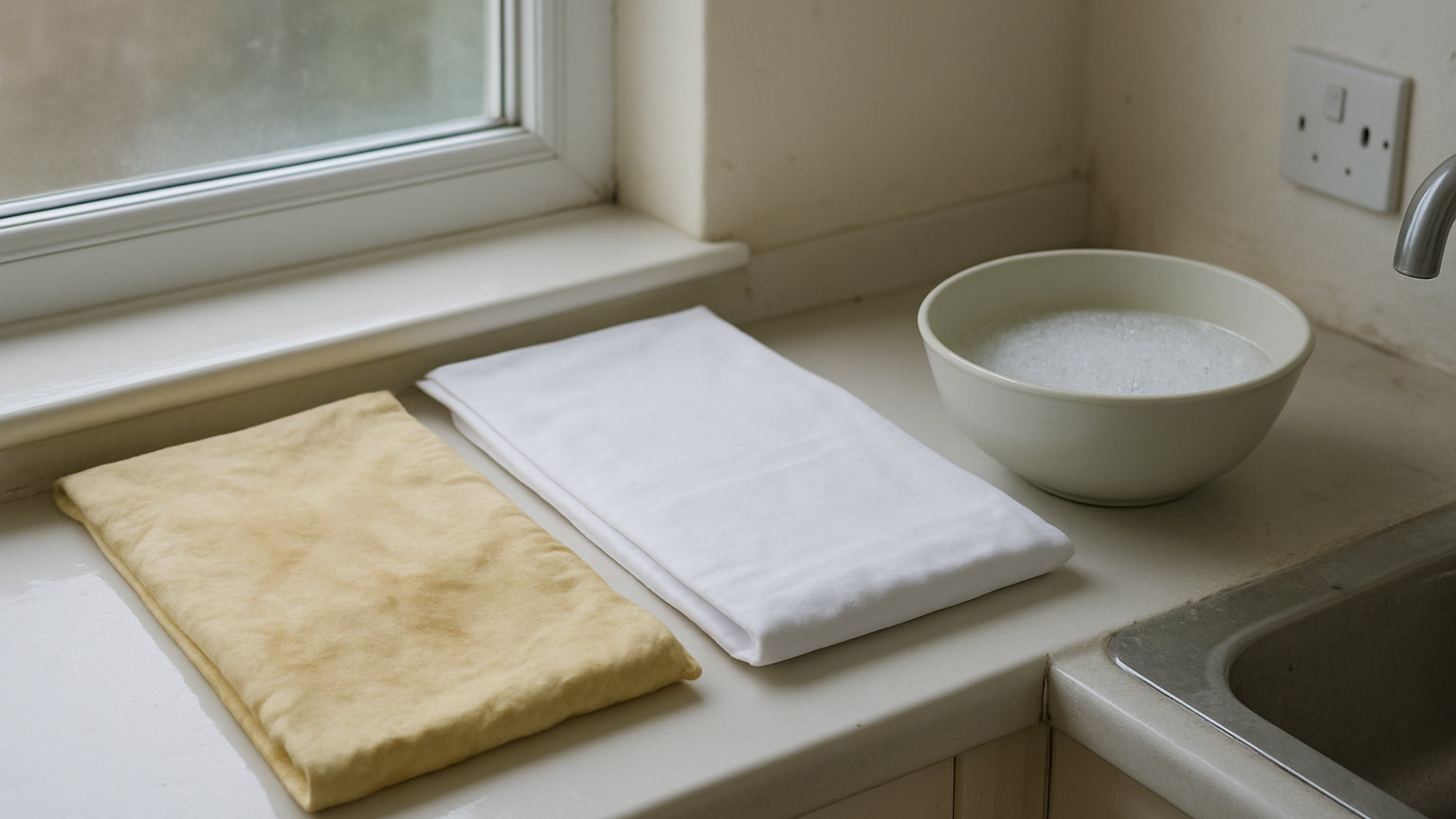
Pillowcases yellow faster than anything else in a household, and the reason is straightforward. They are in contact with a face for eight hours a night, absorbing sweat, natural skin oils, hair product, moisturiser and saliva. Those oils oxidise in the fabric over time and turn yellow, concentrated in the middle where the head rests.
Why does washing normally not fix it?
Because a 30 or 40 degree wash with a liquid detergent does not fully remove oils that have penetrated the fibres, and it does nothing to reverse oxidation that has already happened. The pillowcase comes out clean and still yellow, which is why people conclude it is stained beyond help.
What is needed is an oxidising agent and time, not a stronger wash.
What is the method that works?
- Fill a bucket, bowl or bath with water as warm as the fabric allows, ideally around 50 to 60 degrees for cotton.
- Add a generous dose of oxygen bleach or a laundry booster and stir until fully dissolved.
- Submerge the pillowcases completely, pushing them under so nothing floats above the waterline.
- Leave them for at least four hours, and overnight for heavy yellowing.
- Wash at 60 degrees with a powder detergent at the correct dose.
- Dry outdoors in sunlight if the weather allows.
- Repeat once if the improvement is partial.
Two rounds of this will restore most cotton pillowcases that have yellowed gradually. The soak does the majority of the work, and shortening it is the main reason attempts fail.
Why does sunlight matter so much?
Ultraviolet light breaks down the compounds responsible for yellowing directly, and it is particularly effective on oil based discolouration. It also costs nothing.
Hang the pillowcases out while still wet rather than finishing them indoors first, since the effect is stronger on damp fabric. A full day in summer sun makes a visible difference, and several days spread over a week is better still for stubborn cases.
What about bicarbonate of soda and vinegar?
Both help modestly and neither does the main job. Bicarbonate of soda softens the water and helps the detergent work more effectively, and it can be added to the soak. White vinegar in the rinse helps remove detergent residue and softens the fabric.
Neither oxidises the yellowing, so neither will whiten a pillowcase on its own.
Should you use chlorine bleach?
It is worth avoiding here specifically. Chlorine bleach reacts with the proteins in sweat and skin oils to form yellow compounds, so applied to an already yellowed pillowcase it frequently makes the discolouration darker and sets it permanently.
It also weakens cotton, which matters on bedding that is washed every week.
How do you prevent it recurring?
- Use a pillow protector under the pillowcase, which takes the oils and can be washed hot.
- Wash pillowcases weekly, or twice a week if you use hair products or have oily skin.
- Wash at 60 degrees with a powder detergent rather than 30 with a liquid.
- Let hair products, moisturiser and sun cream dry fully before going to bed.
- Dry hair before sleeping, since damp hair keeps the fabric wet all night.
- Rotate several sets so no single pillowcase takes all the wear.
What about the pillow itself?
A yellowed pillowcase usually means a yellowed pillow underneath, for exactly the same reason. Pillows should be washed two to four times a year where the filling allows, and replaced when they no longer spring back after being folded in half.
A pillow protector is the single most effective preventative for both, and it costs very little.
Does the same method work on sheets?
Yes, with one practical difference: a double or king sheet needs a bath rather than a bucket to be fully submerged, and any part left above the waterline will come out visibly different from the rest. Fill the bath, dissolve the powder completely before the sheet goes in, and weigh the fabric down if it floats. The soaking time and the sunlight drying are identical.