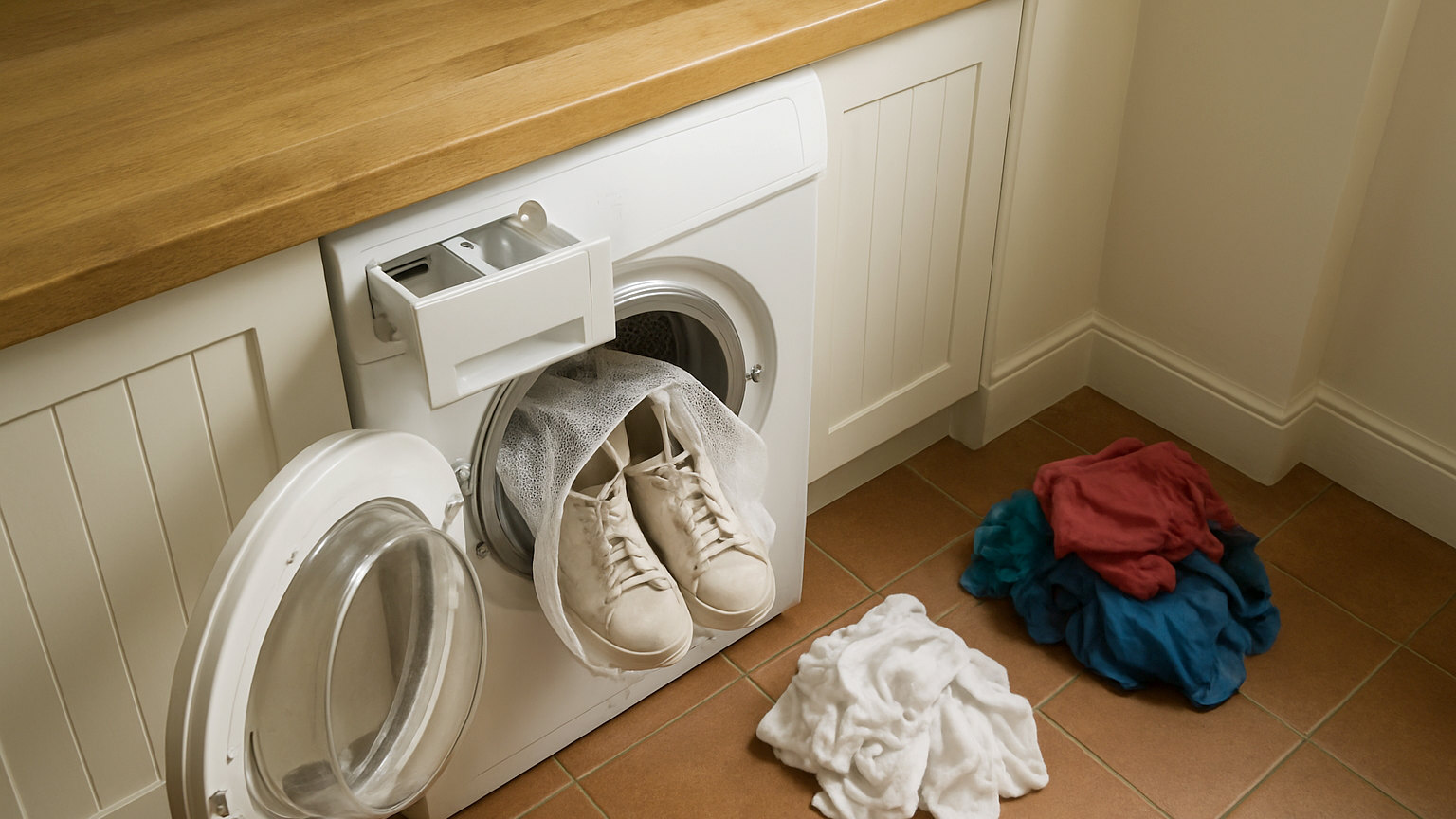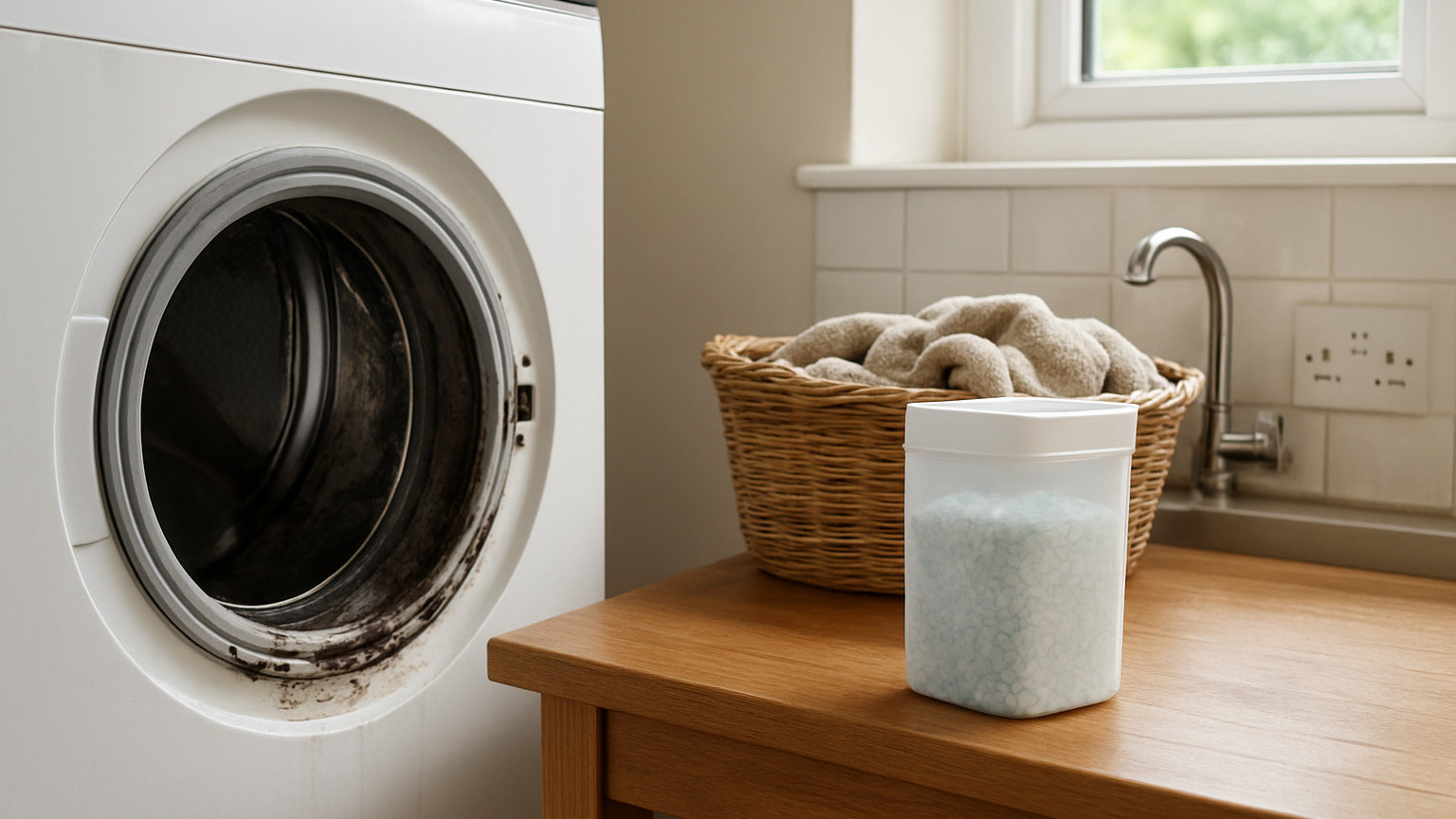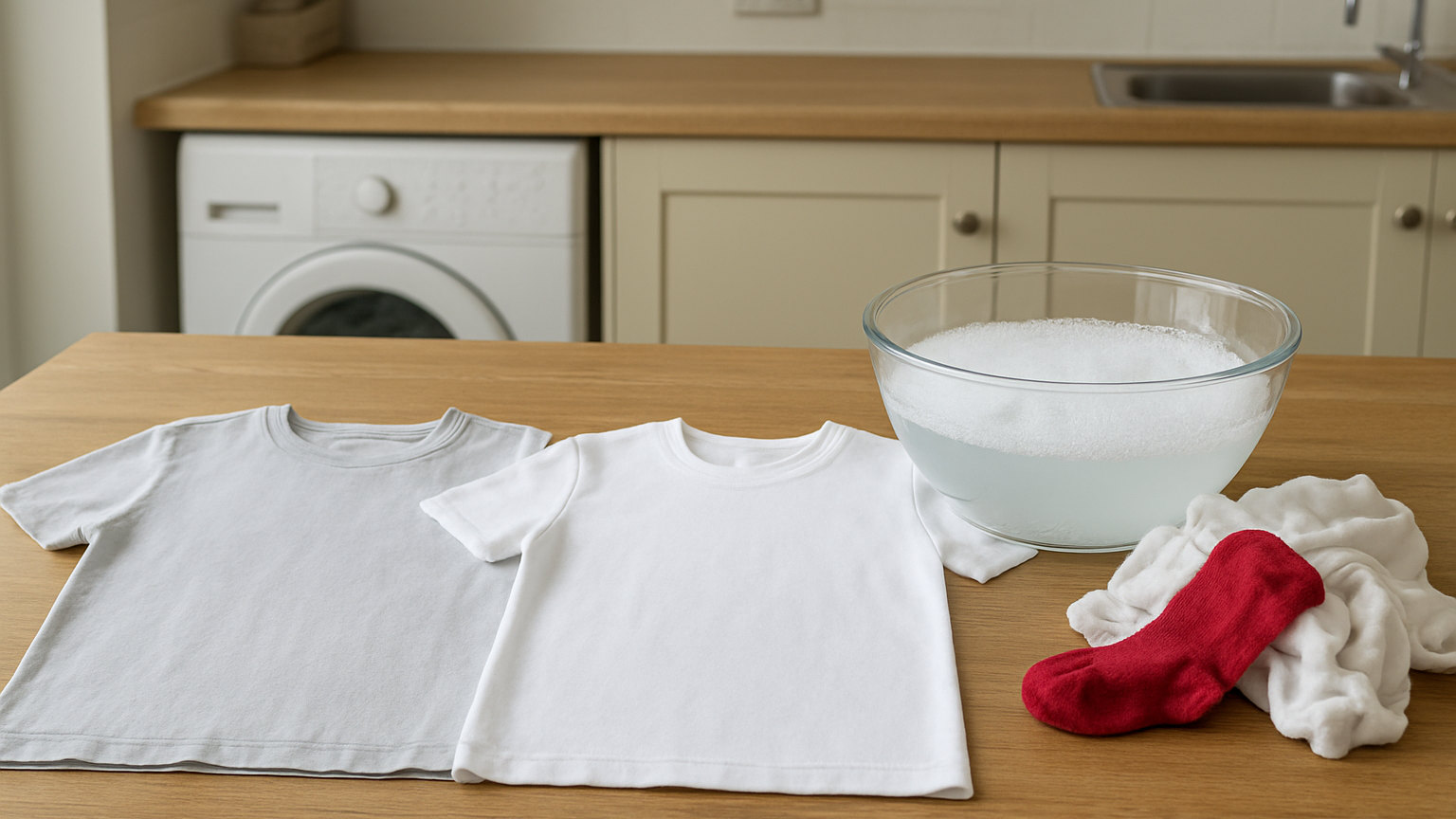
White cotton dulls for two reasons: soil that is redeposited from the wash water rather than removed, and dye picked up from other garments. Almost everything that keeps whites white comes down to preventing one or the other, and prevention is far easier than recovery once a shirt has gone grey.
What is the single most useful change?
Using a powder detergent rather than a liquid for white cottons. Powders contain oxygen bleach, which liquids generally do not because it is unstable in a liquid formulation. That bleach is what removes the everyday staining from tea, coffee, fruit, sweat and body oils that otherwise accumulates and greys the fabric.
A liquid detergent cleans well and does nothing to reverse the gradual dulling, which is why whites washed in liquid look progressively duller over a year even though they are perfectly clean.
What else matters?
- Wash whites on their own. Not with pale colours, not with a single grey sock. Dye transfer is cumulative and invisible per wash.
- Do not overload the drum. A packed machine cannot rinse properly, and soil suspended in the water settles back onto the fabric.
- Use the right detergent dose. Too little leaves soil in suspension to redeposit; too much leaves residue that dulls the fabric.
- Wash at a high enough temperature. Sixty degrees for towels, bedding and underwear; 40 for most white cotton clothing.
- Deal with marks before washing, since a stain that survives a cycle is set by the heat.
- Dry whites in sunlight whenever the weather allows.
Does sunlight actually bleach?
Genuinely, and it is free. Ultraviolet light breaks down many of the compounds that discolour cotton, and it is particularly effective on the yellowing caused by sweat and body oils. A white sheet dried in full sun comes in visibly brighter than the same sheet dried indoors.
It works best on damp fabric, so hang whites out while still wet rather than finishing them indoors first. The one caution is that sunlight is hard on elastic, so bring items with elasticated waistbands in as soon as they are dry.
What about adding something to the wash?
An oxygen based laundry booster is the most useful addition, particularly if you prefer liquid detergent. It is the same active ingredient as in powder, added separately, and it is far gentler than chlorine bleach.
Bicarbonate of soda and white vinegar both help modestly. Bicarbonate softens the water slightly and helps detergent work; vinegar in the conditioner compartment helps rinse residue out. Neither whitens by itself, and neither replaces the bleaching action of an oxygen booster.
Should you use chlorine bleach?
Sparingly and rarely, and never on anything containing elastane, wool, silk or a synthetic blend. Chlorine bleach weakens cotton fibres with repeated use and reacts with body oils and some detergents to produce yellowing, which is why bleached whites often end up yellower rather than whiter over time.
Oxygen bleach achieves nearly the same result more slowly and without the damage, which makes it the better default.
How often should whites be washed?
Before they look dirty. White cotton that is worn repeatedly accumulates body oils in the collar, cuffs and underarms, and those oils oxidise and yellow over time. A white shirt worn twice before washing will yellow faster than one washed after each wear, and the yellowing is difficult to remove once set.
How should they be stored?
Clean, completely dry, and away from light. Storing a white garment with invisible body oils in it is how a shirt comes out of a wardrobe in spring with yellow underarm marks that were not there in autumn. Cardboard and some plastic storage boxes also cause yellowing over months, so use cotton bags or acid free tissue for anything being put away long term.
How often should the whites load be run?
Weekly in most households, which is often enough to keep a proper white load full without items sitting in a basket for a fortnight. Damp or heavily soiled whites should not wait that long, since anything left in a laundry basket while still damp will develop marks that are far harder to remove than fresh soil. A separate small basket for whites makes the weekly load easy to assemble without sorting the whole pile.