Swimwear has a hard life. Chlorine oxidises the elastane that gives it stretch, salt water leaves crystals in the fibres, sun cream and body oils break down the fabric, and ultraviolet light degrades both the dye and the elastic. Most of that damage is preventable with one habit: rinsing immediately after every use.
Why does the immediate rinse matter so much?
Because the damage happens while the chemicals sit in the fabric, not during the swim itself. Chlorine continues to react with the elastane for as long as it remains, and a costume rolled into a bag wet and left for a few hours takes far more damage than one rinsed straight away.
Rinse in cool fresh water as soon as you get out, before the costume has a chance to dry. A poolside shower or a tap is enough, and it makes more difference than any washing routine afterwards.
How should swimwear be washed?
- Rinse thoroughly in cool water immediately after use.
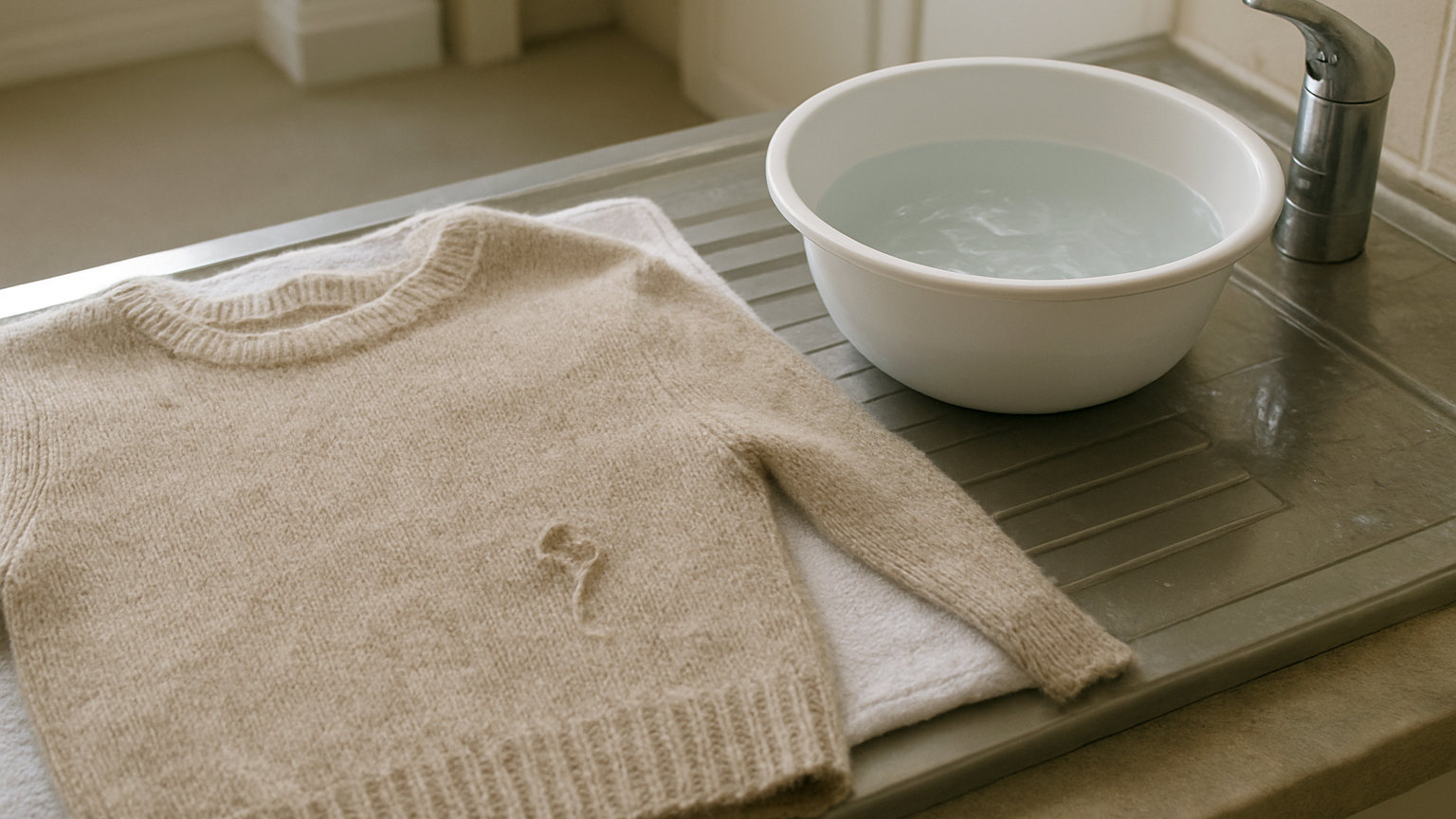
- Fill a basin with cool water and a very small amount of mild or delicates detergent.
- Submerge the costume and squeeze the water gently through the fabric for a minute or two.
- Leave it to soak for no more than half an hour.
- Rinse until the water runs clear and no suds remain.
- Press the water out gently and roll in a towel.
Never wring it. Twisting breaks elastane filaments and leaves permanent creases in the fabric.
Can it go in the washing machine?
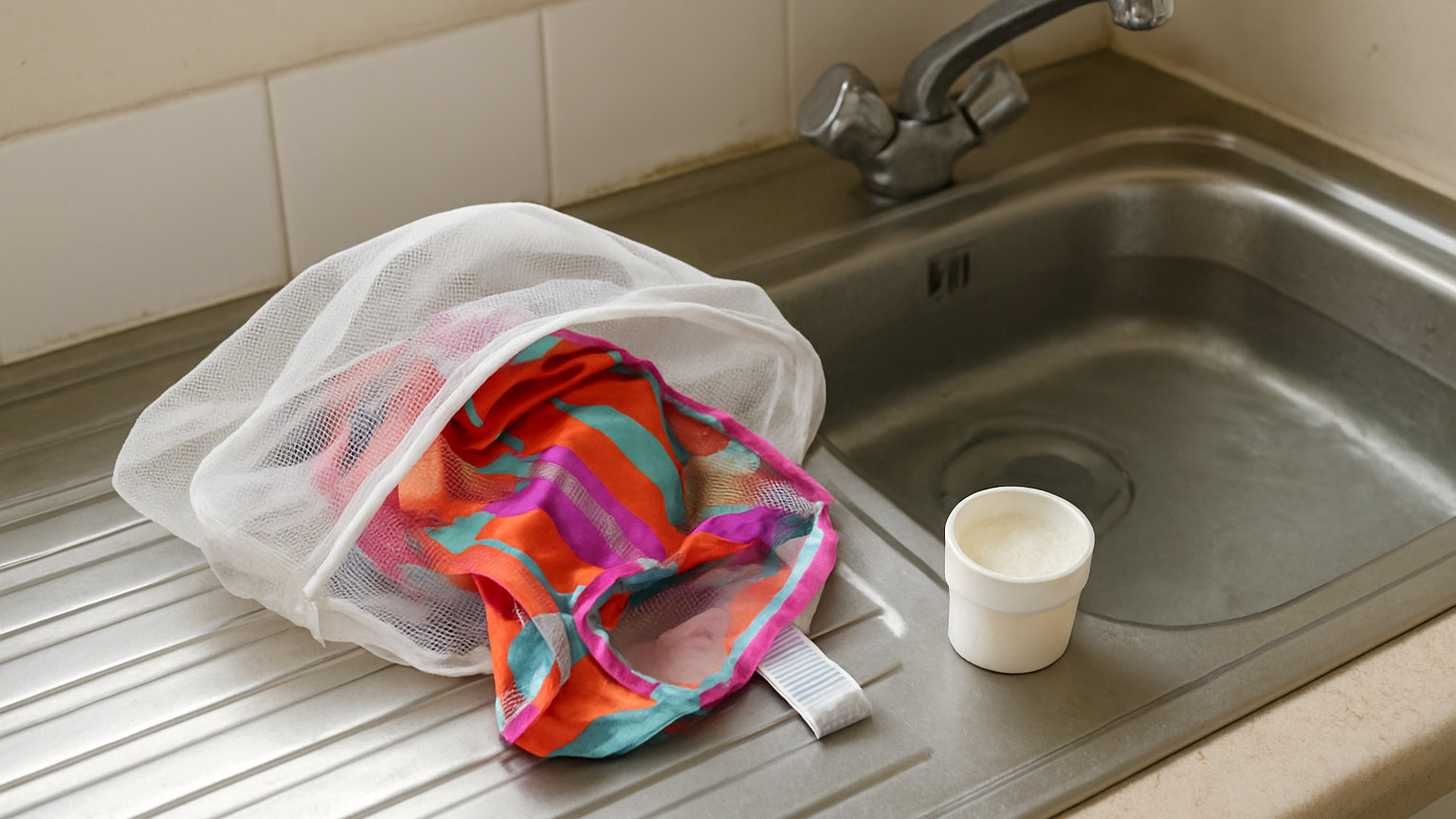
Occasionally, in a mesh bag on a cool delicates cycle with a low spin, and it is not ideal. The agitation and the spin both stress the elastic, and the machine cannot be gentler than hands can. For an item that costs a reasonable amount and is worn a handful of times a year, hand washing is a better use of three minutes.
Never tumble dry swimwear. Heat destroys elastane faster than anything else.
How should it be dried?
Flat, in the shade, away from direct sunlight and heat. Reshape it by hand while damp. Do not hang it by the straps, which stretches them, and do not drape it over a radiator or a hot poolside surface.
Sunlight fades the dye and degrades the elastic, so drying a costume in full sun by the pool every day is a reliable way to ruin it over a fortnight.
What does sun cream do to it?
A great deal, and it is the most underestimated factor. Oils and the chemical filters in sun cream break down elastane and can permanently stain light coloured fabric, particularly with products containing avobenzone or high levels of zinc.
Let sun cream absorb fully before dressing, and rinse the costume promptly afterwards. Yellow or orange marks that appear on white swimwear are usually sun cream rather than dirt, and they are difficult to remove once set.
What about chlorine resistant fabric?
Costumes made from polyester or a polyester and PBT blend rather than nylon and elastane hold up far better in chlorinated water and are the sensible choice for regular swimming. They are stiffer and less soft against the skin, which is the trade.
For a costume worn twice a year on holiday, ordinary fabric is fine provided it is rinsed.
How should it be stored?
Completely dry, folded flat, out of direct light. Never store swimwear damp, since it will develop mildew and a smell that does not wash out. Do not fold it against a sharp crease for long periods, which weakens the elastic along the fold line.
How long should a costume last?
A season or two of regular pool use, and several years of occasional holiday use. The signs it is finished are fabric that has gone transparent when stretched, elastic that no longer recovers, bagging at the seat, and colour that has faded unevenly. None of those can be reversed.
Rotating between two costumes rather than wearing one every day roughly doubles the life of both, since elastane needs time to recover between wearings.