A wooden worktop is a maintained surface rather than a sealed one. Oil soaks into the timber and repels water; as it wears away the wood absorbs instead, and that is when staining, black marks and swelling start. Almost everything about looking after one comes back to oiling it often enough.
How often should it be oiled?
- When new, several coats before and after installation, including the underside and all cut edges.
- First few months, monthly.
- After that, every three to six months over the whole surface.
- Around the sink and hob, more often, since those areas wear fastest.
The test is simple: flick water onto the surface. If it beads, the oil is intact. If it soaks in and darkens the wood, that area needs oiling.
How do you oil it?
- Clean the surface and let it dry completely.
- Sand lightly with fine paper if it feels rough, working with the grain, and wipe off the dust.
- Apply a thin coat of worktop oil with a lint free cloth, following the grain.
- Leave it for the time on the tin, usually fifteen to thirty minutes.
- Wipe off all excess thoroughly, which is the step people skip.
- Leave to cure, and repeat for two or three coats.
Excess oil left on the surface goes sticky and never fully hardens. Thin coats, well wiped, are the whole technique.
Which oil should you use?
A dedicated worktop oil, Danish oil or tung oil. Some are food safe once cured, which matters for a surface used for food preparation.
Avoid vegetable and olive oil, which go rancid and sticky. Mineral oil is food safe and offers less protection than a hardening oil.
Stick to one product, since mixing types can cause adhesion problems.
How do you clean it day to day?
A damp cloth with a little washing up liquid, then dry immediately. Never leave standing water, never flood it, and never use a soaking wet cloth.
Avoid bleach, which bleaches the timber unevenly, and avoid strong detergents which strip the oil.
What causes black marks?
Water reaching bare timber, and in oak specifically, iron reacting with the tannins in the wood. A wet tin, a cast iron pan or a steel wool pad left on oak leaves a black stain that is a chemical reaction rather than dirt.
Oxalic acid, sold as wood bleach, removes these. Sanding them out is the alternative. Either way, re-oil the area afterwards.
How do you deal with stains and marks?
Most stains sand out, which is the great advantage of wood over every other worktop material. Use fine sandpaper, work with the grain, feather the area into the surrounding surface, wipe off the dust and re-oil.
Ring marks and light heat marks come out the same way. Deep burns and heavy scorching may need coarser paper and more blending.
What about the area around the sink?
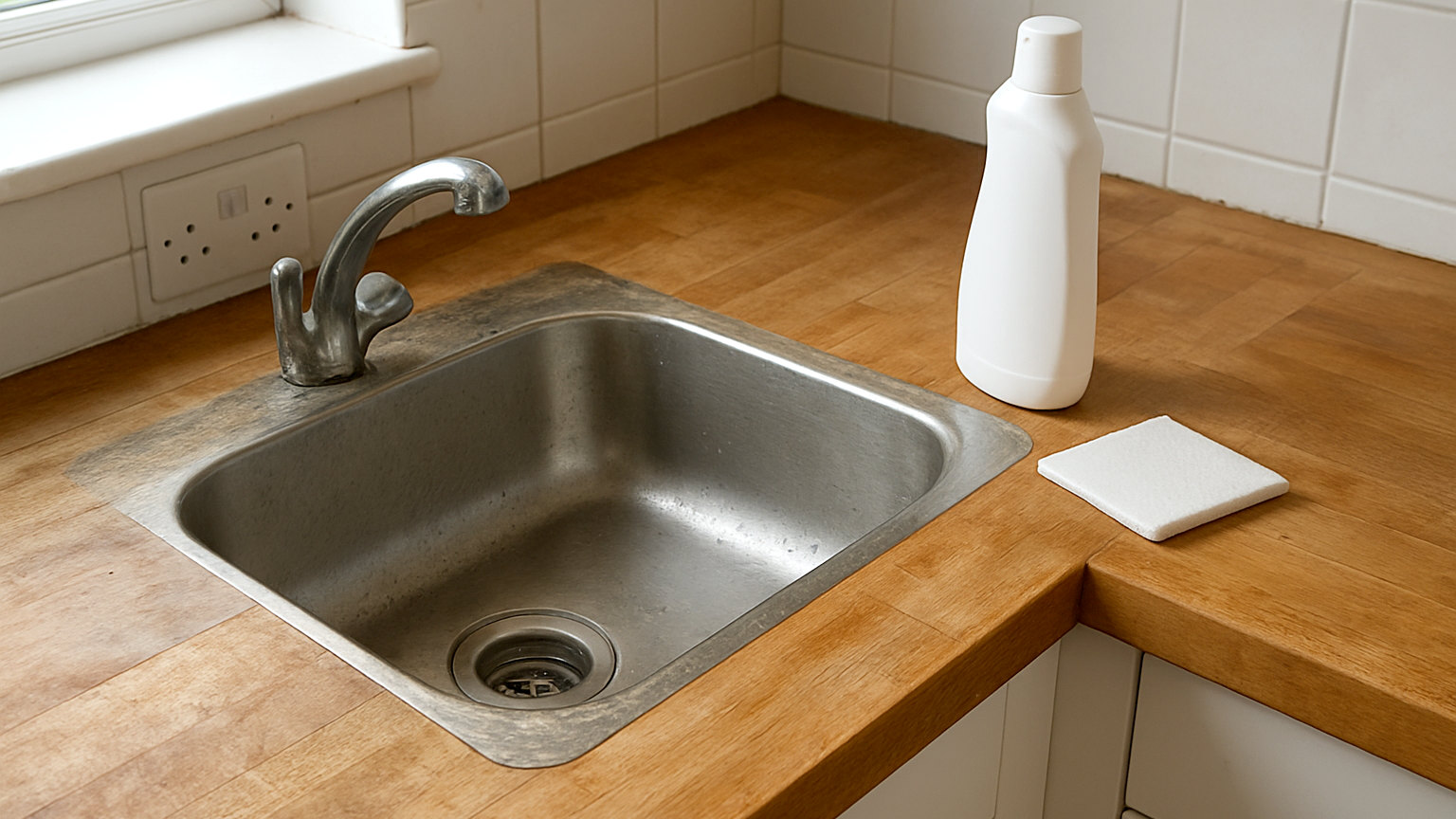
The critical zone. Water sits there constantly and the oil wears fastest. Oil it every month or two regardless of the rest of the worktop, dry it after every use, and check the sealant where the sink meets the wood.
Most failed wooden worktops fail at the sink, and it is entirely preventable.
What should never be done?
Cutting directly on it, which scars the surface and breaks the oil film. Placing hot pans on it. Leaving a wet dishcloth or a draining rack standing on it. And letting a leaking tap drip onto the same spot for weeks.
Is it a lot of work?
Less than its reputation suggests. Oiling a whole worktop takes about twenty minutes of work plus drying time, three or four times a year, and the area around the sink perhaps ten minutes more often than that. Against that, it is the only worktop material where almost any damage can be sanded out and made good again, which no other surface in a kitchen offers.