Laminate is a thin decorative layer bonded to a chipboard or MDF core. The surface is tough, easy to clean and resistant to most things. The core is not, and any water that reaches it through a joint, a cut edge or a failed seal causes swelling that is permanent.
What is the daily routine?
- Wipe with a cloth and warm soapy water.
- Rinse with a clean damp cloth to remove detergent film.
- Dry, particularly around the sink and the hob.
Drying matters more than cleaning here, because standing water is the thing that causes real damage.
Where is the vulnerability?
- The cut edge around the sink, sealed at installation and easily compromised.
- Joints between lengths, particularly at a corner.
- The back edge where the worktop meets the wall or an upstand.
- Around tap holes on the top surface.
- Anywhere the laminate has chipped or lifted.
Swelling shows as a raised, darkened area that feels soft. It cannot be repaired and the only fix is replacing that length of worktop, which is why it is worth checking the seals annually.
How do you protect the seals?
Wipe water away rather than letting it sit. Check the sealant around the sink and the upstand each year and renew it if there is any gap. Where a seal has failed, clean and dry the area thoroughly before resealing with a clear silicone.
A leaking tap or a dripping washing up bowl left on the worktop will find a joint eventually.
What removes stains?
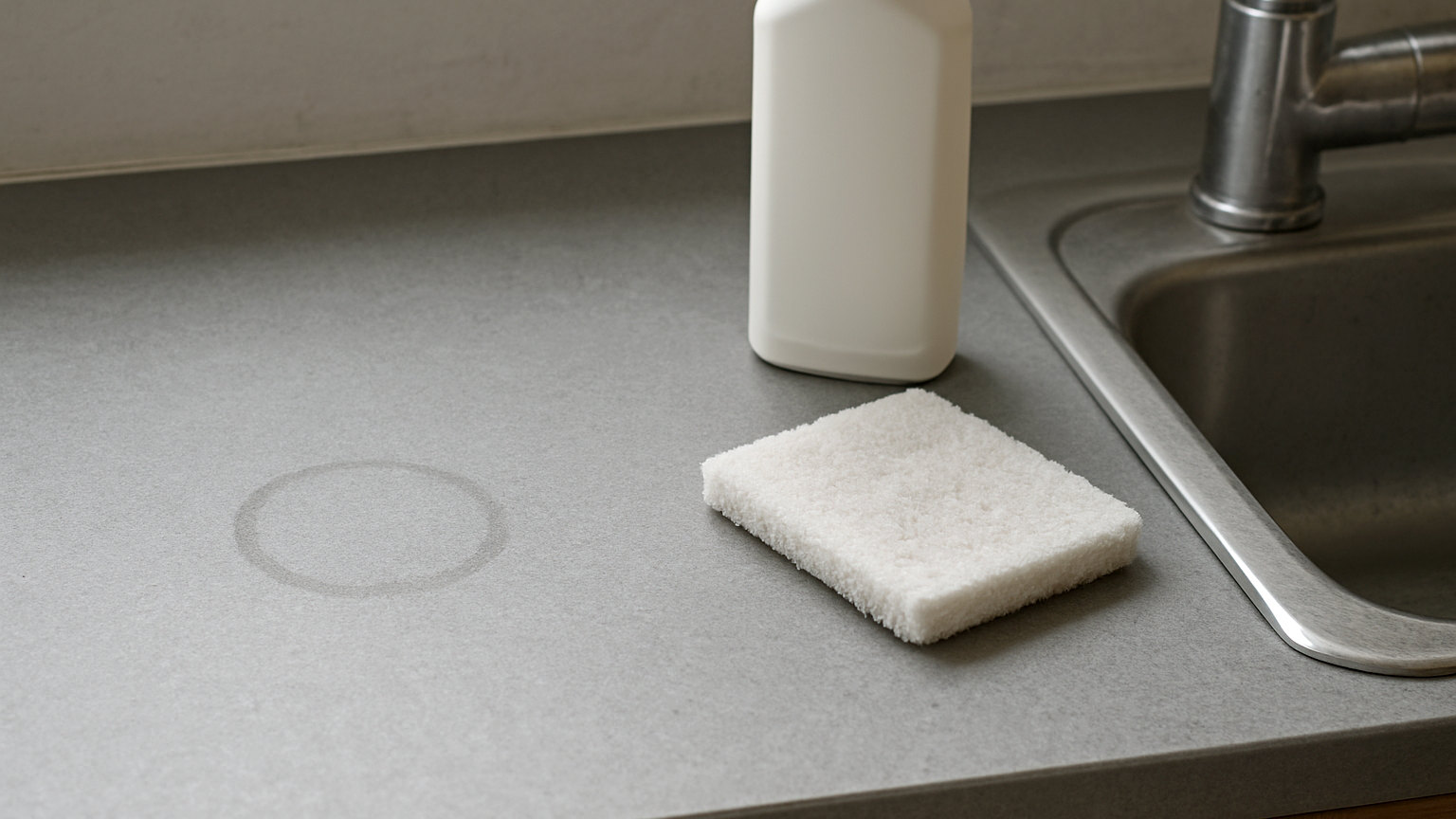
Most marks lift with washing up liquid and a soft cloth. For anything stubborn, a cream cleaner applied with a damp cloth, worked gently and rinsed off.
A paste of bicarbonate of soda works on tea, coffee and turmeric marks, left for fifteen minutes before wiping.
On a light or white laminate, a melamine sponge used very lightly clears scuffs, and it is mildly abrasive and can dull a gloss finish, so test in a corner.
What causes heat marks?
Placing a hot pan directly on the surface. Laminate is typically rated to around 100 to 140 degrees, so anything straight off a hob or out of an oven will scorch, blister or discolour it.
Heat damage is permanent. Always use a trivet or a heat mat, and be aware that a slow cooker or an air fryer left running on a worktop for hours transmits enough heat to mark it.
What should never be used?
Abrasive powders and scouring pads, which scratch and dull the finish irreversibly. Bleach in any strength on coloured laminate, which fades it. Oven cleaner and strong solvents. And a knife directly on the surface, since laminate scratches and the scratch cannot be sanded out.
How do you deal with scratches?
Light scratches on a matt finish can be disguised with a laminate repair paste or a wax filler stick in a matching colour. Deeper ones cannot be repaired properly.
Always use a chopping board. A laminate worktop is a surface layer perhaps a fraction of a millimetre thick, and once it is through there is chipboard underneath.
What about the gloss finish going dull?
High gloss laminate shows every mark and dulls with abrasive cleaning. Once dull it cannot be polished back, so the approach has to be preventative: soft cloths only, no abrasives, and a proprietary laminate or gloss surface cleaner.
What is worth doing annually?
Check every joint and seal, particularly around the sink. Look underneath at the cut edge inside the sink cupboard for any sign of swelling or water staining. Finding it early is the difference between resealing and replacing.
Can damaged laminate be repaired?
Chips and small scratches can be filled with a matching repair paste, which is a cosmetic improvement rather than a restoration. Swelling, burns and lifted laminate cannot be repaired at all. Since worktops are sold in lengths, replacing a single damaged run is usually possible without redoing the whole kitchen.