Worktops are rarely ruined by dirt. Almost all permanent damage comes from four things, each of which is avoidable and each of which cannot be undone once it has happened.
What are the four?
- Heat, from pans, trays and running appliances.
- Standing water, particularly at joints and cut edges.
- Acid, on natural stone and quartz.
- Knives, on anything except a purpose made board.
Why does heat matter so much?
Laminate is typically rated to around 100 to 140 degrees and scorches, blisters or discolours above that. Quartz contains a resin binder that discolours and can crack above roughly 150 degrees. Wood scorches. Even granite, which tolerates heat well, can crack under thermal shock.
Anything straight off a hob or out of an oven needs a trivet. So does a slow cooker, an air fryer or a kettle base left running for hours, which transmits enough heat over time to mark laminate and quartz.
Heat damage is permanent on every worktop material except wood, which can sometimes be sanded.
Why does standing water matter?
Because it finds the weak point. On laminate that is the cut edge around the sink, a joint or a tap hole, and once water reaches the chipboard core it swells irreversibly. On wood it strips the oil and lets staining and black marks develop. On stone it leaves mineral deposits and can penetrate an unsealed area.
A draining rack sitting in a pool of water, a wet dishcloth left on the surface, or a slow drip from a tap will all cause damage over weeks.
Why is acid a problem?
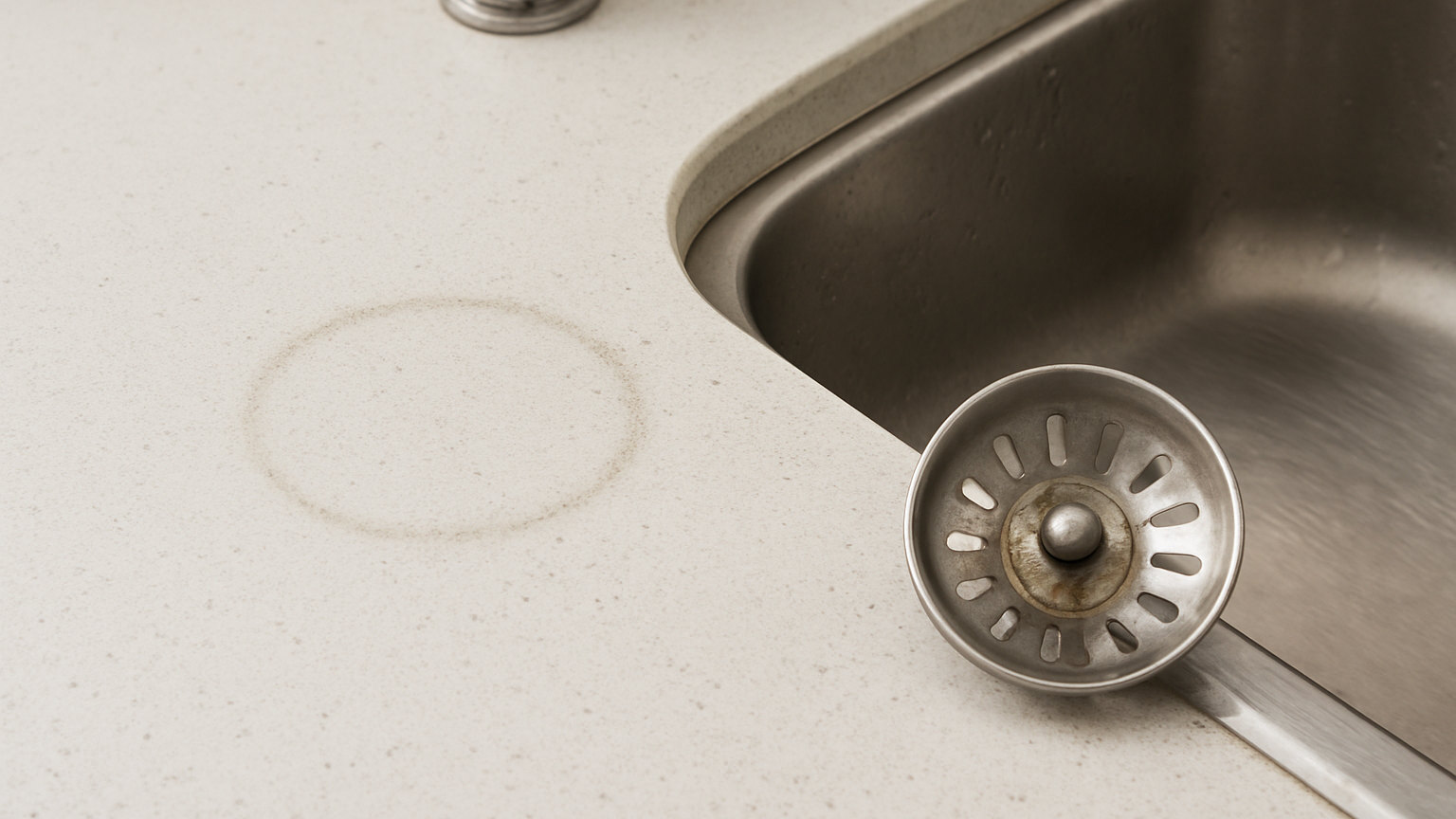
On natural stone it etches, dissolving the polished surface and leaving a dull patch that is physical damage rather than a stain. Marble and limestone etch almost instantly; granite is more resistant but not immune.
On quartz, acid attacks the resin binder and dulls the finish.
The culprits are lemon juice, vinegar, wine, tomato, some fizzy drinks, and a great many general purpose cleaning sprays which are acidic without saying so.
What about knives?
Every worktop material scratches. Laminate has a decorative layer a fraction of a millimetre thick and a cut through it exposes the core. Quartz and granite scratch less readily and will scar the knife instead. Wood marks and can be sanded.
Use a board every time, including for opening packaging with a knife or scissors.
What else causes problems?
- Metal tins and cast iron left standing, which leave rust marks on stone and black marks on oak.
- Nail varnish remover and solvents, which damage most surfaces.
- Bleach, which fades laminate and discolours quartz.
- Abrasive cleaners, which dull every polished finish.
- Drain cleaner, splashed while being poured.
- Hair dye and fake tan, which stain porous surfaces permanently.
What is worth having to hand?
A couple of trivets kept within reach of the hob rather than in a drawer, since one that has to be fetched will not be used. A chopping board out on the surface. A cloth for drying around the sink.
The barrier to good habits here is almost always convenience.
Which worktop is most tolerant?
Granite for heat, quartz for staining and general durability, wood for repairability since almost anything sands out, and laminate for cost. None of them is immune to all four, which is why the precautions matter regardless of what you have.
Does damage affect resale?
A burn or a swollen edge is one of the first things a buyer notices in a kitchen, and it reads as neglect even on an otherwise well kept surface. Replacing a single damaged worktop run is straightforward and far cheaper than the impression a scorched one gives, which is worth weighing before a sale.
What about the overhang and the front edge?
The front edge takes knocks, spills running off and the most handling, and on laminate it is the first place the surface chips. Wiping along the edge rather than across it, and dealing with drips rather than letting them run down the front of a cupboard, keeps both the worktop and the units below in better condition.