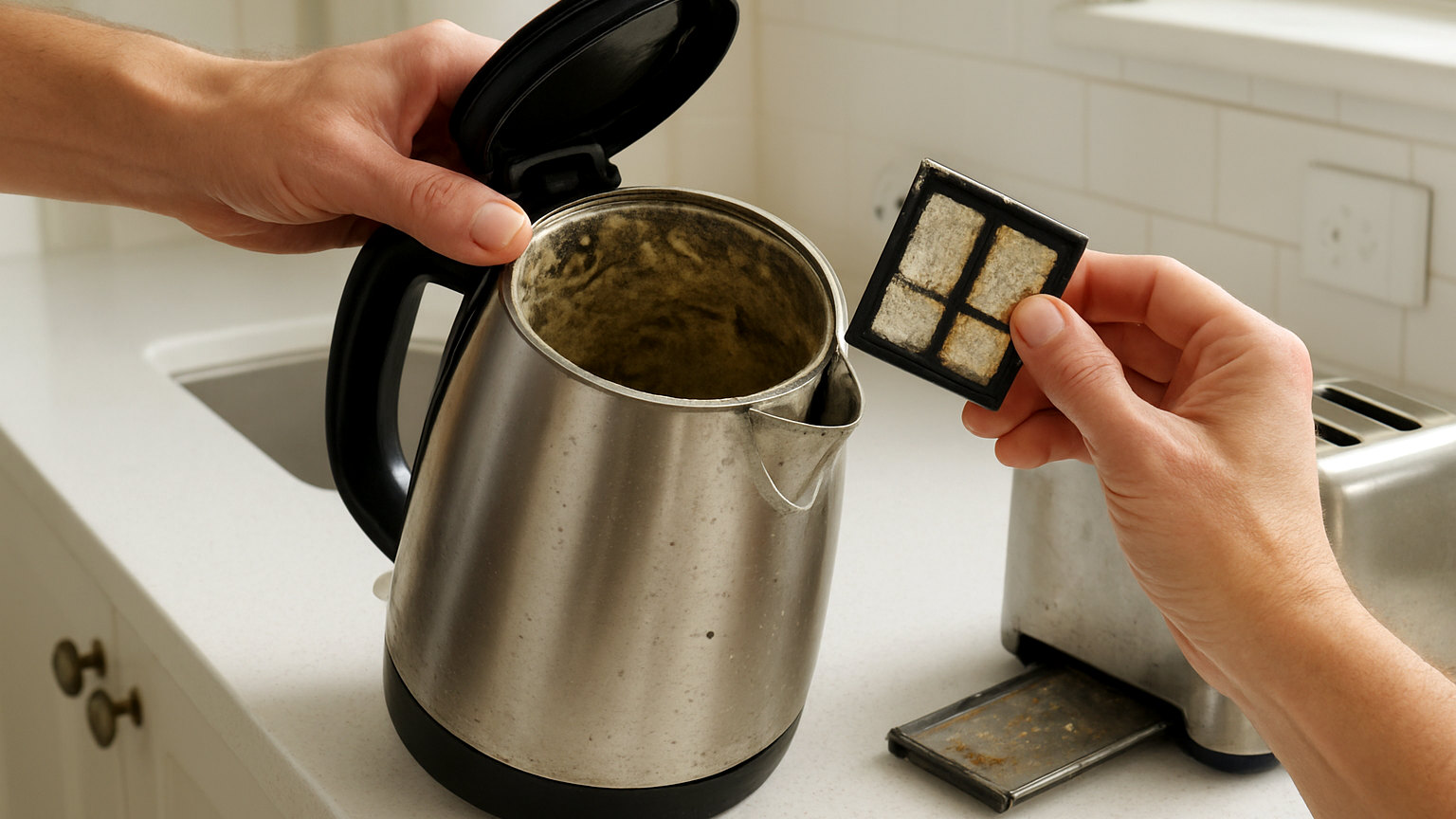
Limescale in a kettle forms on the heating element, where it insulates the metal. A scaled kettle takes longer to boil, uses more electricity, runs louder and eventually fails. It also sheds flakes into the water, which is where the white bits floating in a cup of tea come from.
What is the citric acid method?
- Fill the kettle to about half with water.
- Add one to two tablespoons of citric acid powder.
- Boil, then leave to stand for twenty to thirty minutes.
- Pour away and rinse thoroughly.
- Boil a full kettle of fresh water and discard it.
- Repeat that rinse boil once more before making a drink.
Citric acid is what most branded descalers contain, and bought as a plain powder it costs a fraction as much. It also has almost no smell, which is its main advantage over vinegar.
What about white vinegar?
Equally effective and considerably smellier. Fill the kettle with equal parts water and white vinegar, boil, leave for an hour, then rinse and boil through twice with clean water.
The smell lingers longer than people expect, so an extra rinse boil is worth doing. Lemon juice works on the same principle and is weaker.
How often?
It depends entirely on your water. In a very hard water area, monthly. In a moderately hard one, every two to three months. In a soft water area, rarely or never.
Your water supplier publishes the hardness for your postcode. The practical test is simply looking inside: visible white deposit on the element or the base means it is due.
Are the white flakes harmful?
No. Limescale is calcium carbonate, the same mineral found in chalk and in many mineral waters, and swallowing small amounts is not a health concern. It is unpleasant in a cup of tea and it affects the taste, which is reason enough to deal with it.
What about kettles with a hidden element?
Most modern kettles have a flat concealed element, which scales just as readily and is harder to inspect. Descale on a schedule rather than waiting for visible deposit, since by the time flakes appear in the water there is a substantial layer underneath.
The base plate can be wiped with a cloth dampened in vinegar once the kettle is empty and cool.
What about the filter?
Most kettles have a mesh filter in the spout that catches flakes. It usually pulls out and should be rinsed and brushed at the same time as descaling, or soaked in the descaling solution.
A blocked filter makes a kettle pour badly and is easily overlooked.
Can you prevent it?
- Empty the kettle after use rather than leaving water standing, which is when scale deposits.
- Use filtered water, which reduces the mineral content and slows the build up.
- A stainless steel descaling ball in the kettle, which collects scale onto itself and can be rinsed out.
- Boil only what you need, which reduces both scale and electricity.
What should you never do?
Never use an abrasive or a scourer inside a kettle, which damages the element coating and makes future scaling worse. Never immerse the base or the electrical connection in water. And never use a strong acid descaler intended for industrial use.
If scale has hardened into a thick layer, repeat the citric acid treatment two or three times rather than scraping at it.
What about the outside?
A damp cloth and a little washing up liquid. Stainless steel benefits from a wipe in the direction of the grain and buffing dry. Keep all liquid away from the base connection and the switch.
Do glass kettles need different treatment?
The same descaling method, and the scale shows far more clearly on glass, which is either helpful or irritating depending on your view. Glass also shows water marks on the outside, which come off with a little white vinegar on a cloth. Avoid abrasives entirely, since scratched glass looks permanently cloudy.
What about a kettle that has been left unused?
Empty it, descale it, and run two or three full boils through before using the water. Water standing in a kettle for weeks goes stale and can pick up a metallic taste from the element, and the first boil after a long gap is worth discarding regardless.