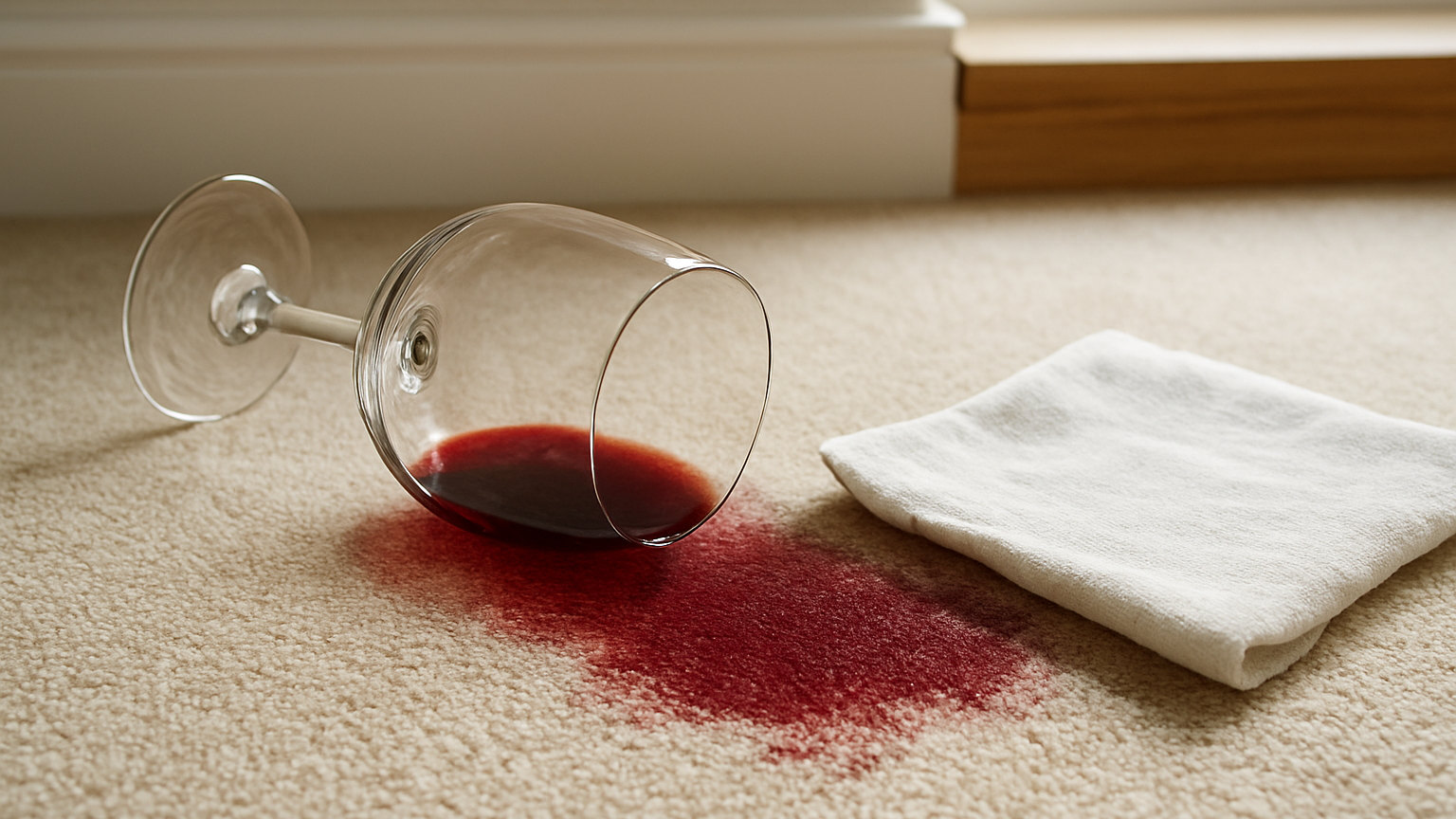
Tannins are plant compounds found in tea, coffee, red wine, fruit juice and many other things. They are moderately soluble when fresh, which is why a prompt cold rinse deals with most tannin spills. Left in contact with air they oxidise, and the oxidised compounds are darker, less soluble and bonded more tightly to the fibre.
What is actually happening?
Oxygen reacts with the tannin molecules and links them together into larger structures. It is the same chemistry that turns a cut apple brown and that darkens tea left standing in a cup. Those larger molecules cannot be dissolved out, so rinsing stops working and an oxidising agent is needed to break them apart instead.
Heat accelerates the process considerably, which is why a hot wash makes an untreated tannin stain worse rather than better.
Why do stains appear that were never there?
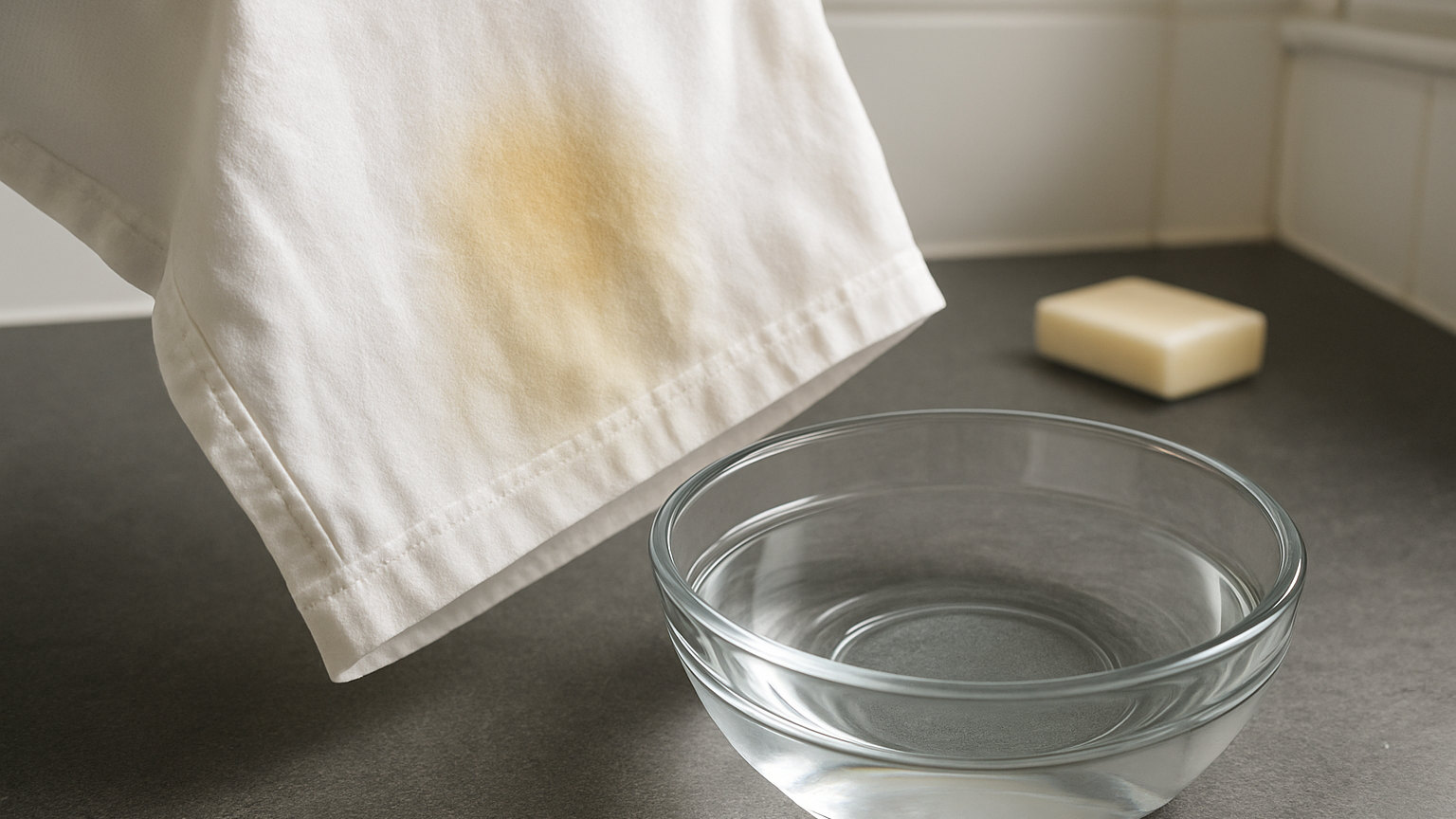
This is the most disconcerting version of the problem. A tablecloth put away clean comes out months later with clear brown patches in places nobody remembers spilling anything. What happened is that a colourless sugar or tannin residue was left in the fabric, and it oxidised slowly in the dark of a cupboard until it became visible.
White wine, apple juice, clear spirits and sugar syrup all do this. The stain was always there; it simply had no colour at the time.
How fast does it happen?
Noticeably within a few hours, substantially within a day, and it continues for months. A tea mark treated within ten minutes usually disappears entirely. The same mark found the next morning needs a soak. After a week it needs a long soak and may leave a shadow.
That is the reason the first response matters so much with this family of stains.
What reverses oxidation?
Another oxidising agent, which sounds contradictory and is not. Oxygen bleach releases hydrogen peroxide, which oxidises the coloured compounds one step further, past the point where they absorb visible light. The molecule is broken rather than removed, and the mark becomes colourless.
This is why oxygen bleach is the standard treatment for every tannin stain and why detergent alone rarely finishes the job.
How should an oxidised stain be treated?
- Rehydrate by soaking the item in cold water for thirty minutes.
- Dissolve a generous dose of oxygen bleach in water as warm as the fabric allows.
- Submerge the whole item and leave it overnight.
- Wash at the highest temperature the label permits.
- Dry in sunlight while still damp, which continues the process.
- Repeat if the improvement is partial rather than complete.
Why does sunlight help?
Ultraviolet light breaks down many coloured organic compounds directly, including oxidised tannins. It is slower than a chemical treatment and completely free, and on damp white cotton the effect over a full day is often striking.
Alternating soaking and sun drying over several days works better on an old stain than any single treatment.
How do you prevent the invisible version?
Never store fabric with an untreated spill in it, even one you cannot see. Anything that has been used at a table should be washed before it goes away, and anything with a known spill should be soaked rather than simply washed.
For table linen, an oxygen bleach soak before storage costs an evening and prevents the brown patches that otherwise appear at the next occasion.
Which stains behave this way?
Tea, coffee, red and white wine, fruit juice, beer and cider, most fruit, and anything containing sugar. Between them they cover most of what gets spilled at a table, which is why one treatment method handles so much of it.
Do they behave the same on every fabric?
The chemistry is the same and the outcome is not. Cotton and linen release oxidised tannins readily and tolerate the warm oxygen soak that does the work. Polyester holds them more tightly. Wool and silk cannot take the treatment at all, which is why an old tea stain on a silk tie is far more likely to be permanent than the same stain on a cotton shirt.