Red wine on clothing is far more recoverable than red wine on carpet, for one reason: you can rinse a garment. Holding the fabric face down and running cold water through the back pushes the wine out the way it came in rather than driving it deeper, and that single technique deals with most of a fresh spill.
What is the immediate response?
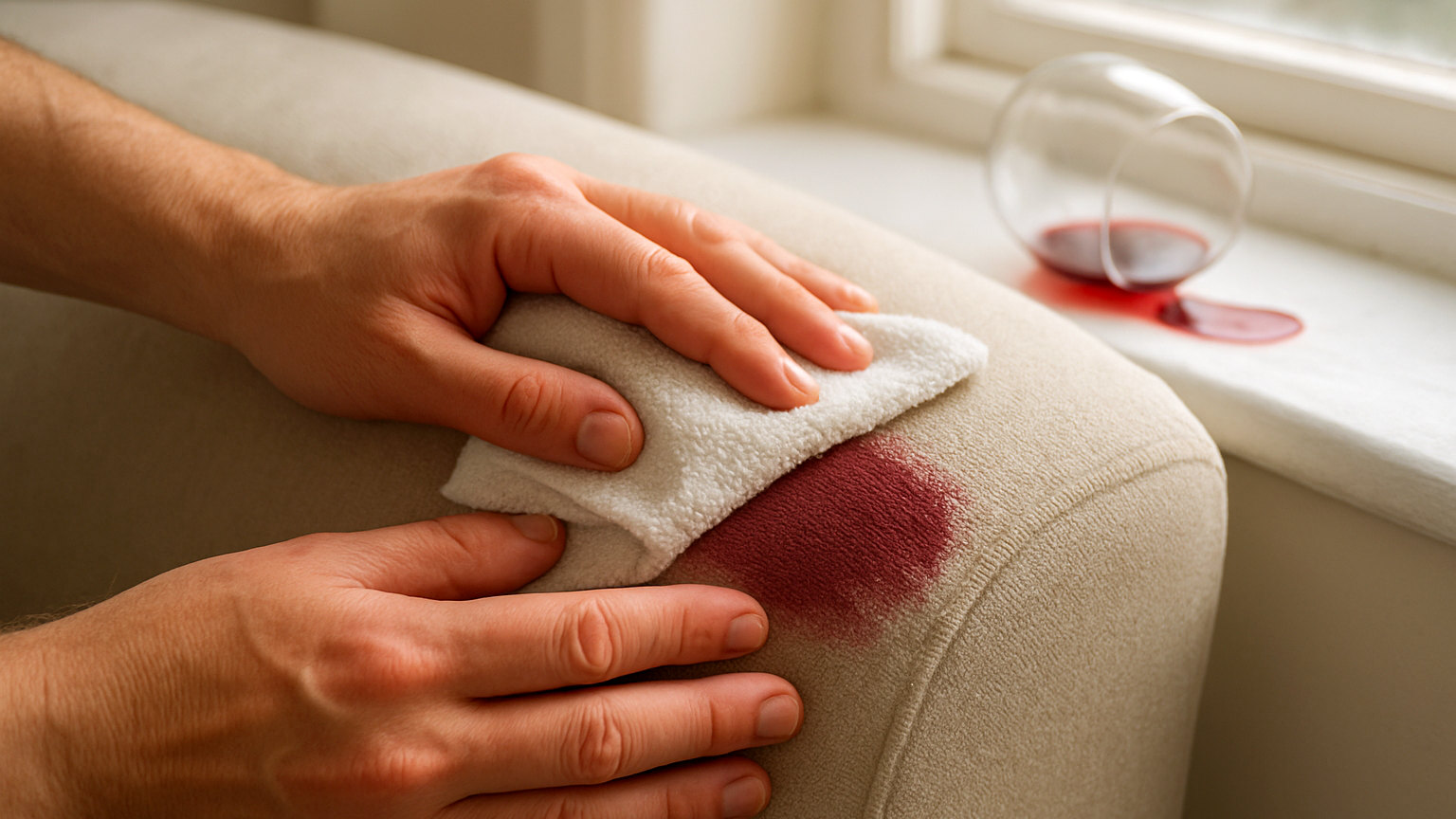
- Blot the area with a clean cloth, pressing rather than rubbing.
- Get the garment off and turn it inside out.
- Hold the stain face down and run cold water through the back of the fabric.
- Keep flushing until the water runs clear, which may take a minute or two.
- Rub a little washing up liquid or detergent into what remains.
- Soak in cold water for at least thirty minutes.
- Wash at the warmest temperature the fabric allows and check before drying.
Why cold water rather than hot?
Because heat darkens tannins and encourages them to bond to the fibre. Wine is not a protein stain, so hot water will not set it in the way it sets blood or egg, but it does make the mark noticeably harder to remove and pushes it towards a permanent brown.
Cold water at every stage until the pigment has gone is the safe approach.
What if you are out and cannot rinse?
Blot with a napkin and keep the area wet with cold water from a glass, which stops the wine drying into the fibre. That is the whole of the useful first aid available at a table.
Resist the suggestions that will be offered. Salt absorbs a little liquid and then has to be removed. White wine dilutes red wine and adds sugar. Neither is better than cold water and a napkin, and both waste the minutes that matter.
What clears the mark that is left?
An oxygen bleach soak. Dissolve a generous dose in water as warm as the fabric allows, submerge the garment fully and leave it for several hours or overnight. Oxygen bleach oxidises the coloured compounds into colourless ones, which is exactly what a wine stain needs, and it is safe on most colours.
Follow with a normal wash and dry in sunlight, which continues the process.
Does hydrogen peroxide work?
Very well on white cotton, and it is the active ingredient oxygen bleach releases. A mixture of one part hydrogen peroxide to two parts washing up liquid, dabbed onto the stain and left for twenty minutes, clears a great deal.
Test it on a hidden seam first. It will lighten some dyes, and it should not be used on wool or silk.
What about white shirts specifically?
White cotton is the easiest case, because every treatment is available. Flush, soak in oxygen bleach overnight, wash at 60 degrees with a powder detergent, and dry in the sun. Even a badly marked white shirt usually comes back completely.
The mistake is putting it straight into a hot wash without the soak, which leaves a faint pink shadow that then becomes permanent in the dryer.
What about wool, silk and delicates?
These are the difficult ones, since oxygen bleach and hot water are both unavailable. Flush with cold water immediately, blot, and use a mild detergent suitable for the fibre. For anything valuable, a professional cleaner is a better bet than an experiment, and telling them it is wine matters.
What if it has already been washed and dried?
Repeated oxygen bleach soaks, several hours at a time over two or three attempts, with sunlight in between. Dried and heat set wine often improves substantially, since the pigment can still be oxidised even once it has bonded.
Expect gradual improvement rather than a single dramatic result, and stop if the fabric shows any sign of weakening.
What about wine on a coat or a jacket?
Blot immediately and check the label before doing anything else. Tailored and lined garments cannot be soaked, since the lining and interlining shrink at a different rate from the shell. Blot, dab with a barely damp cloth, and take it to a cleaner promptly, telling them it is wine so they can pre-treat it.