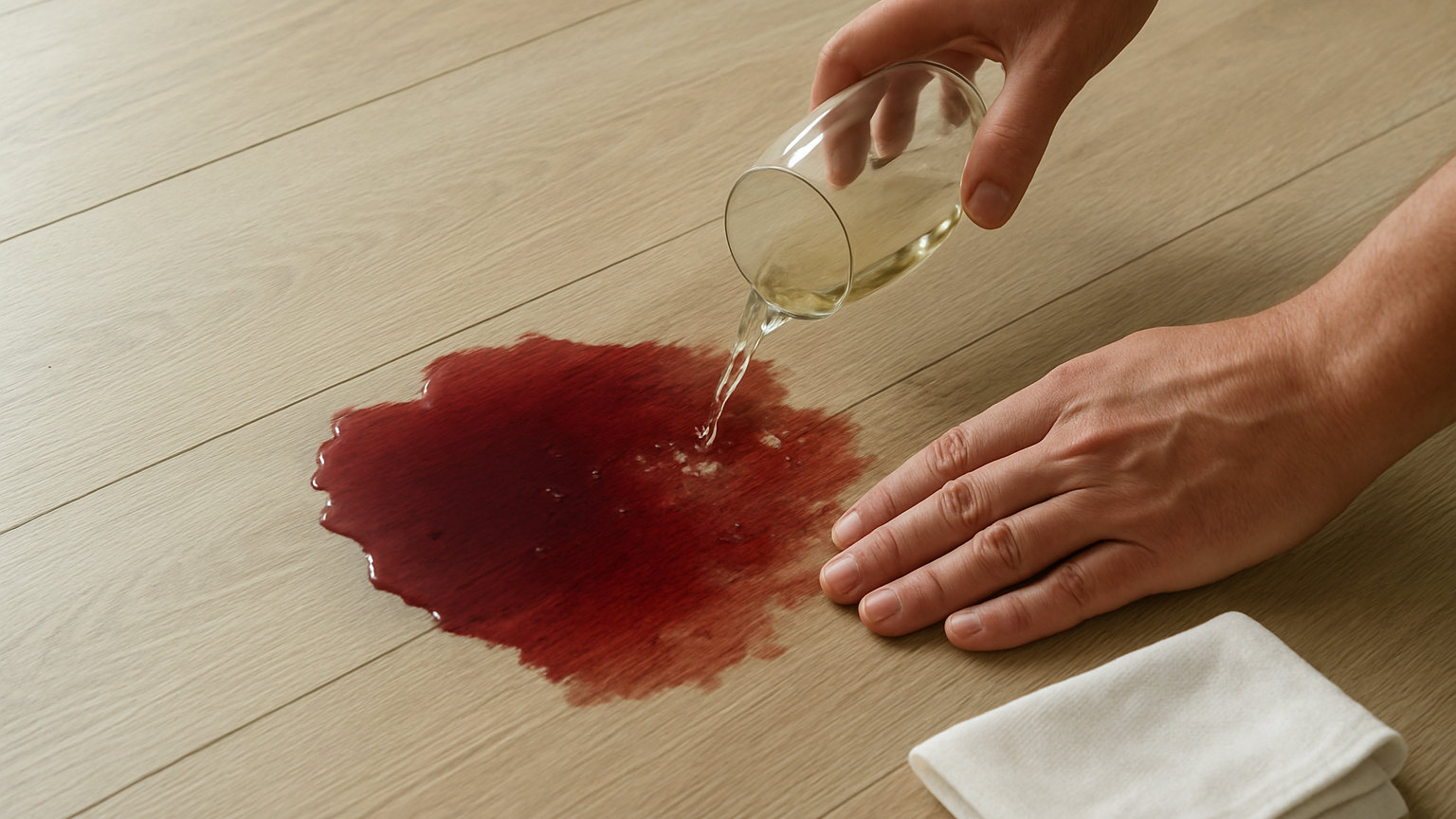
Pouring white wine onto a red wine spill is a widely repeated remedy and it achieves one thing: dilution. Any cold liquid dilutes the pigment and makes it easier to blot out. White wine does that no better than water, and it brings sugar, acid and its own faint colour along with it.
What is the theory behind it?
The usual claim is that something in white wine neutralises the pigment in red. There is no chemistry to support that. Both are wine, both contain acids and both contain phenolic compounds. White wine has far less pigment, and less pigment is not the same as an agent that removes pigment.
The effect people observe is the spill spreading and becoming paler, which looks like improvement and is actually dilution over a larger area.
Why is the sugar a problem?
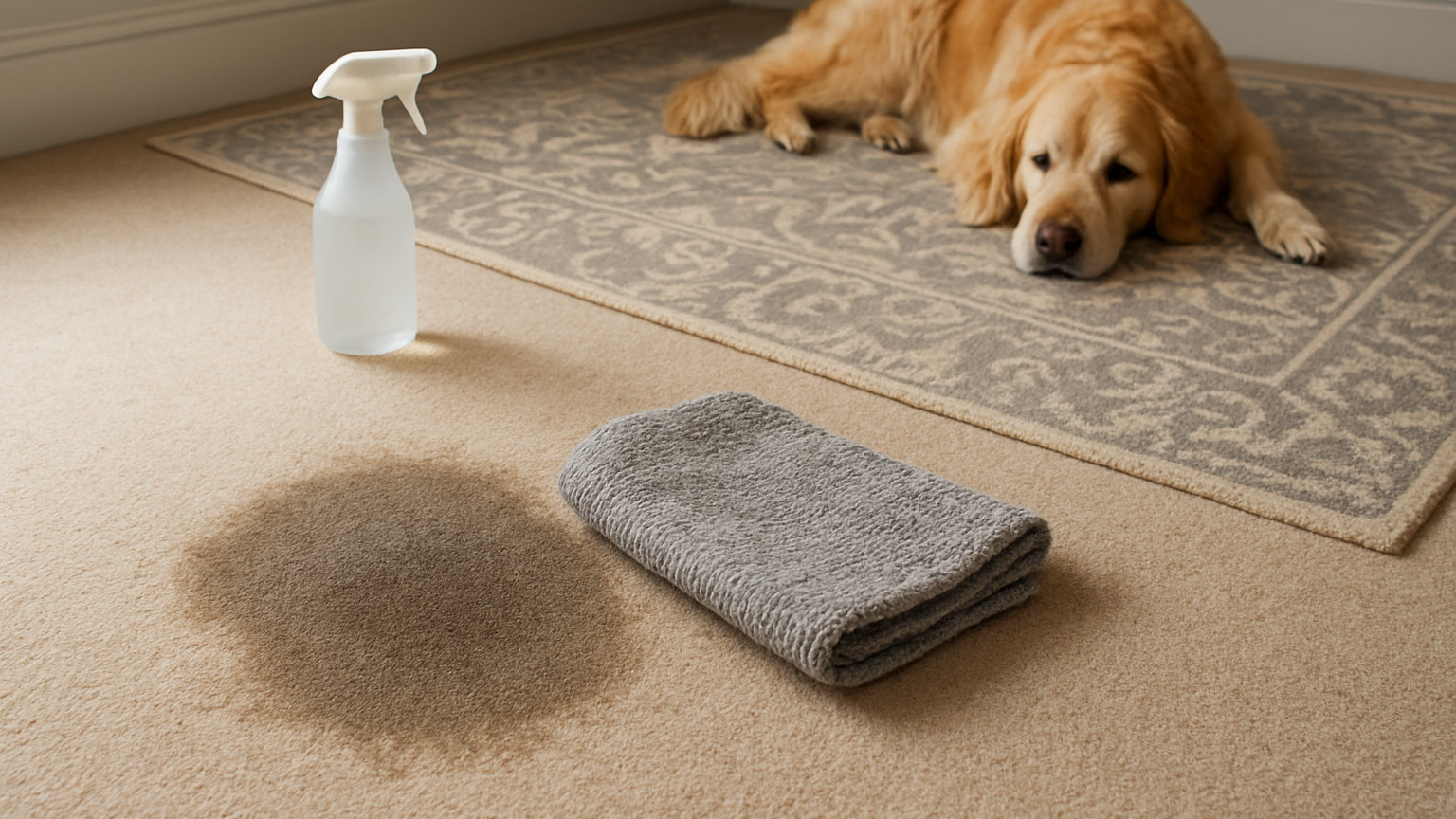
Because sugar residue left in fabric or carpet caramelises with heat and attracts dirt. A carpet treated with white wine and then left will often develop a dark patch over the following weeks, in a slightly larger area than the original spill.
Dry white wine has less sugar than sweet, and any of it is more than water contributes, which is none.
Does the acidity help at all?
Marginally, and not usefully. Anthocyanin pigments in red wine do shift colour with pH, becoming redder in acidic conditions and bluer in alkaline ones. Adding an acid therefore changes the shade slightly rather than removing anything.
That is the same effect as adding lemon juice, and it is cosmetic rather than a solution.
What should you use instead?
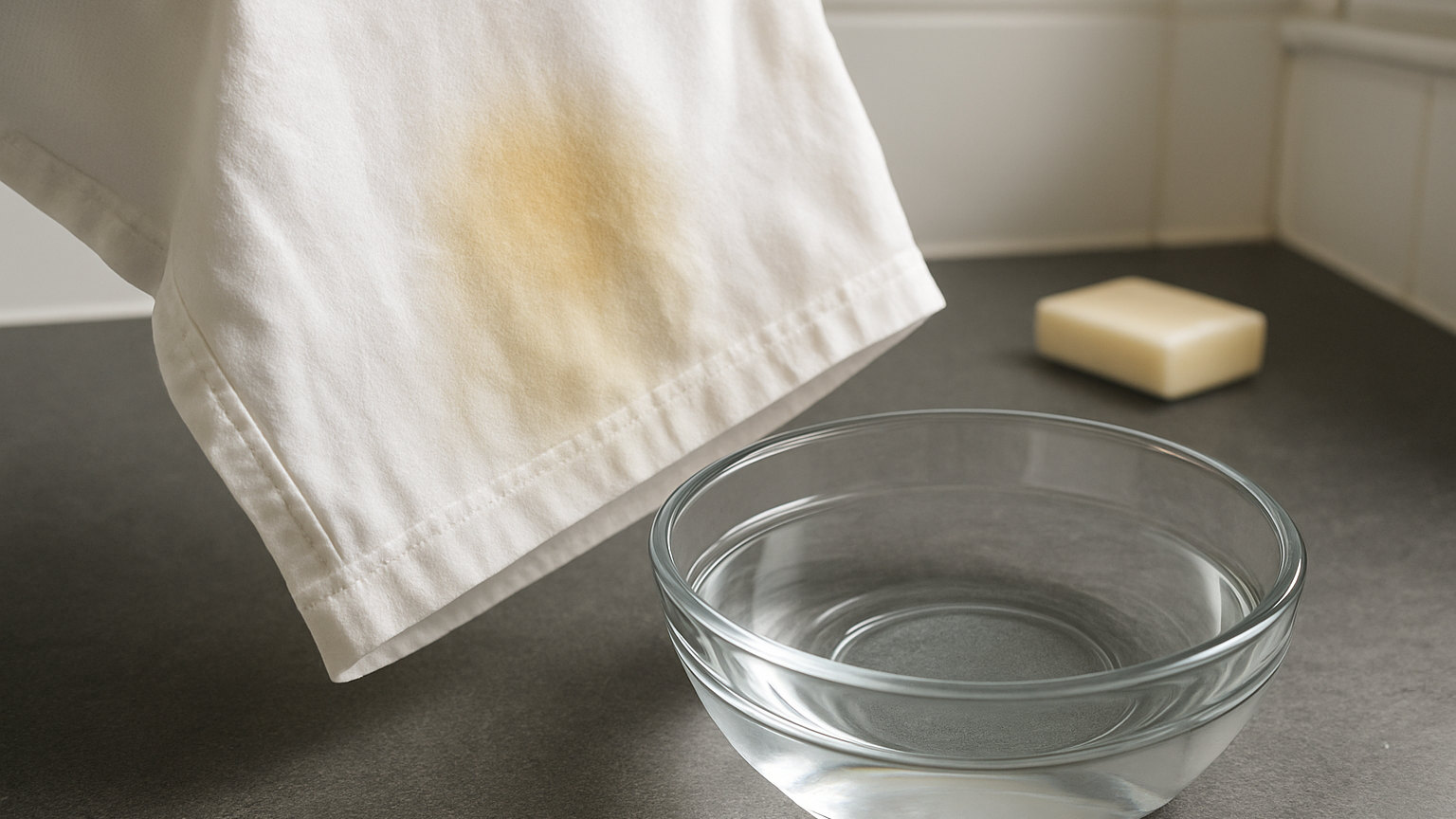
Cold water, applied the same way you would apply the white wine but without the sugar. On clothing, flush the back of the fabric under a cold tap. On carpet, blot first and then dab with a cloth dampened in cold water, working from the outside in.
Cold water does everything white wine does and leaves nothing behind.
What is the full sequence for a fresh spill?
- Blot with a clean white cloth, pressing rather than rubbing.
- Keep moving to a dry section until little further transfers.
- Dilute with cold water, applied to a cloth on carpet or flushed through on clothing.
- Blot again thoroughly.
- Apply a solution of cold water and a drop of washing up liquid.
- Blot, rinse by blotting with clean water, and extract with a dry towel under weight.
- For clothing, follow with an oxygen bleach soak.
Is it ever reasonable to use white wine?
Only in the sense that any cold liquid is better than nothing. At a restaurant table with no water available and a glass of white to hand, it will dilute the spill and buy time. That is the honest extent of it, and the garment still needs treating properly afterwards.
The risk is that people treat it as a fix and stop there, which leaves both the pigment and the sugar in the fabric.
What about the other popular remedies?
- Salt – absorbs surface liquid, does nothing to the pigment.
- Soda water – no better than tap water; the bubbles are irrelevant.
- Bicarbonate paste – mildly abrasive, no bleaching action on wine.
- Boiling water – works on fresh fruit stains and darkens wine tannins.
- Milk – adds a protein stain to a tannin one.
What actually removes red wine?
Oxidation. Oxygen bleach as a soak, hydrogen peroxide with a little detergent on white cotton, or a proprietary wine stain remover, all of which break the coloured compounds down into colourless ones. Sunlight on damp fabric continues the same process for free.
Everything before that is dilution and extraction, which matter enormously and are best done with plain cold water.
Why do these myths persist?
Because most red wine spills that get treated quickly come out, whatever was poured on them. The remedy gets the credit for what prompt blotting achieved. It is the same reason several stain folk remedies have survived for generations despite doing very little on their own.