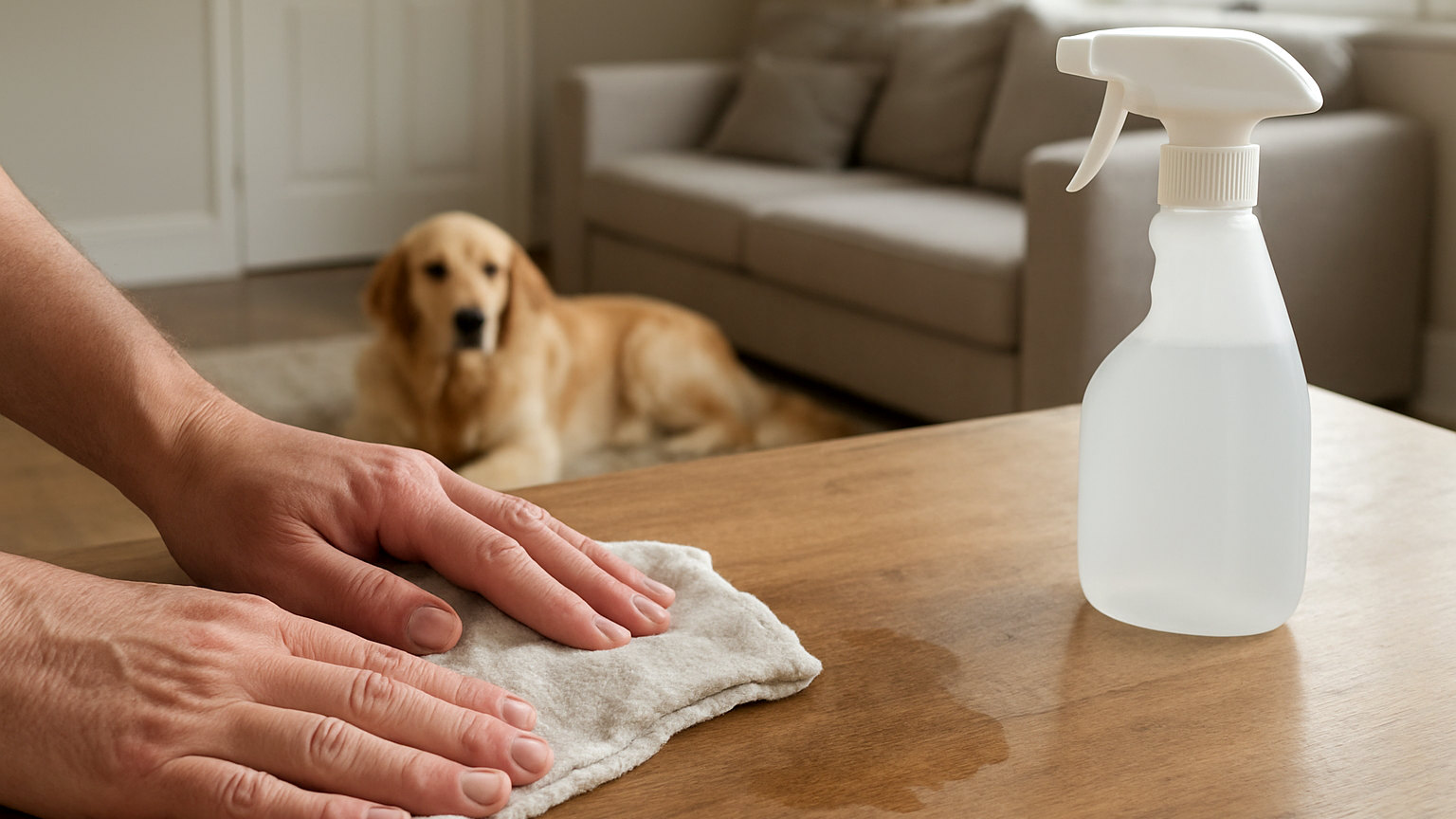
Dog drool and nose prints are a mixture of water, protein, mucus and oils. The protein and oil are why they smear when you wipe them and why a quick pass with glass cleaner leaves a haze rather than clear glass. They need a degreaser or an enzyme rather than simply a wipe.
What works on glass and windows?
- Wipe the loose material away with a dry cloth or paper first.
- Wash the glass with warm water and a single drop of washing up liquid, which cuts the oils.
- Rinse with a cloth wrung out in clean water.
- Dry and buff with a clean dry microfibre cloth.
Going straight to a glass spray leaves the protein and oil behind and simply spreads them into a film. The detergent stage first is what produces clear glass.
For heavy drool on a door or a car window, warm water and a longer dwell time before wiping saves a great deal of effort.
What about dried drool?
Soften it rather than scraping. Lay a warm damp cloth over the area for a couple of minutes, which rehydrates the protein, then wipe. Dried drool on glass can be lifted with a plastic scraper once softened, and never with a metal blade on coated glass.
What works on walls and paintwork?
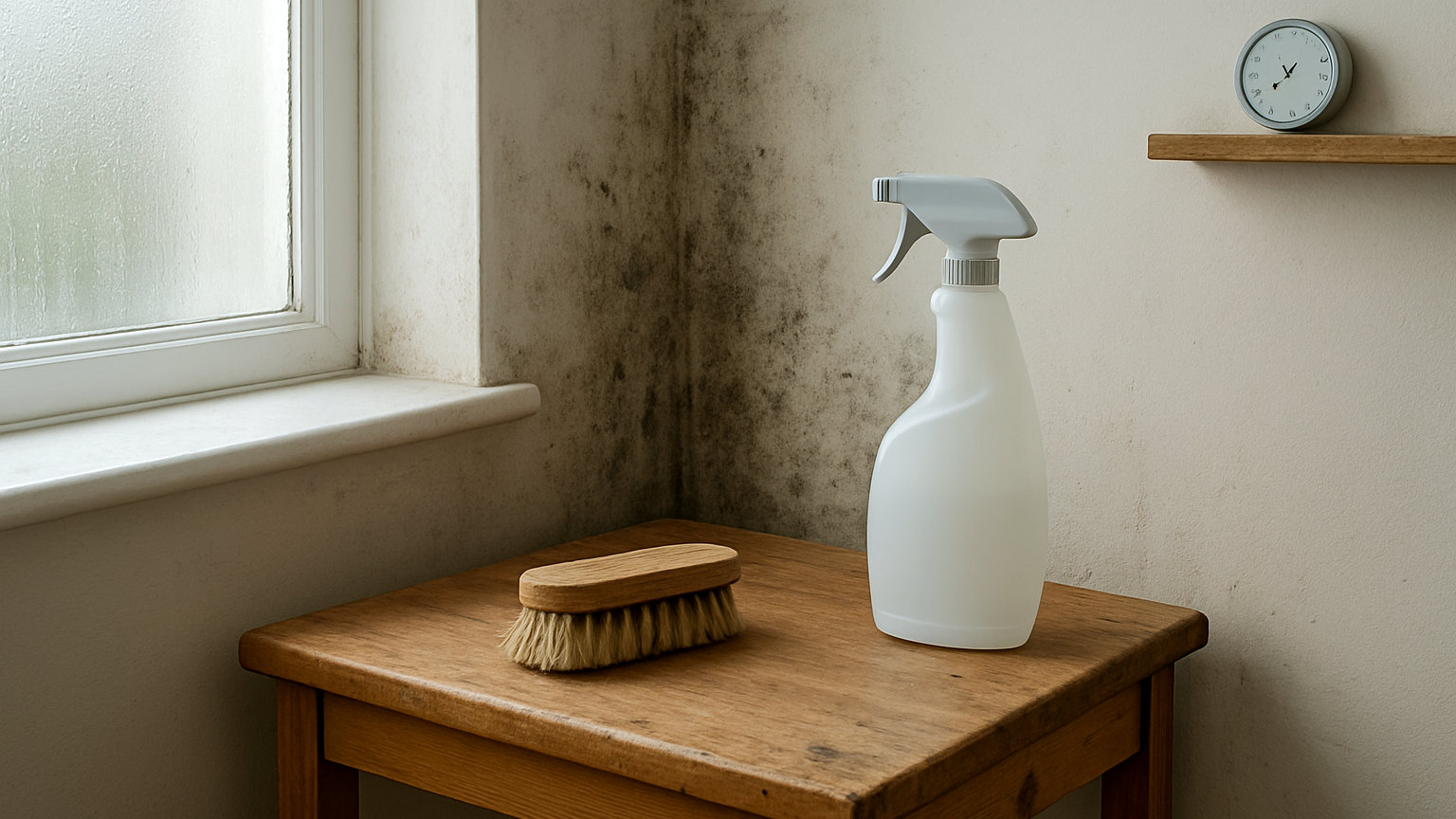
Drool at nose height on a hallway wall is common and awkward, because matt emulsion marks easily. Use a barely damp cloth with a drop of washing up liquid, dabbing rather than rubbing, and dry immediately.
Rubbing matt emulsion burnishes it into a shiny patch that is more visible than the mark. On a wall that gets this regularly, a washable emulsion is worth considering at the next repaint.
What about upholstery and beds?
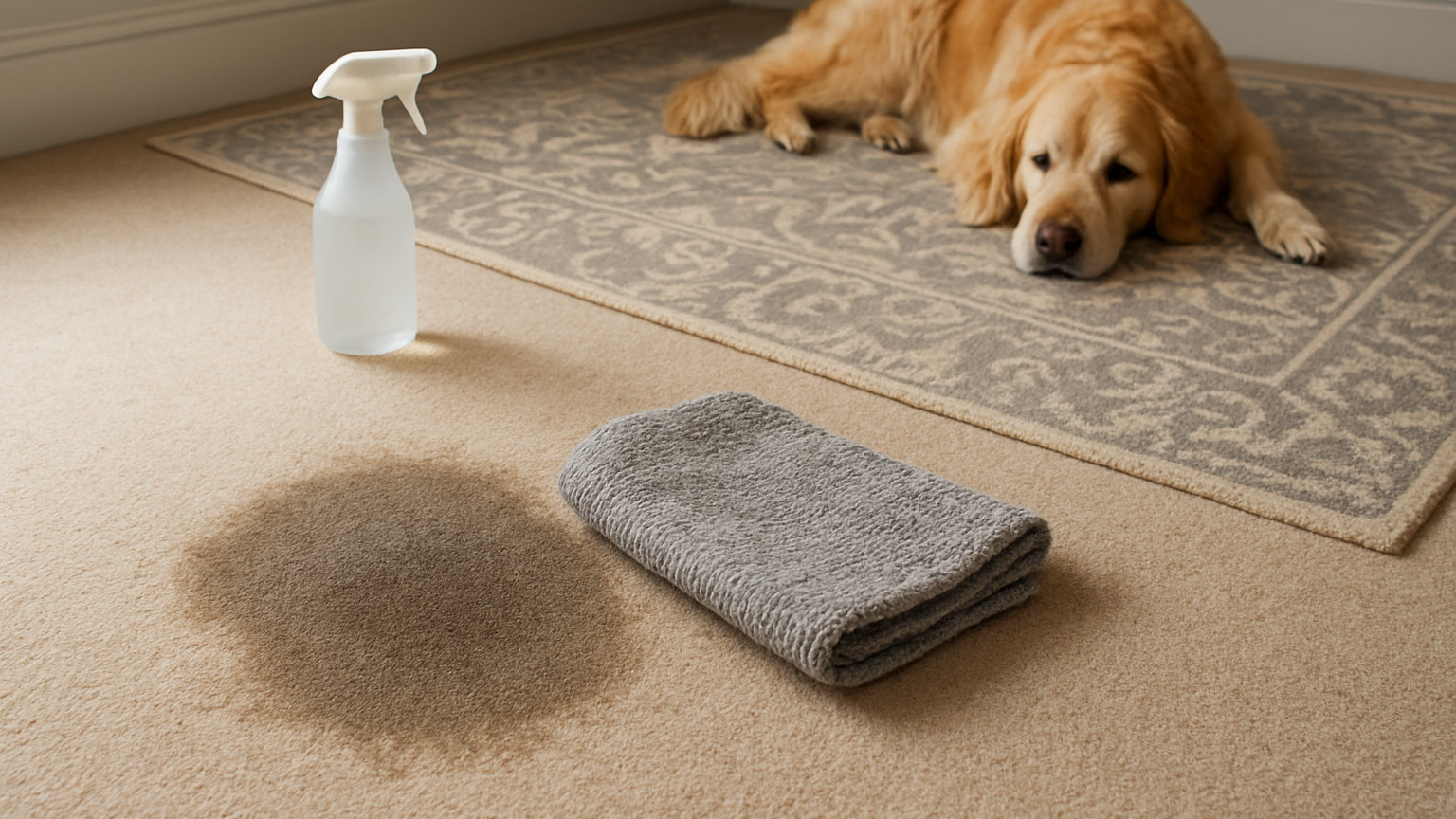
Check the cleaning code first. On a W or WS coded fabric, whisk washing up liquid into warm water and apply the foam only, working across a whole panel. Follow with an enzyme cleaner for the protein, which is what causes the lingering smell on a favourite cushion.
Blot, rinse by wiping with a cloth wrung out in clean water, and dry quickly with a fan.
What about car interiors?
The classic version, with nose prints along a rear window and drool on the door card. Glass gets the detergent and buff method. Door cards and plastic trim take a damp cloth with a little detergent. Leather needs a leather cleaner and a conditioner afterwards.
Perforated leather seats need care, since liquid runs through the holes into the foam where it will smell.
Why does drool sometimes leave a stain?
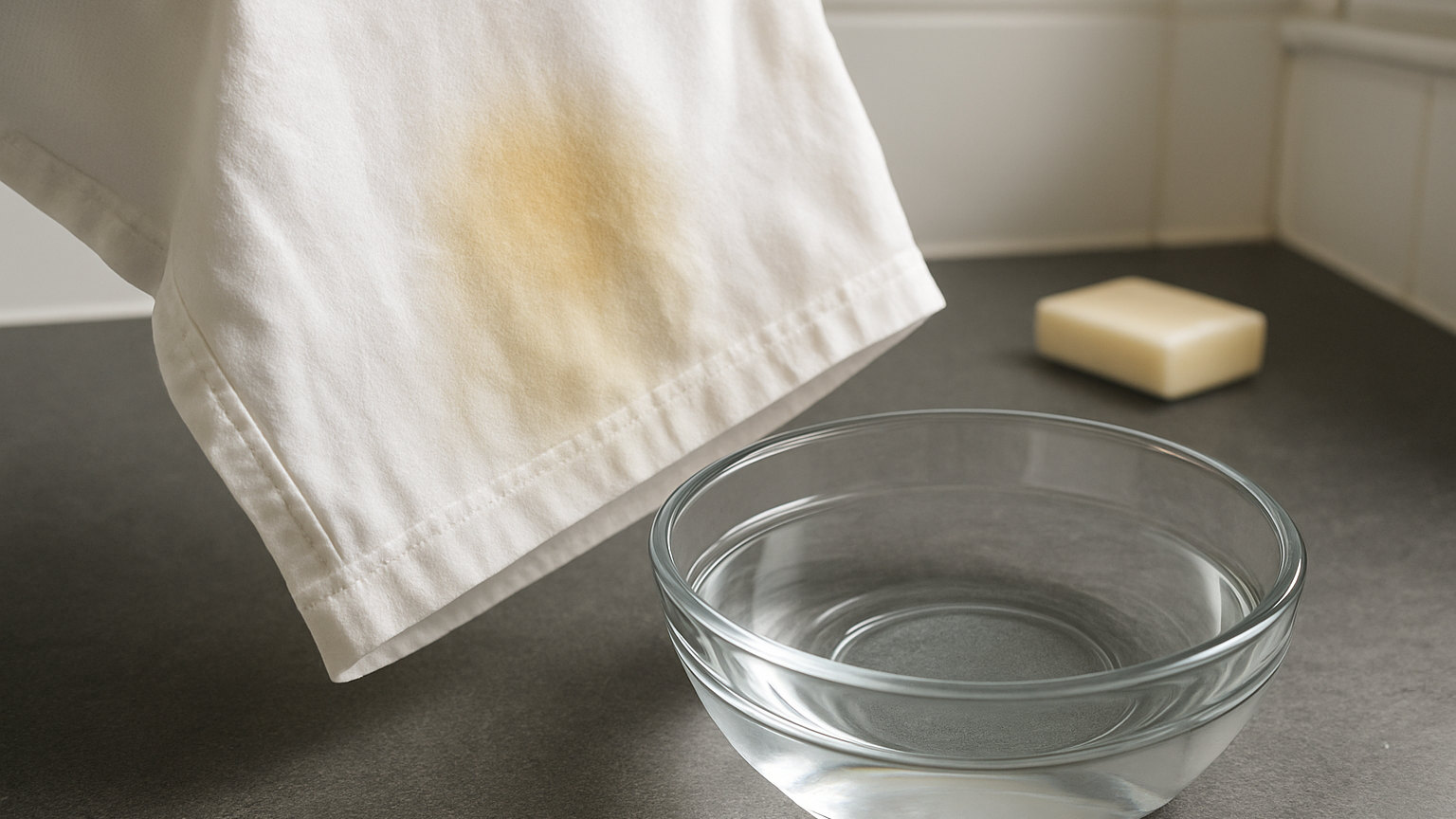
Because it carries food residue, and because some dogs produce drool that is slightly coloured. On light upholstery a yellowish mark can remain after the protein has been removed. An enzyme cleaner followed by an oxygen bleach treatment on colourfast fabric will usually lift it.
On white leather, clean promptly, since drool left to dry can discolour the finish.
What about the smell?
Drool smells because of the protein breaking down, not because of the water. An enzyme cleaner is the answer, applied generously and left for the full contact time. Detergent removes the visible mark and leaves the residue that smells.
Can the marks be prevented?
Partly. A film on the lower part of a glass door, or a strip of window frosting, removes the temptation to press a nose against it. Keeping the dog away from the window it favours is more effective and less popular with the dog.
Excessive drooling that is new or unusual for the animal is worth mentioning to a vet, since it can indicate dental problems, nausea or something lodged in the mouth.
What about drool on a wooden floor?
Wipe it up promptly, because standing liquid on a wood floor damages the finish and can raise the grain. Drool that has been left to dry near a water bowl is a common cause of a dull ring on a lacquered floor, and once the finish has been affected it needs refinishing rather than cleaning. A mat under the bowl prevents it entirely.