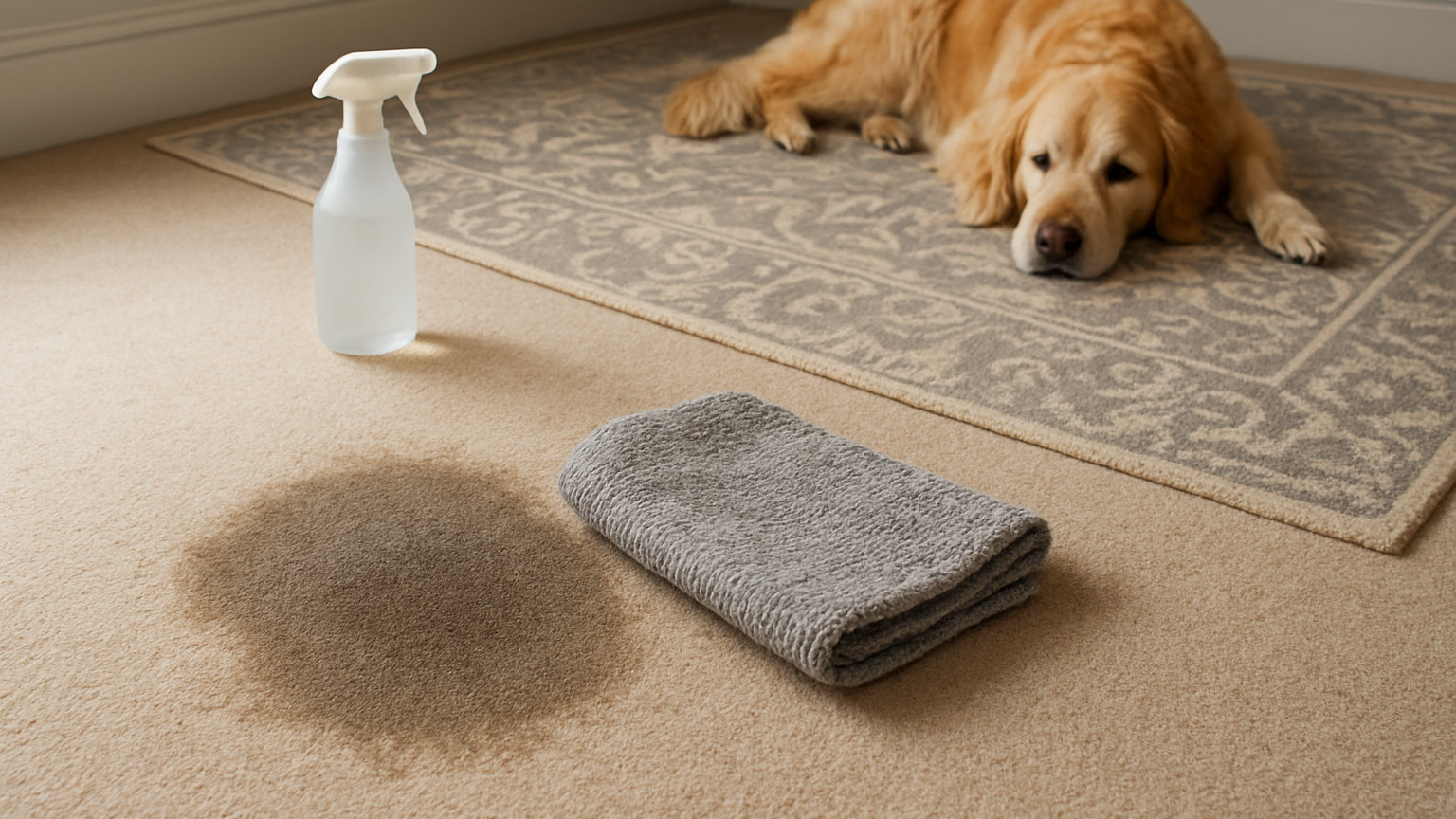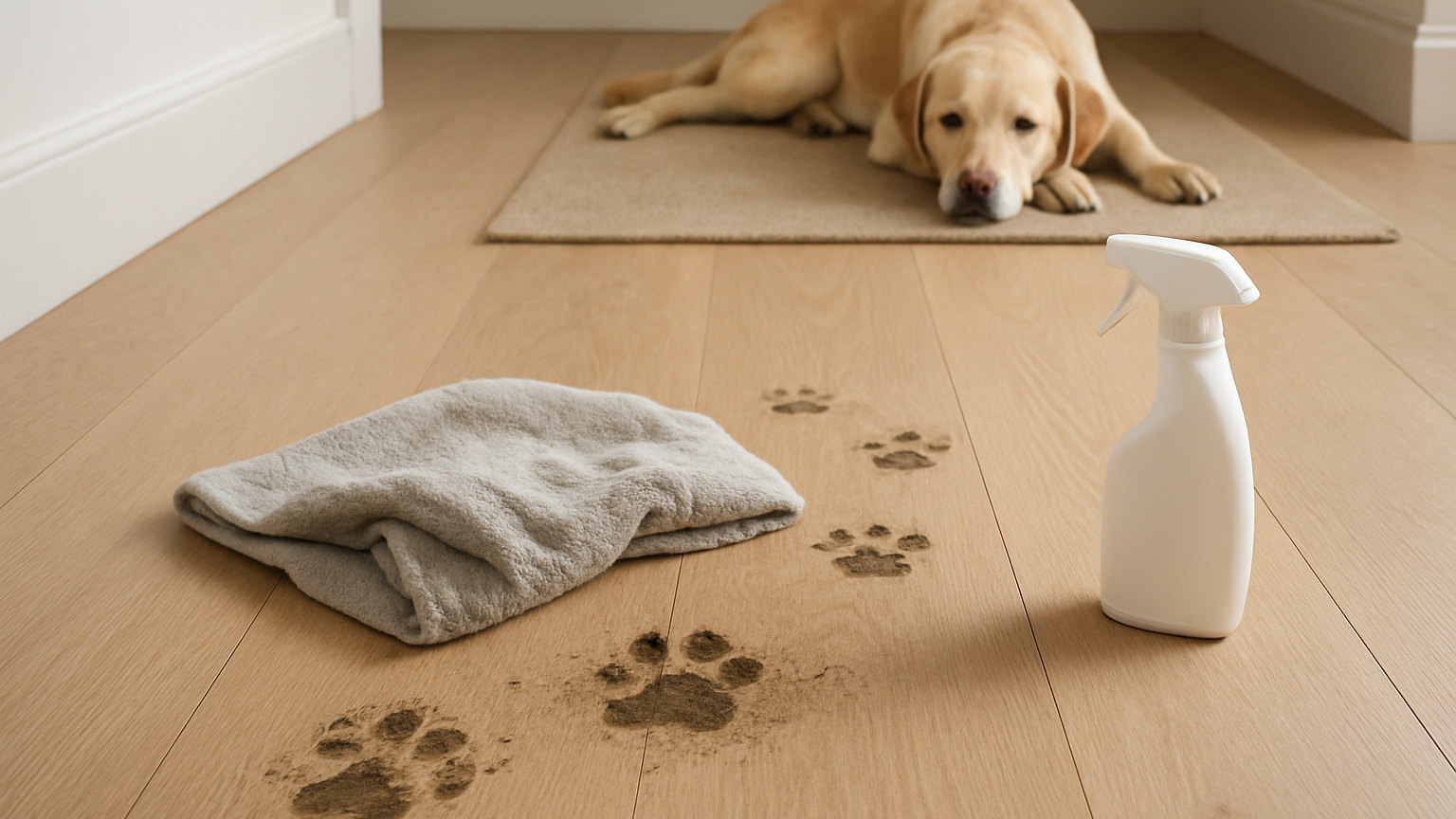
The instinct with a muddy dog is to get the mud off immediately with something wet. That is almost exactly the wrong approach for the floor, because wet mud is a liquid that spreads, and rubbing it into carpet turns a surface deposit into an embedded stain covering several times the area.
What is the right sequence?
- Intercept the dog at the door rather than letting it into the house.
- Wipe or wash the paws and belly there, over a hard surface or a towel.
- Towel the coat down, working from the head backwards.
- Keep the dog in one contained area until it is dry.
- Deal with whatever reached the floor only after it has dried.
- Vacuum the dried mud thoroughly before any water is introduced.
- Treat any remaining mark with warm water and a little washing up liquid.
Why let the mud dry?
Because dry mud is a solid that breaks up and vacuums away, while wet mud is a suspension of fine particles that penetrates the pile and the backing. Attacking a wet muddy paw print with a cloth guarantees a larger, darker mark than leaving it alone for two hours.
Put a chair over it if there is any risk of someone walking through, and come back when it is crisp.
What is the method for dried mud on carpet?
Break the crust up gently with a soft brush or a blunt edge, working from the outside inwards. Vacuum thoroughly, going over the area several times from different directions. Repeat the brushing and vacuuming until nothing further lifts.
Then treat any remaining discolouration with warm water and a drop of washing up liquid applied to a cloth, blotting rather than rubbing, and extract the moisture with a dry towel under weight.
What should the doorway look like?
- A hard surface or a large washable mat immediately inside the door.
- A stack of old towels kept by the door, not in a cupboard upstairs.
- A shallow tray or a jug of water for heavily muddy paws.
- A hook for the lead so the dog stays put while being dried.
- A contained area, such as a utility room or a hallway with a door, for the drying period.
The single most useful change is having the towels where the dog arrives rather than where they are stored.
What about paw washing devices?
The cup style paw washers work well for genuinely muddy paws and are quicker than a bowl and a cloth. A jug of warm water and a towel does the same job for less. Either is better than wiping a muddy paw with a dry towel, which pushes grit into the fur.
Dry the paws properly afterwards, since damp fur between the pads causes irritation in some dogs.
What about the dog itself?
Towel drying is usually enough, and a full bath after every muddy walk strips the natural oils from the coat. For a heavily muddy dog, let the mud dry and brush it out, which is far gentler and surprisingly effective on most coats.
Check between the pads and under the belly, where mud collects and is easily missed.
What about the car?
A boot liner and a blanket, and the same principle: let mud dry, then vacuum. A wet dog shaken out in a car boot puts moisture into the carpet and the sound deadening, which then smells for weeks. Dry the dog before it goes in rather than after it comes out.
What about salt and grit in winter?
Road salt is worth rinsing off paws rather than just wiping, since it irritates pads and is unpleasant if licked. It also marks carpet with white crystalline patches that need an acidic treatment rather than detergent. A quick rinse at the door deals with both.
What about a dog that will not stand still?
Train the routine rather than fighting it each time. Feeding a small treat at the door while the paws are done turns it into something the dog anticipates rather than resists, and most dogs accept it within a fortnight. A lead clipped to a hook by the door keeps the dog in place without anyone holding it.