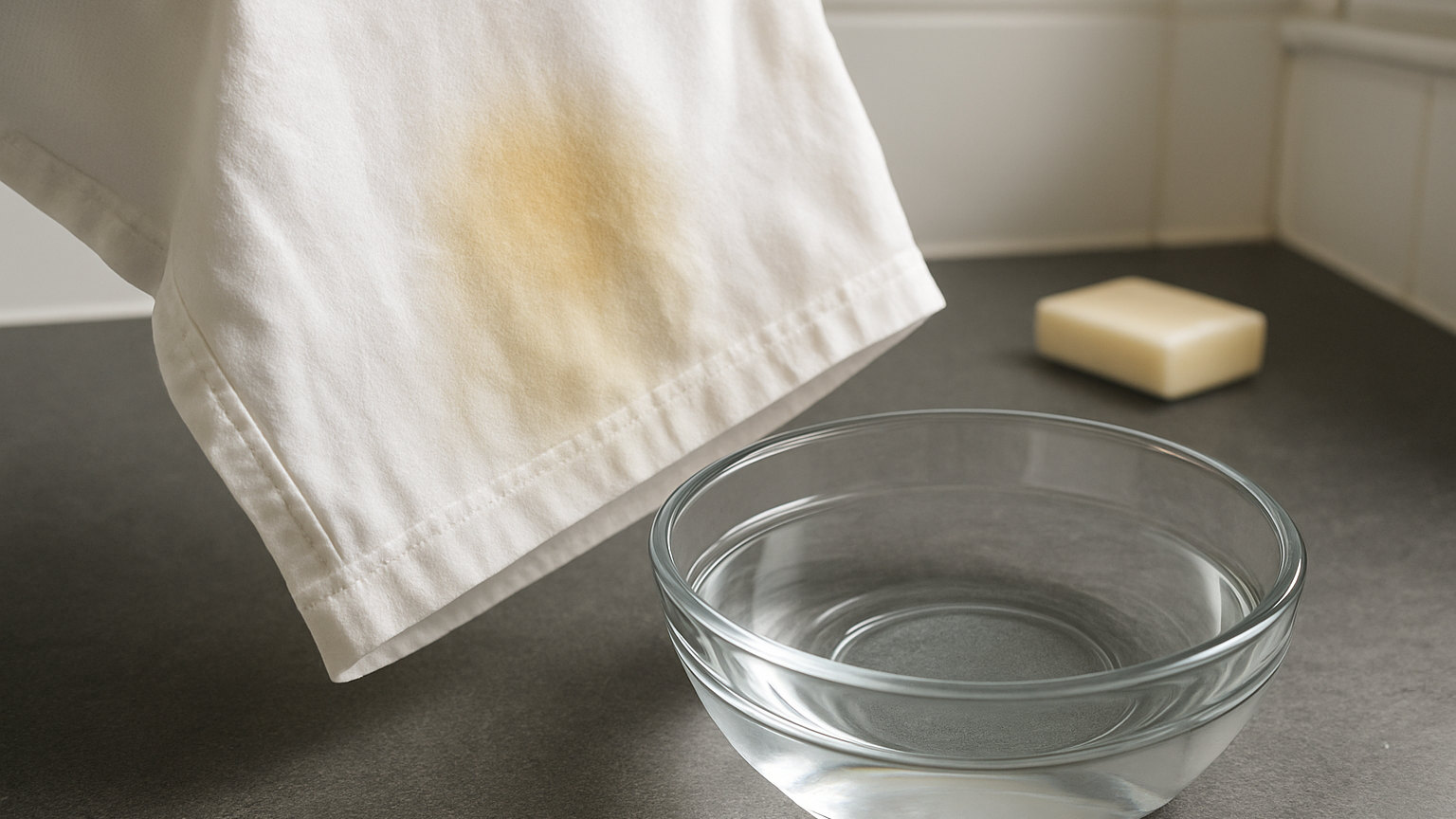
Cooking oil leaves a translucent dark patch that looks straightforward and frequently survives a wash. The reason is that oil penetrates into the fibre itself rather than sitting on the surface, and a normal wash cycle does not deliver enough concentrated degreaser to the specific spot to remove it.
What should you do immediately?
- Blot the excess with kitchen paper, pressing straight down rather than wiping.
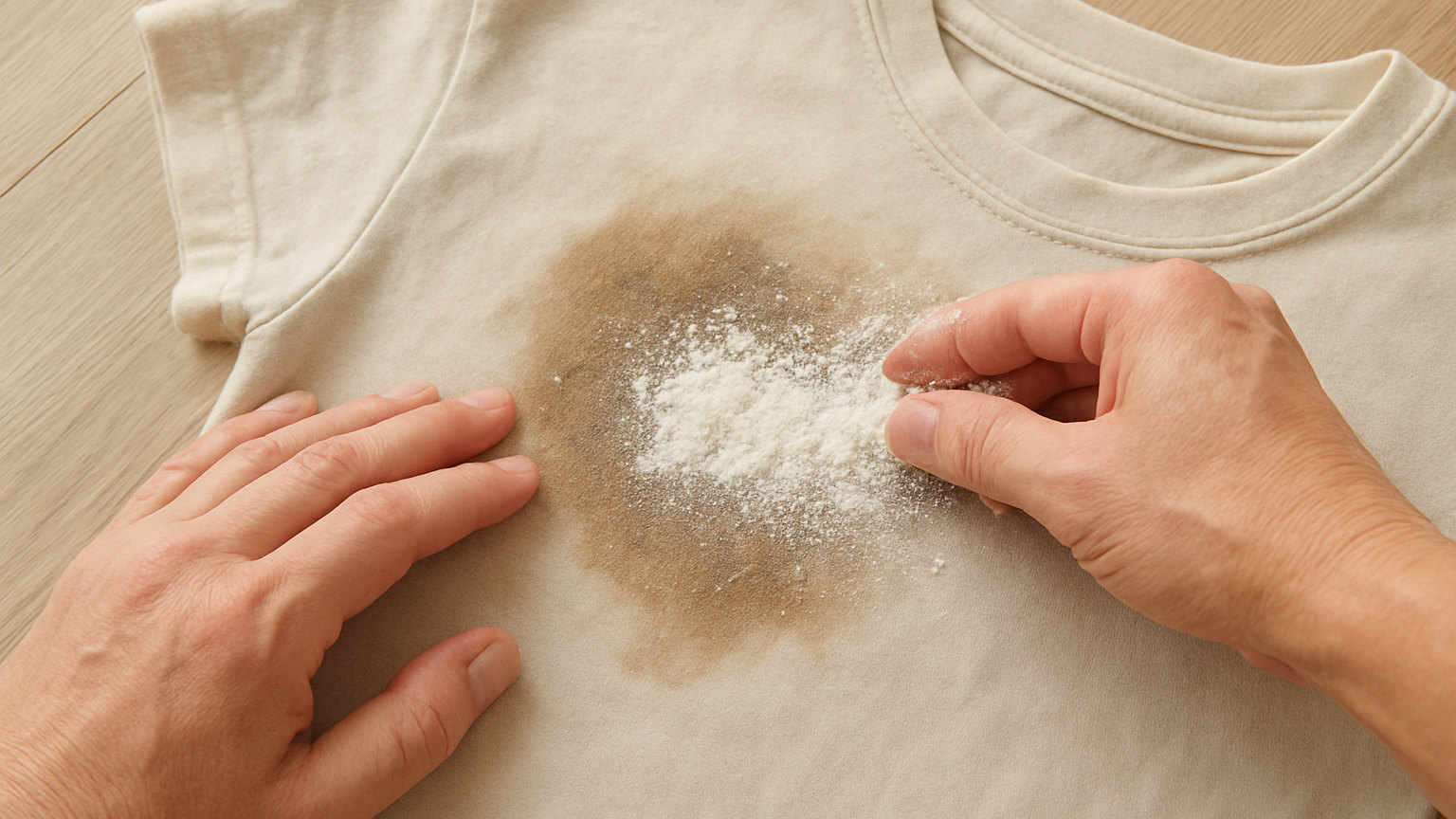
- Sprinkle the mark generously with cornflour, talc or bicarbonate of soda.
- Leave the powder for fifteen to thirty minutes to draw the oil out.
- Brush the powder off.
- Apply washing up liquid directly to the mark and work it in gently.
- Leave it for ten minutes.
- Rinse with the warmest water the fabric allows, then wash normally.
The powder stage is genuinely worth doing on a fresh splash. Oil migrates readily into a fine powder, and removing a proportion of it before the detergent stage makes the rest far easier.
Why does warm water matter?
Because fats become more fluid as they warm, and a fluid fat is easier for the surfactants in detergent to surround and lift away. A cooking oil mark washed at 30 degrees often leaves a shadow that the same garment washed at 40 would not.
Check the label and use the highest temperature it permits. Grease is one of the few stains where washing cooler is genuinely a disadvantage.
Why does the mark come back?
Because the wash removed the oil near the surface and left some deeper in the fibre. As the garment dries, the remaining oil spreads back outwards and the patch reappears, often slightly larger and fainter than before.
The fix is to repeat the direct treatment rather than simply washing again, since the wash cycle was never going to reach it. Two or three rounds of washing up liquid and warm water usually finishes it.
What about a mark that has been through the dryer?
Heat oxidises oil and bonds it to the fibre, which makes it considerably harder and sometimes permanent. Treat it with a generous application of washing up liquid worked in thoroughly, left for thirty minutes, then washed warm. Repeat two or three times.
An eucalyptus based or solvent stain remover often succeeds where detergent alone has not. Test on a hidden seam first.
Which oils are worst?
- Olive oil and vegetable oil – straightforward, respond well to detergent and warmth.
- Used frying oil – contains carbonised particles as well as fat and leaves a darker mark.
- Sesame and chilli oil – carry pigment as well as oil, so they need a second treatment for the colour.
- Coconut oil – solid at room temperature, so warm the area first to liquefy it.
- Butter and ghee – contain milk solids, which add a protein element.
Does dish soap work better than a stain remover?
For fresh cooking oil, usually yes, and it costs a fraction as much. Proprietary grease removers are worth having for old or heat set marks, where a stronger solvent element helps. For a fresh splash, a few drops of washing up liquid and ten minutes of patience is hard to beat.
What about oil on a work shirt during the day?
Blot the excess and apply a little powder if any is to hand, even a pinch of salt or flour from a kitchen. Do not rub, and do not use hot water from a washroom tap without detergent, which spreads the oil without lifting it.
Keeping the garment out of a dryer afterwards matters more than anything done at the time.
How do you avoid it?
An apron, a splatter guard over the pan, and slightly lower heat under the frying pan than it seems to want. Most cooking oil on clothing comes from splatter rather than spills, and a guard costs very little and stops nearly all of it.
Why do the marks often appear in a pattern?
Because splatter travels in a spray rather than a single drop, so the result is a scatter of small spots across the front of a garment rather than one large mark. Each one needs treating, and it is easy to deal with the obvious spot and miss four faint ones that then darken with age. Hold the garment up to the light before washing it.