Mould needs four things: moisture, a food source, a suitable temperature and spores. Spores are present in every building and cannot be excluded. Food is anything organic, including dust, plaster and paint. Temperature suits mould at the range people find comfortable. That leaves moisture as the only variable you can realistically control, and it is why every lasting solution is about drying rather than cleaning.
Where is the moisture coming from?
- Condensation, by far the most common in UK homes. Warm moist air meeting a cold surface.
- Drying laundry indoors, which adds a litre or more per load.
- Showering and cooking without ventilation.
- A plumbing leak, often small and slow.
- Penetrating damp from a failed gutter, cracked render or a roof detail.
- Rising damp, which is less common than people assume and produces a distinctive tide mark.
Working out which applies matters, because the remedies are entirely different.
How do you tell condensation from a building fault?
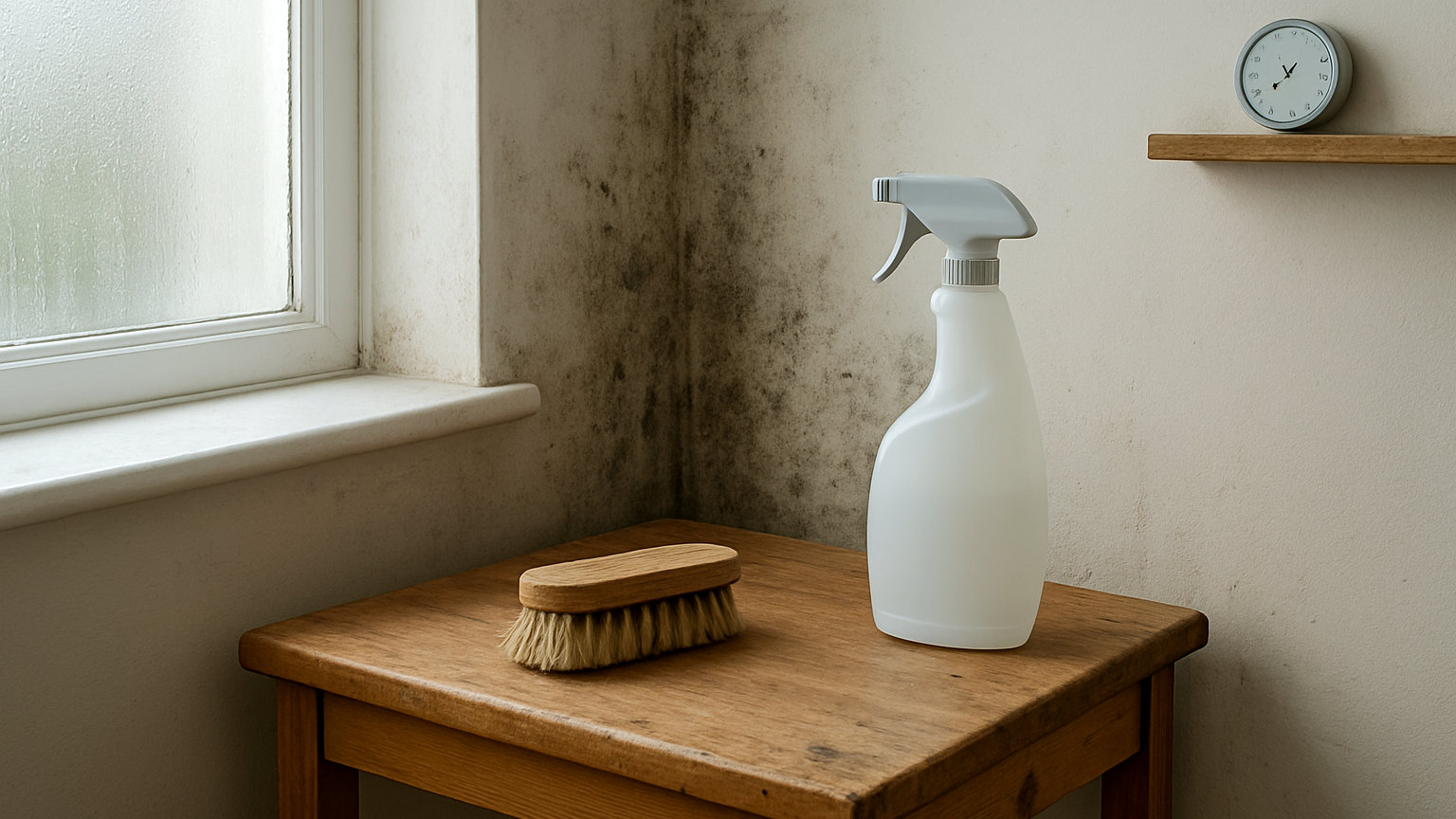
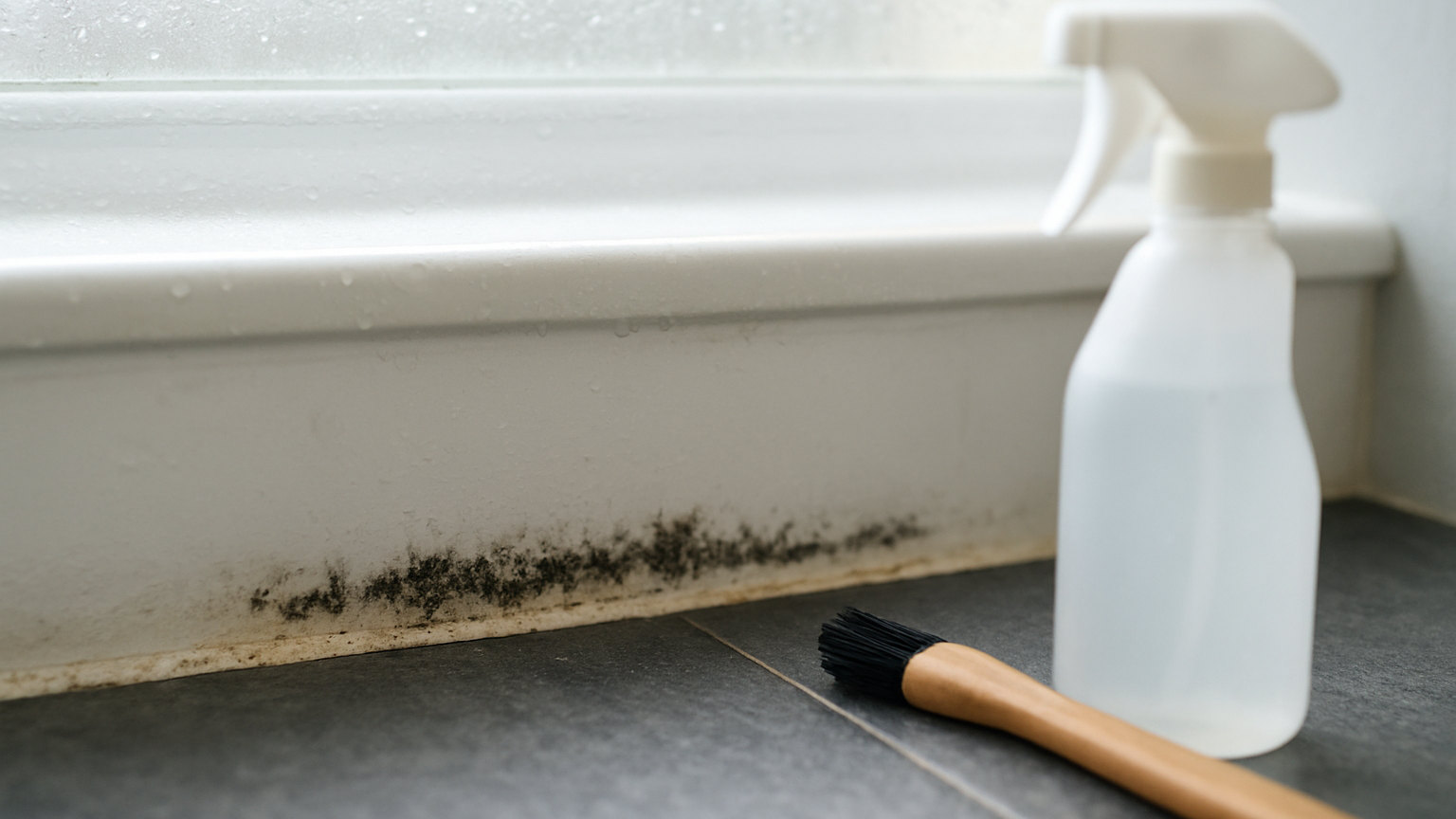
Condensation mould appears in cold spots: window reveals, external corners, behind wardrobes, in unheated rooms. It is worse in winter and improves in summer. The wall behind it is sound.
Penetrating or rising damp is present year round, often worse after rain, and comes with a tide mark, blown plaster, salts on the surface or a patch that is genuinely wet to the touch.
Seasonal is condensation. Constant is a building fault.
Why does it always return to the same spot?
Because that spot is the coldest surface in the room. An external corner loses heat in two directions. A wall behind a wardrobe is insulated from the room heat. A window reveal is a thin section of masonry. Warm moist air reaches those surfaces first and condenses there first.
Cleaning changes none of that, which is why the patch is back by the following December.
What actually breaks the cycle?
- Ventilate deliberately, with windows wide open for ten to fifteen minutes each morning rather than ajar all day.
- Run extractors properly, for fifteen to twenty minutes after showering and while cooking, with the door shut.
- Heat to a steady low background temperature rather than in short bursts, which keeps surfaces above the dew point.
- Stop drying laundry indoors without ventilation or a dehumidifier.
- Pull furniture off external walls by five to ten centimetres.
- Use a dehumidifier in a persistently damp room, aiming below 60 per cent relative humidity.
- Open trickle vents and leave them open.
Why does intermittent heating make it worse?
Because surfaces never warm up. Heating a room hard for an hour warms the air and leaves the wall cold, and the warm air then holds more moisture which condenses on that cold wall. A lower temperature maintained for longer keeps the surface above the point where condensation forms, and often costs no more.
Does insulation help?
It addresses the root cause, since a warmer wall surface does not reach the dew point. Internal insulated plasterboard, external wall insulation or cavity fill all reduce condensation substantially in a house with cold solid walls.
It has to be done properly. Poorly detailed insulation can create new cold bridges and move the problem rather than solving it.
What if you have done all of this?
Then it is likely a building fault. A leak behind a wall, a bridged cavity, a failed damp proof course, blocked underfloor ventilation or a cold bridge at a structural junction will all keep producing moisture regardless of how the house is used.
An independent damp survey, from someone who is not selling the remedial work, is worth the cost at that point.
Does the season tell you anything?
A good deal. Growth that appears in October and fades in April is condensation, driven by cold surfaces and closed windows. Growth that is present in July as well points to a water source in the building. Keeping a note of when patches appear over a year is genuinely useful information to hand to a surveyor, and it costs nothing to record.