Mould and mildew are both fungi, and the words are used loosely. In everyday usage mildew describes a flat, powdery growth that sits on a surface, while mould describes something fuzzier and more established that has often penetrated the material it is growing on. That distinction is not a biological one, and it is still useful, because it maps closely onto how difficult each is to remove.
What does mildew look like?
Flat and powdery, usually white, grey or yellowish, sometimes turning brown as it ages. It sits on the surface and wipes away with relatively little effort, leaving the material underneath largely undamaged.
It appears on shower curtains, window frames, damp fabric, bathroom walls and the surface of leather. It is the early stage of a damp problem rather than an established one.
What does mould look like?
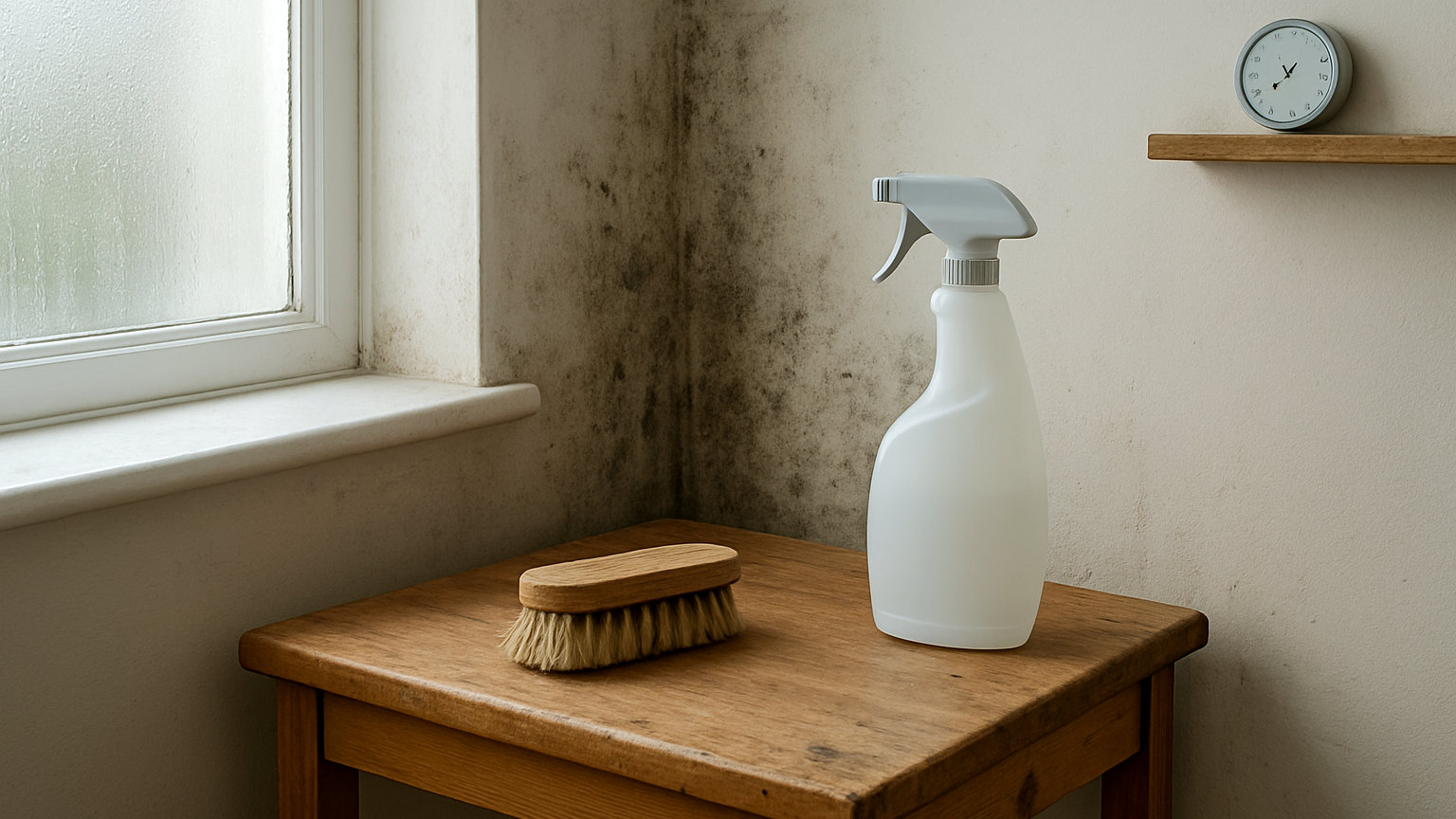
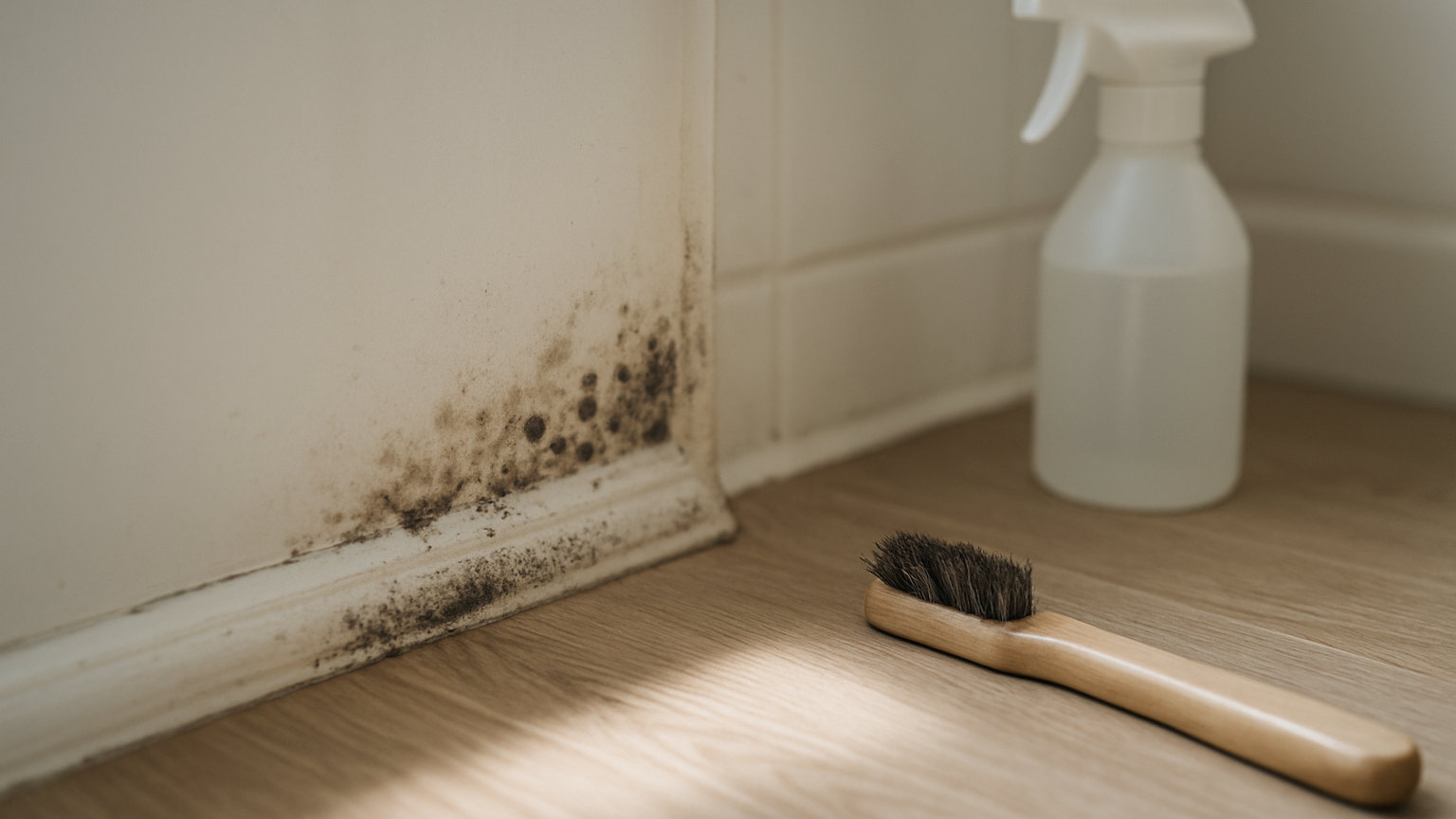
Raised, fuzzy or slimy, and usually black, dark green or blue. It has visible texture rather than a flat film, and it has usually grown into the material rather than onto it.
That penetration is what makes the difference. Mould in silicone sealant, in plasterboard or in the grain of timber has sent structures below the surface, and wiping the top away leaves the growth in place to return within weeks.
Why does the distinction matter?
Because it tells you whether cleaning will work. Surface growth wipes off and stays off, provided the moisture is dealt with. Growth that has penetrated will come back regardless of how thoroughly the surface is cleaned, and the material itself may need replacing.
Mould in silicone is the clearest example. It can be lightened with bleach and it cannot be removed, because it is growing inside the material. The only permanent fix is to cut the sealant out and replace it.
What do both of them need?
Moisture, a food source and a reasonable temperature. Of those, moisture is the only one you can realistically control. Ordinary household dust, soap residue, plaster, timber and fabric all provide enough to feed on, and normal room temperatures suit most species.
That is why every genuine solution comes back to drying the surface rather than to the product used on it.
Where does each typically appear?
- Mildew – shower curtains, bathroom tiles, window sills, damp laundry, book covers, outdoor furniture, the surface of leather.
- Mould – silicone sealant, window reveals, behind wardrobes on external walls, in cupboards against cold walls, in carpet underlay, behind washing machine door seals.
The pattern is consistent: mildew where a surface gets wet and dries, mould where something stays damp.
Is one more of a health concern?
Extensive mould growth is generally treated more seriously than surface mildew, and the position of health bodies is that damp and mould in homes can affect respiratory health, particularly for children, older people and anyone with asthma or a weakened immune system.
Anyone with symptoms they think may be related should speak to a GP. Extensive or recurring growth in rented housing is something a landlord is expected to address.
How do you tell which you have?
Wipe a small area with a damp cloth. Surface mildew comes away and leaves the material looking normal underneath. Mould leaves a stain, returns quickly, or is visibly growing out of a joint, a seal or the grain rather than sitting on top of it.
Colour is a poor guide on its own, since plenty of harmless species are black and some problematic ones are not.
What is the practical takeaway?
Treat surface growth promptly and it stays gone once the damp is fixed. Treat penetrated growth and expect either to replace the material or to accept it returning. Either way, the cleaning is the smaller half of the job and the ventilation is the larger one.
Does the treatment differ between them?
The products are largely the same and the expectations are not. Surface mildew responds to almost anything: detergent, vinegar, a bleach based cleaner. Established mould needs a fungicidal wash with residual action, and even then the result depends on whether the material can be dried out afterwards. Choosing a stronger product rarely helps; choosing the right approach to the moisture always does.