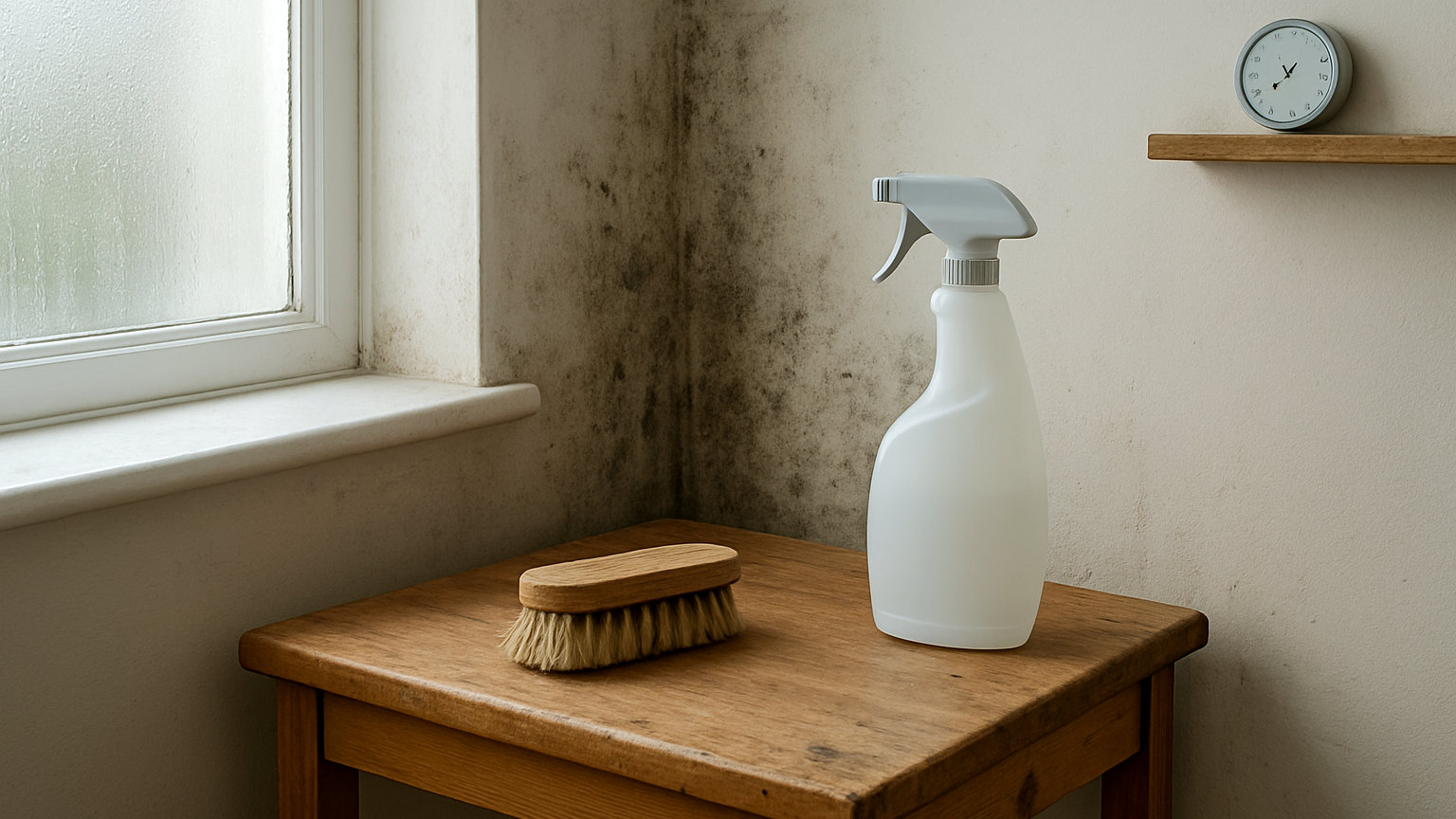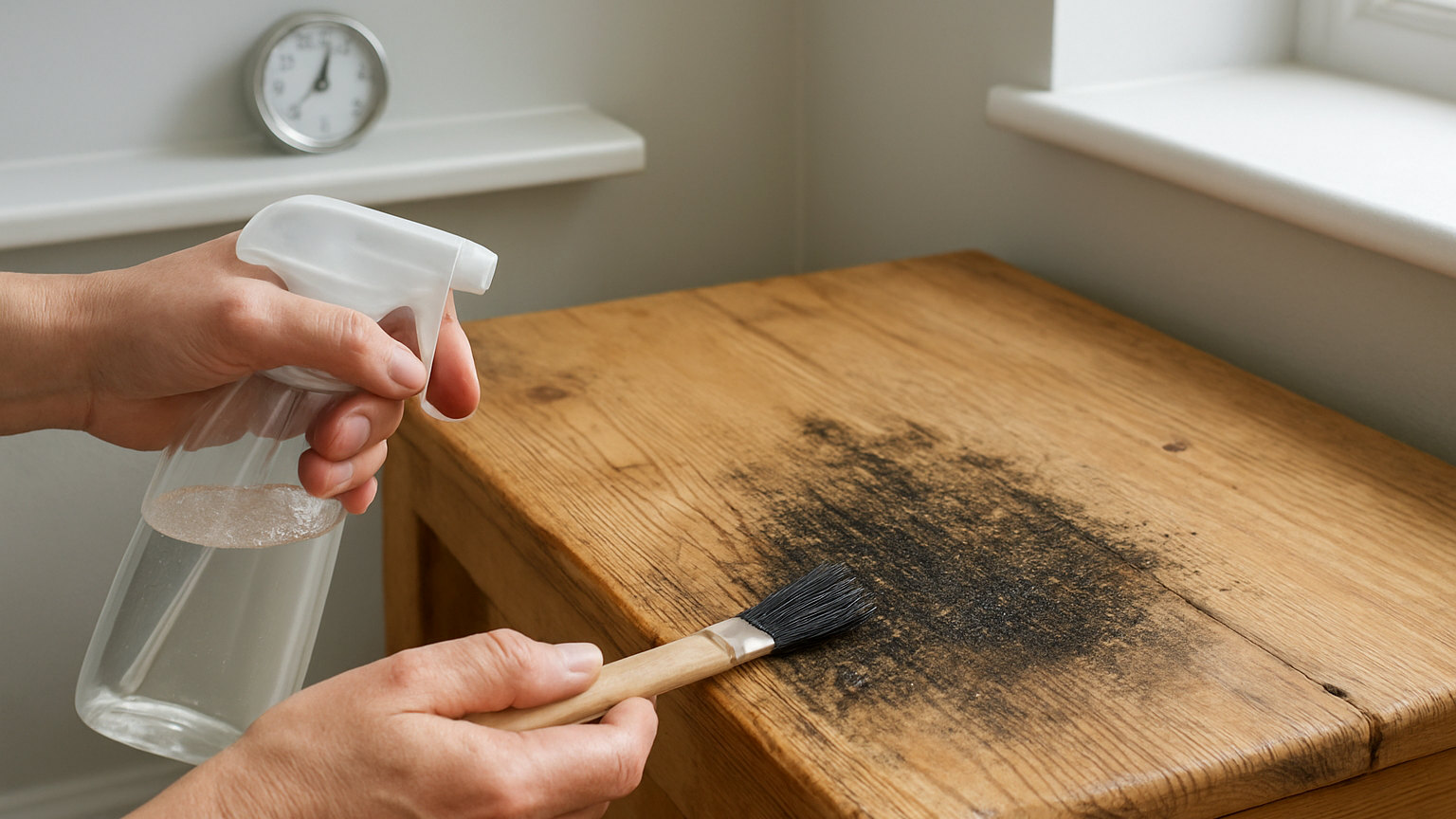
Wood is porous and hygroscopic, meaning it absorbs and holds moisture from the air. That makes it an excellent surface for mould and a difficult one to treat, because by the time growth is visible it has usually put structures down into the grain rather than sitting on top of it.
What should you do first?
- Work outdoors if the item can be moved, or open the window and close the door.
- Wear gloves and a mask rated for fine particles.
- Dampen the surface lightly with water to stop spores becoming airborne.
- Wipe the growth away with a disposable cloth, bagging each one as you go.
- Do not dry brush or sand at this stage, which releases spores.
What should you clean it with?
A fungicidal wash formulated for timber, which penetrates and remains active, is the best option. White vinegar is a reasonable alternative and works better on wood than bleach does, since it soaks in rather than reacting only at the surface.
Apply, leave for the stated time, wipe, and let the timber dry completely before doing anything else. Drying is the step that decides whether it returns.
Why is bleach a poor choice on wood?
Because it is mostly water, and on a porous material the water soaks in while the chlorine reacts at the surface. The visible growth is bleached pale and the structures below survive, now with added moisture. It also raises the grain, lightens the timber unevenly and can damage any finish.
On painted or sealed wood a bleach based cleaner is more reasonable, since the surface is not truly porous.
What about the stain that remains?
Mould pigment penetrates the grain and frequently stays after the growth has been killed. On bare or unfinished timber, light sanding once the wood is completely dry will remove it, working with the grain and wearing a mask.
On a finished surface, sanding means refinishing the area, which may mean doing the whole piece to get an even result. On structural timber that is not visible, the stain is cosmetic and can be left once the growth is dead.
What about wooden furniture?
Move it outdoors if you can. Clean with a vinegar solution or a fungicidal wash on a well wrung cloth, working with the grain, and dry immediately. Do not soak it, since standing water on timber causes swelling, splitting and lifted veneer.
Once dry, reapply wax or oil to a finished piece. Furniture that has been in a loft, garage or cellar is the usual candidate, and the storage conditions are the actual problem.
What about skirting, window frames and door frames?
These usually indicate condensation rather than a leak, and they are frequently painted rather than bare. Clean with a fungicidal wash, dry thoroughly, and repaint with an anti-mould emulsion or a suitable primer and paint.
Check the bottom edge of a window frame and the joints at the corners, which are where water collects and where rot starts. Soft timber that gives under a fingernail is rotten rather than merely mouldy.
What about structural timber?
Mould on joists, floorboards or roof timbers is a signal rather than a stain. It means moisture is present in a place it should not be, and the cause matters far more than the growth. Common sources are a leaking pipe, a failed roof detail, blocked underfloor ventilation or rising damp.
Wet rot and dry rot are different and more serious problems, and both need professional assessment. Timber that is soft, crumbling, cracked into cubes or accompanied by white strands or a mushroom-like growth needs a specialist rather than a cleaning product.
What prevents it?
Keeping timber dry, which means ventilation, heating and dealing with any source of water. Do not store wooden furniture in a loft, garage or cellar. Keep furniture a few centimetres off external walls. Check underfloor air bricks are clear, since blocked ventilation under a suspended floor is a common and fixable cause.