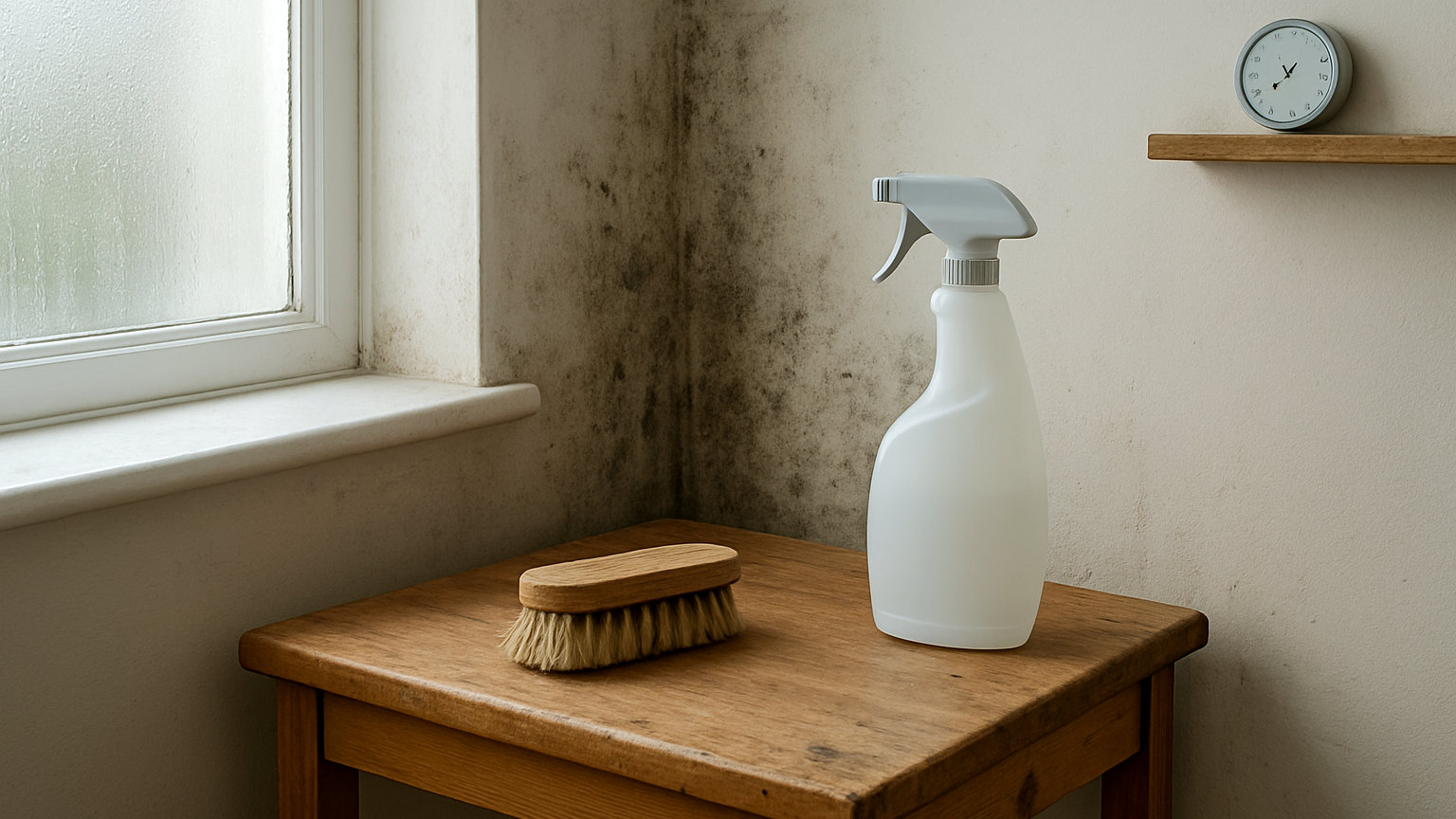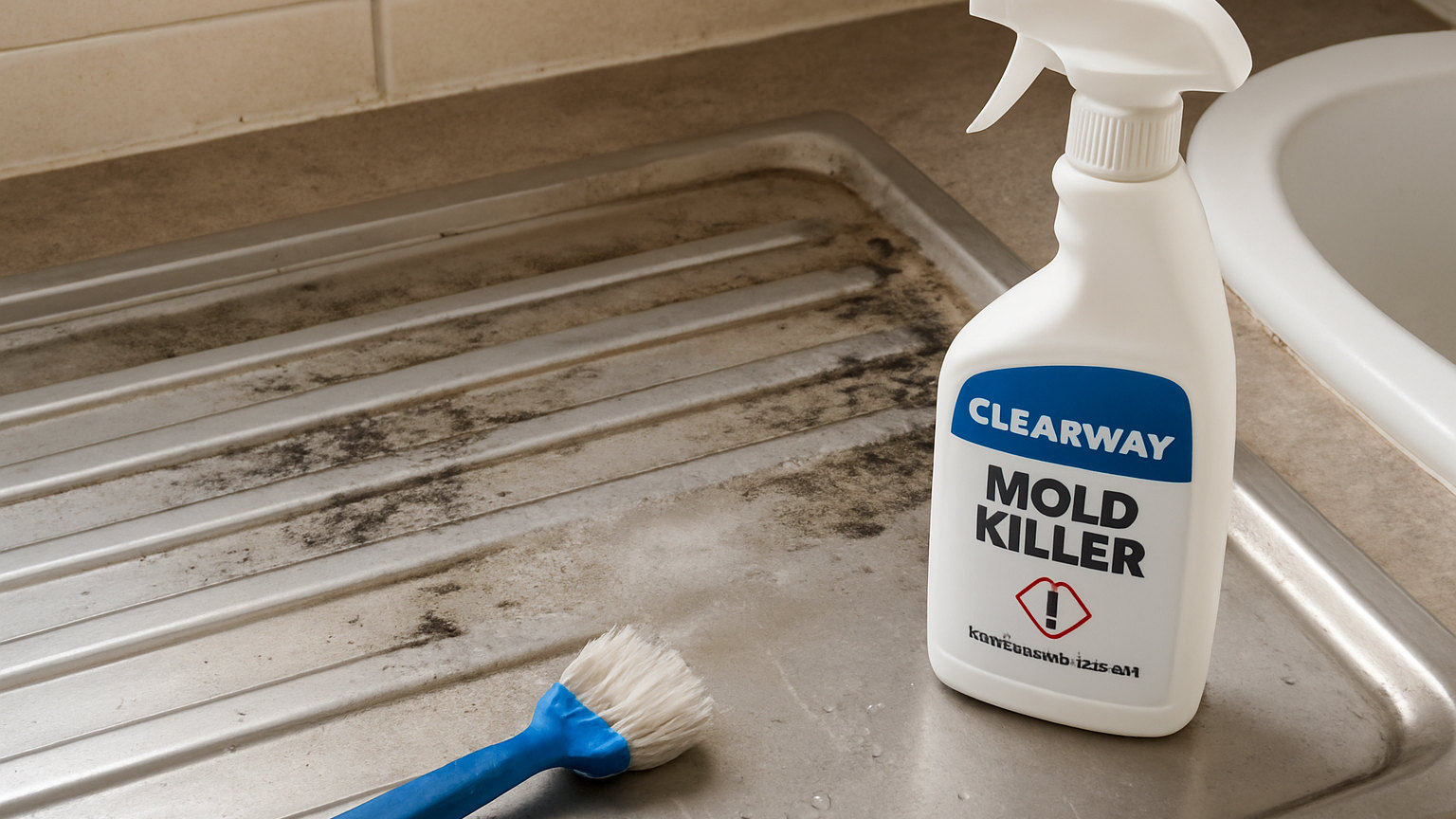
Bleach kills mould on hard, non-porous surfaces such as tile, glass and glazed ceramic, where it works quickly and reliably. On porous surfaces such as plaster, plasterboard, timber and grout, its record is much poorer, and the reason explains a good deal of why mould keeps coming back after being cleaned.
Why does it fail on porous surfaces?
Because bleach is largely water with a small amount of active chlorine. On a porous material the water soaks in and carries very little chlorine with it, since the active component reacts at the surface and is consumed. The visible growth is bleached white and the structures below remain alive, with a fresh supply of moisture from the water that just went in.
The result looks like a success and regrows within weeks. It is the single most common reason a wall is cleaned repeatedly with no lasting effect.
What does a fungicidal wash do differently?
It contains a biocide designed to penetrate and to remain active on the surface for a period afterwards, rather than reacting immediately and being spent. That residual action is what prevents rapid regrowth.
Products sold specifically as mould removers or fungicidal washes are formulated for this and are the better choice on plaster and painted walls.
Where is bleach genuinely the right tool?
- Bathroom tile and glazed ceramic.
- Glass and shower screens.
- Plastic shower curtains and trays.
- Silicone sealant, where it lightens the staining even though it cannot remove growth from within the material.
- Grout, to a degree, though a dedicated grout product works better.
On all of these it is effective, cheap and fast.
What are the safety rules?
Never mix bleach with anything else. Combined with an acidic cleaner such as a limescale remover or toilet cleaner it releases chlorine gas, and combined with ammonia it produces chloramine vapour. Both are genuinely dangerous in a small unventilated room such as a bathroom.
Ventilate throughout, wear gloves, protect your eyes, and do not use it in a confined space such as inside a cupboard without the door open and air moving.
Does it damage anything?
Several things. It degrades silicone sealant over time, making it yellow and brittle. It weakens grout with repeated use. It corrodes stainless steel and chrome if left in contact. It removes colour from grout, fabric and paint. And on timber it can raise the grain and lighten the wood unevenly.
On a bathroom used heavily, alternating between bleach and gentler options extends the life of the sealant considerably.
What about vinegar as an alternative?
White vinegar has a genuine antifungal effect and penetrates porous surfaces better than bleach does, since it is not consumed on contact in the same way. It is slower and less dramatic, and it does not bleach the staining, so the surface may still look marked after the growth has been killed.
It is a reasonable choice on plaster, timber and anywhere bleach is unsuitable, and it must never be used in combination with bleach.
Why does the stain remain after the mould is dead?
Because the discolouration is pigment produced by the fungus and, on porous materials, it has soaked in. Killing the growth stops it spreading and does not restore the colour. On a wall that usually means repainting with an anti-mould emulsion once the surface is completely dry.
What is the honest summary?
Use bleach on hard non-porous bathroom surfaces, where it is the right tool. Use a fungicidal wash on walls, plaster and anything porous. Use neither as a substitute for fixing the moisture, since every product in this article treats a symptom.
What concentration should be used?
Follow the dilution on the bottle rather than using it neat, which is the common assumption. Neat bleach is no more effective against mould than a correct dilution, it is considerably harder on surfaces and fittings, and it produces far stronger fumes in an enclosed bathroom. A weaker solution left in contact for longer outperforms a strong one wiped off immediately.