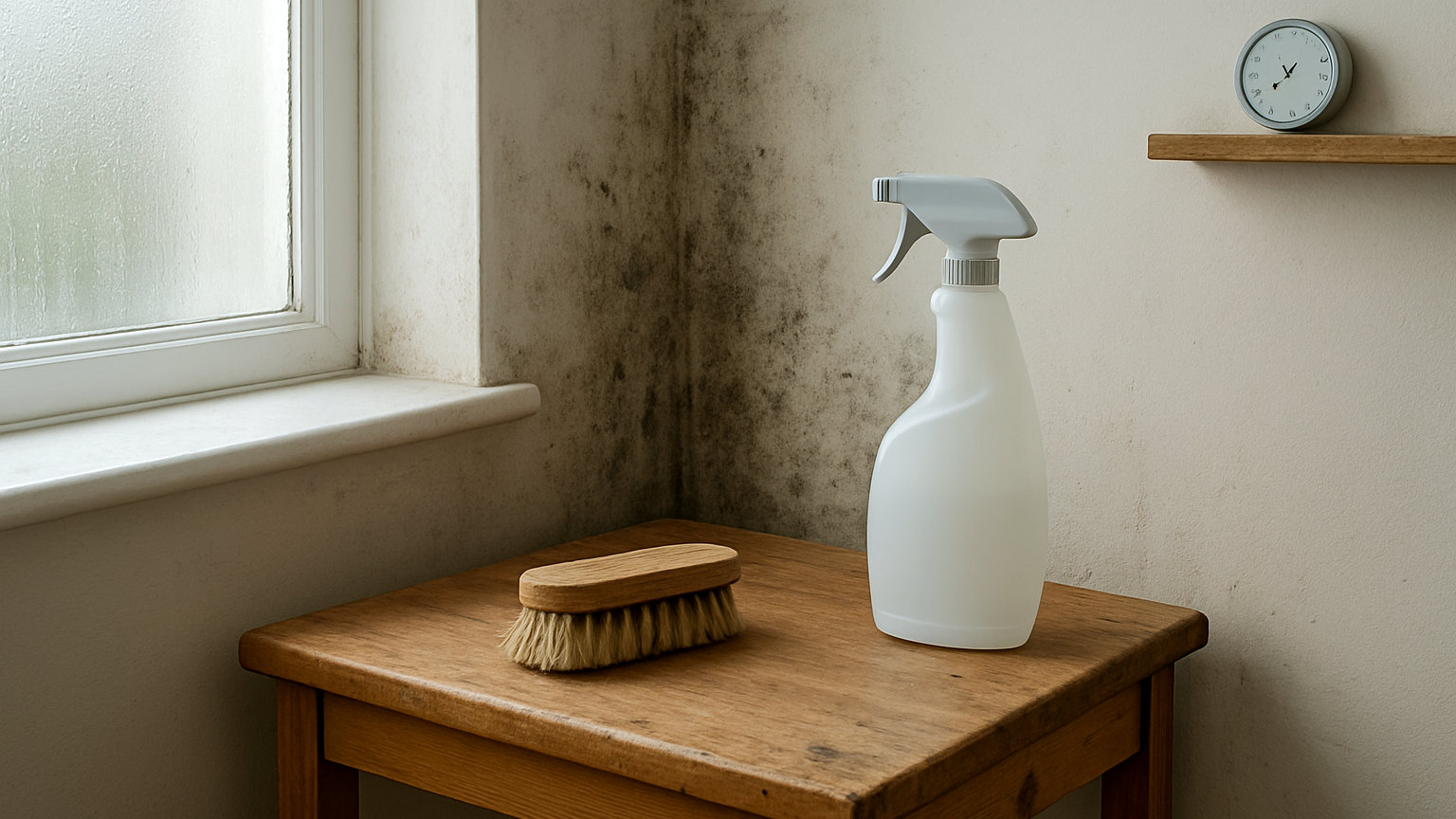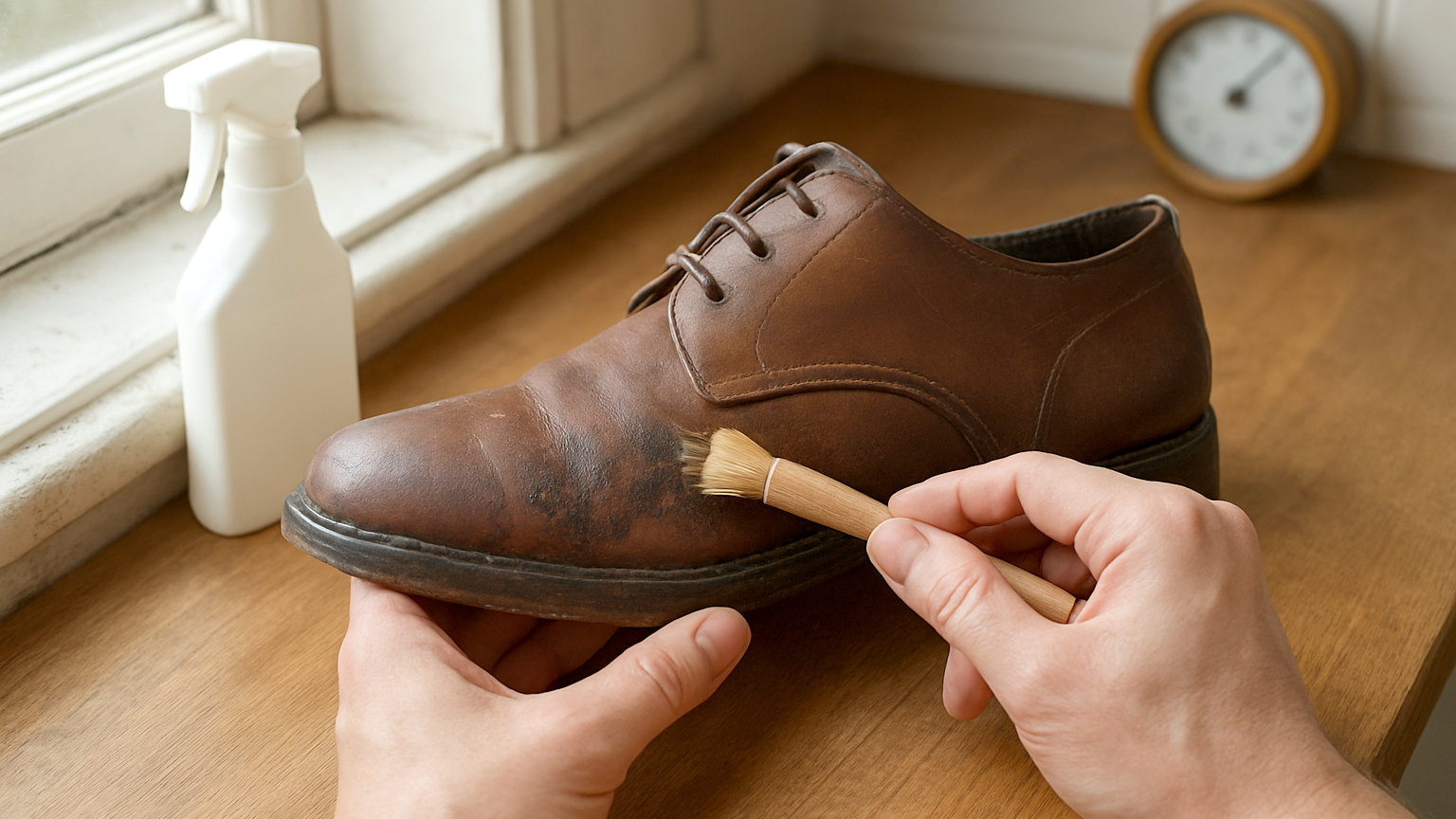
Mould on leather almost always comes from storage rather than use. Leather is a protein material, it holds moisture, and it is frequently put away in a cupboard, a loft or the bottom of a wardrobe with no airflow. Given a few damp months those conditions are ideal, which is why a pair of boots can come out in autumn covered in a grey bloom.
What should you do first?
- Take the item outdoors before touching the growth.
- Wear gloves, and a mask if there is a substantial amount.
- Brush off the surface growth with a soft brush, away from yourself.
- Leave the item in fresh air, out of direct strong sunlight, for a few hours.
- Only then clean it.
Brushing indoors spreads spores through the wardrobe and onto everything else in it, which is how one pair of shoes becomes a whole cupboard.
What is safe to clean leather with?
A solution of equal parts water and surgical spirit, applied on a cloth and wiped over the affected area, then dried immediately. Alcohol kills the growth and evaporates quickly, which suits a material that should not stay wet.
White vinegar diluted in water is a gentler alternative and works reasonably on light growth. A proprietary leather cleaner deals with what remains.
Follow with a leather conditioner once the item is fully dry, since both the mould and the cleaning dry the hide out.
What should never be used?
- Chlorine bleach, which destroys leather.
- Enzyme cleaners, which digest protein and will damage the hide.
- Soaking of any kind, since wet leather dries hard and cracked.
- Direct heat to speed drying, which shrinks and hardens it.
- Strong solvents, which strip the finish.
What about suede and nubuck?
Keep liquid away from them entirely. Brush the growth off outdoors with a suede brush, then use a suede eraser on any remaining mark. A light wipe with a cloth barely dampened in surgical spirit is the most that should be attempted, and it may leave a water mark.
Once dry, brush the nap back up and use a suede protector spray. Anything heavily affected is worth taking to a specialist.
How do you deal with the inside of shoes?
Often worse than the outside and frequently ignored. Remove the insoles and treat them separately. Wipe the interior with a cloth dampened in the alcohol solution, then dry the shoes thoroughly with the laces out and the tongue open.
Stuff them loosely with newspaper to absorb moisture, changing it after a few hours. Do not put them near a radiator.
What about the smell?
It usually means residue remains. Once dry, put a tablespoon of bicarbonate of soda into each shoe overnight and tip it out in the morning. Repeat if necessary. Sunlight and fresh air over a few days does a good deal.
A persistent smell after two rounds suggests growth within the lining or the insole, and replacing the insole is often the answer.
Why did it happen?
Because the item was put away damp, or stored somewhere with no ventilation and fluctuating humidity. Lofts, garages, cellars and the bottom of a wardrobe against an external wall are the usual locations, and shoes worn in rain and put straight into a cupboard are the usual cause.
How do you prevent it?
Dry footwear completely before it goes away, ideally over a day or two rather than overnight. Store leather with air around it rather than sealed in plastic. Use breathable shoe bags or the original boxes with the lid slightly open. Put silica gel sachets or a moisture absorber in the cupboard, and open the doors occasionally to let air move through.
What about handbags and jackets?
The same approach, with more attention to the lining, which is usually fabric and frequently worse affected than the leather outside. Empty the bag completely, brush the outside outdoors, treat the lining with a cloth dampened in the alcohol solution, and dry it open. Stuff a bag loosely with paper to hold its shape while it dries, and never store one sealed in a plastic bag.