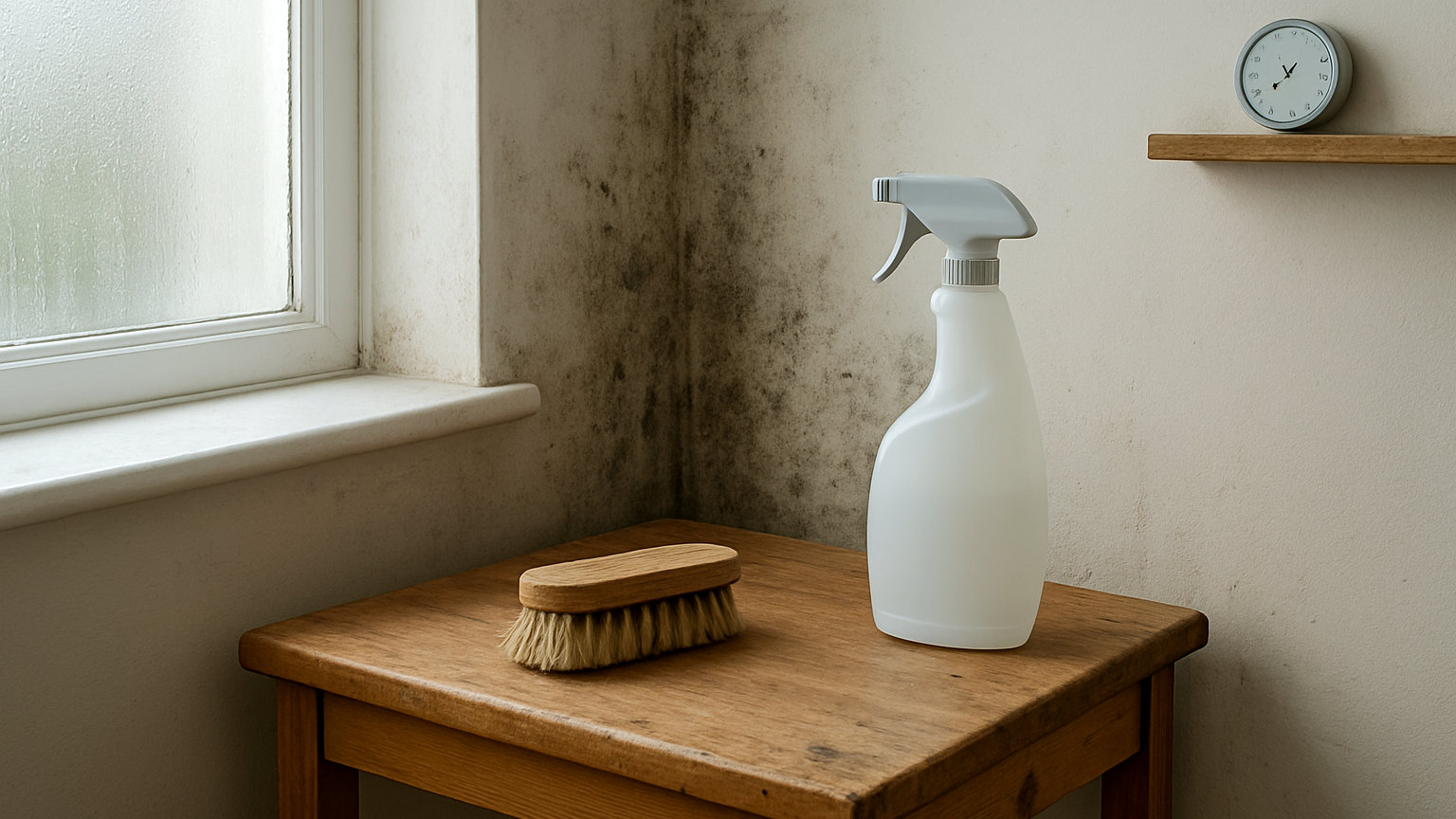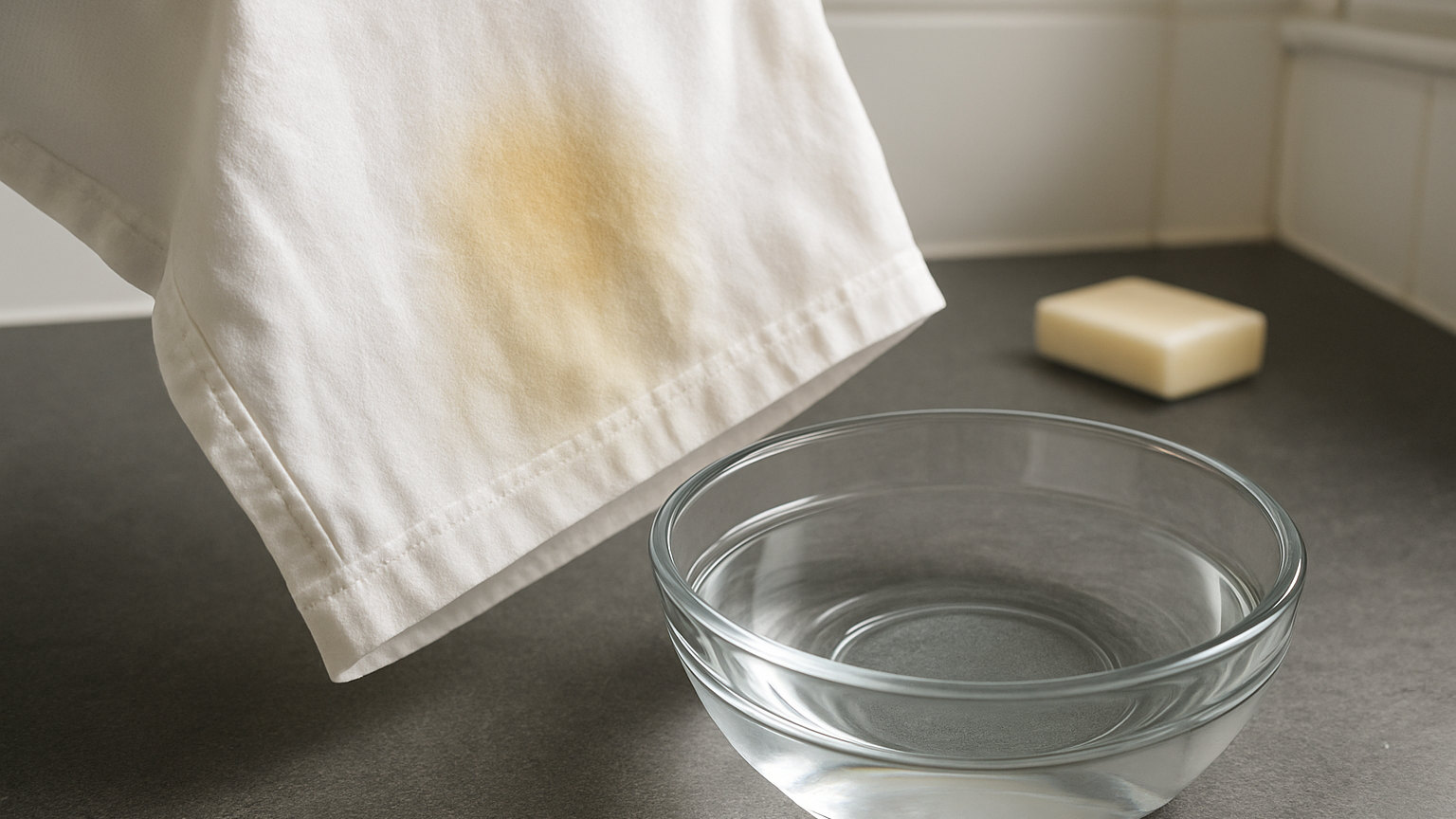
Mould on fabric is two problems. The living growth can be killed reliably with heat or an appropriate product. The stain it leaves is pigment produced by the fungus, and on some fabrics it has already damaged the fibres, which means the discolouration may not come out at all.
What should you do first?
- Take the item outdoors, and do the first stage there.
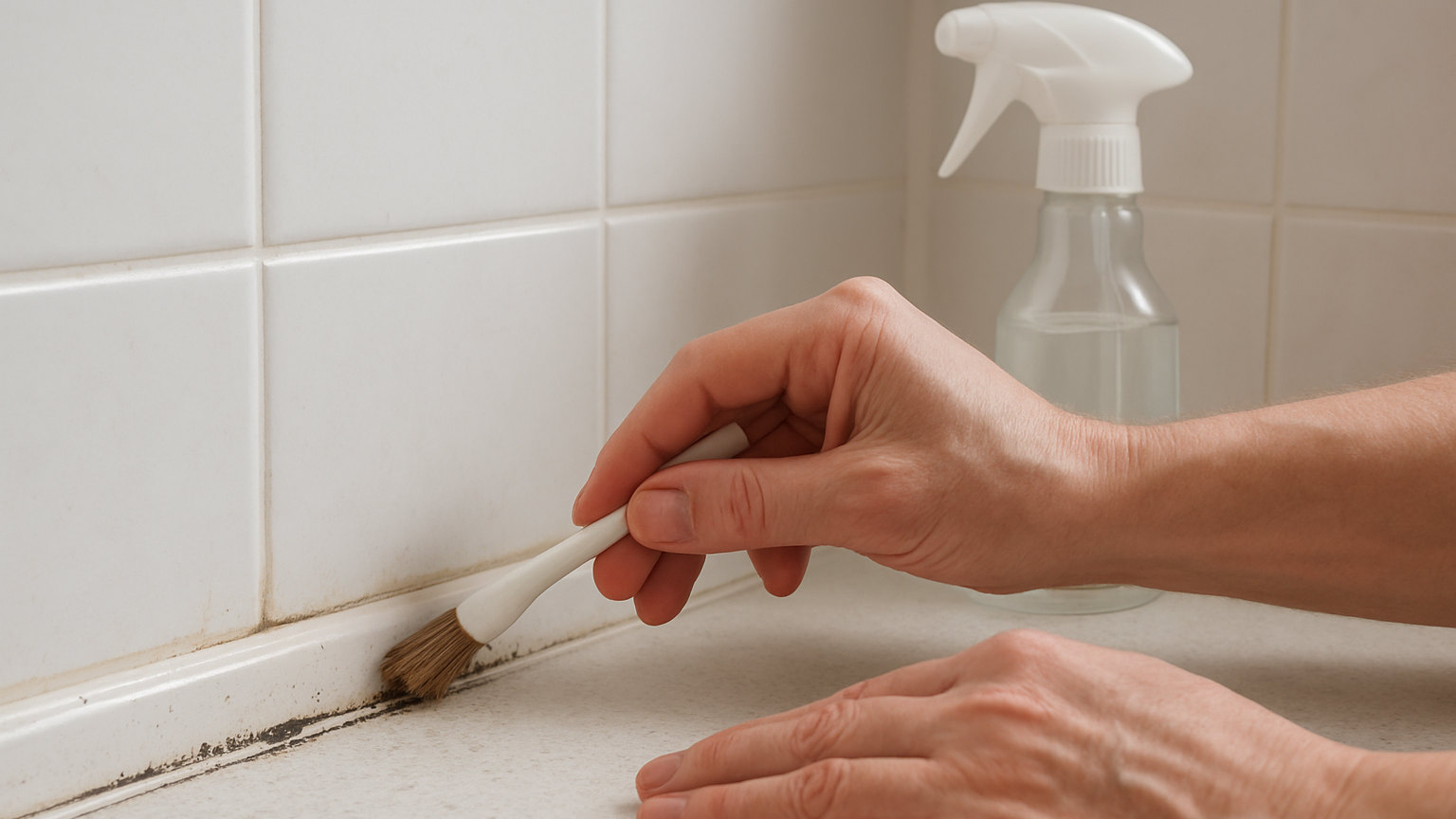
- Brush off the surface growth with a stiff brush, away from yourself and away from the house.
- Leave it in sunlight for a few hours if the weather allows, which kills spores and lightens the stain.
- Shake it out again before bringing it inside.
Brushing indoors releases spores into the room, which is worth avoiding both for health reasons and because you will simply reseed the problem elsewhere.
What is the washing method?
Soak in warm water with a cup of white vinegar for an hour, which kills much of the growth and begins on the stain. Then wash at 60 degrees where the fabric allows, with a biological detergent.
For white and colourfast items, add an oxygen bleach booster or soak overnight in an oxygen bleach solution, which is the most effective treatment for the staining.
Dry outdoors in sunlight, which continues to lighten what remains.
What if the fabric cannot be washed hot?
Use a laundry sanitiser designed to work at low temperatures, added to the rinse. Follow with a vinegar soak and thorough drying. Delicates and wool need the gentlest approach and are the most likely to keep a stain.
Anything valuable and mould damaged is worth taking to a professional cleaner rather than experimenting.
Does the stain always come out?
No, and it is worth setting expectations. Mould pigment binds strongly, and some species produce compounds that attack cellulose, which means the fabric may be weakened as well as stained. Black spotting on cotton frequently leaves a permanent grey shadow even after repeated treatment.
Test the fabric by stretching it gently in an affected area. If it tears easily, the fibres have been damaged and the item is beyond saving.
What about coloured fabric?
Oxygen bleach is colour safe in principle, though a long warm soak can affect a poorly dyed item. Test on a hidden seam first. Chlorine bleach removes the stain and the colour together and should not be used on anything but white cotton.
For coloured items, rely on the vinegar soak, a hot wash where possible and sunlight, and accept a slower and partial result.
What about curtains and large items?
Check the care label, since lined curtains frequently shrink unevenly and are better dry cleaned. For washable curtains, brush outdoors, soak in a bath with vinegar or oxygen bleach, then wash cool on a gentle cycle and hang damp to dry.
Mould on curtains is almost always caused by condensation on the window behind, so the window needs addressing or the curtains will go the same way again.
Why did it happen?
Because the fabric stayed damp. The usual causes are washing left in the machine, laundry that took days to dry, items stored before they were completely dry, a damp wardrobe against a cold external wall, and anything kept in a loft, garage or cellar.
Finding which of those applies matters more than the cleaning, since otherwise the next item goes the same way.
What precautions are worth taking?
Wear gloves, work outdoors where possible, and open a window if you cannot. Bag the cloths and brushes used rather than reusing them elsewhere. Anyone with asthma or a respiratory condition should get someone else to handle heavily affected items.
What about items in storage?
Check the rest of the box or wardrobe rather than treating one item in isolation. Spores spread readily in an enclosed space, so where one garment is affected the ones beside it usually are too, even if nothing is visible yet. Wash the lot, clean out the storage space, dry it thoroughly and put everything back only when both the clothes and the container are completely dry.