A fresh grease mark responds to washing up liquid in ten minutes. An old one frequently does not, because the oil has oxidised. Exposure to air and heat causes fat molecules to link together into larger, harder compounds that are bonded to the fibre rather than sitting in it, and those need breaking down rather than simply dissolving.
Why does age make so much difference?
Oxidation begins immediately and continues indefinitely. Within a day an oil mark is measurably harder to remove; within a month it has often darkened and set. Heat accelerates it enormously, which is why a garment that has been through a tumble dryer is so much worse than one that was air dried.
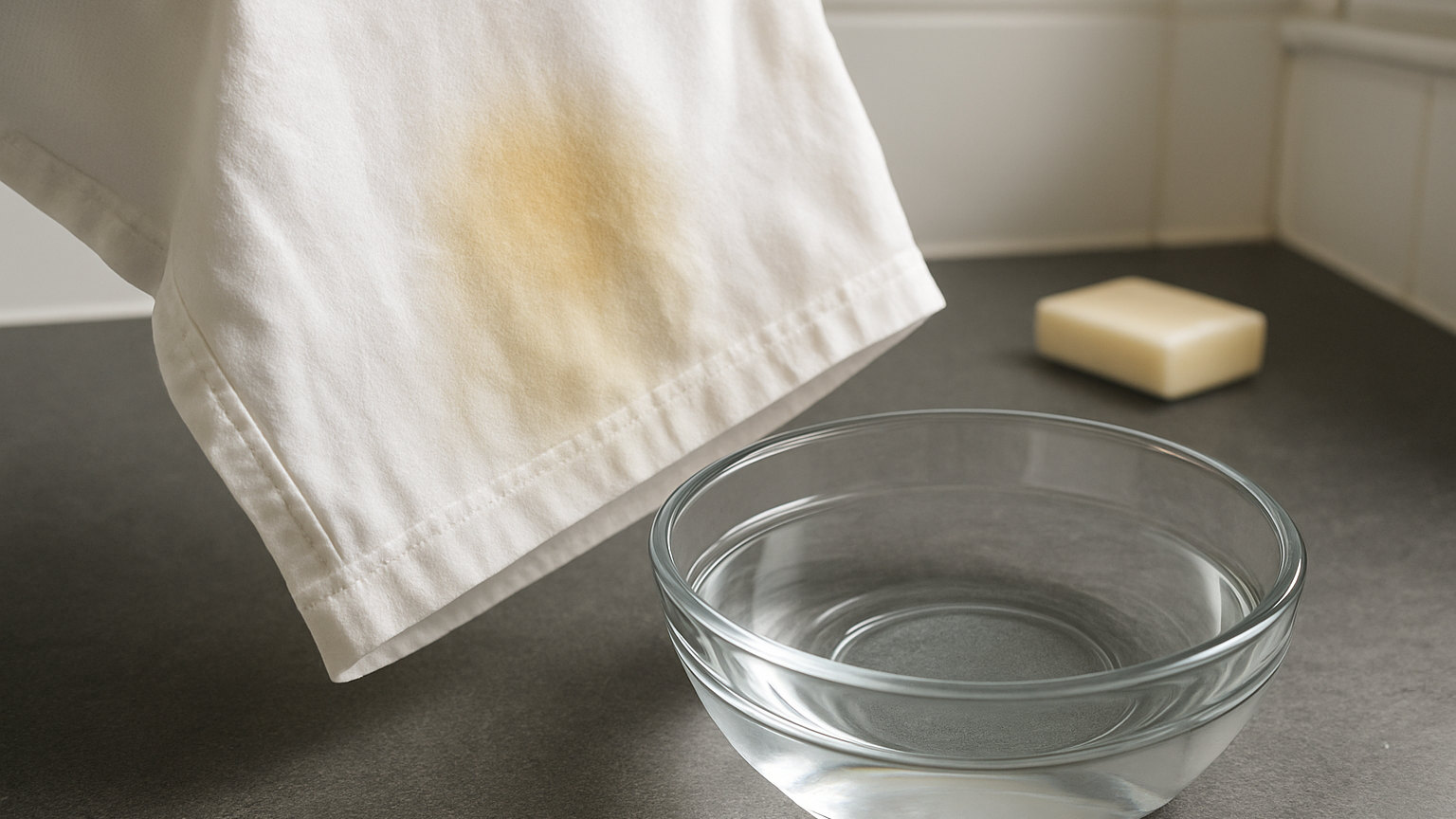
The visible sign is a mark that has gone from translucent to a definite yellow or brown, sometimes with a slightly stiff feel.
What is the method?
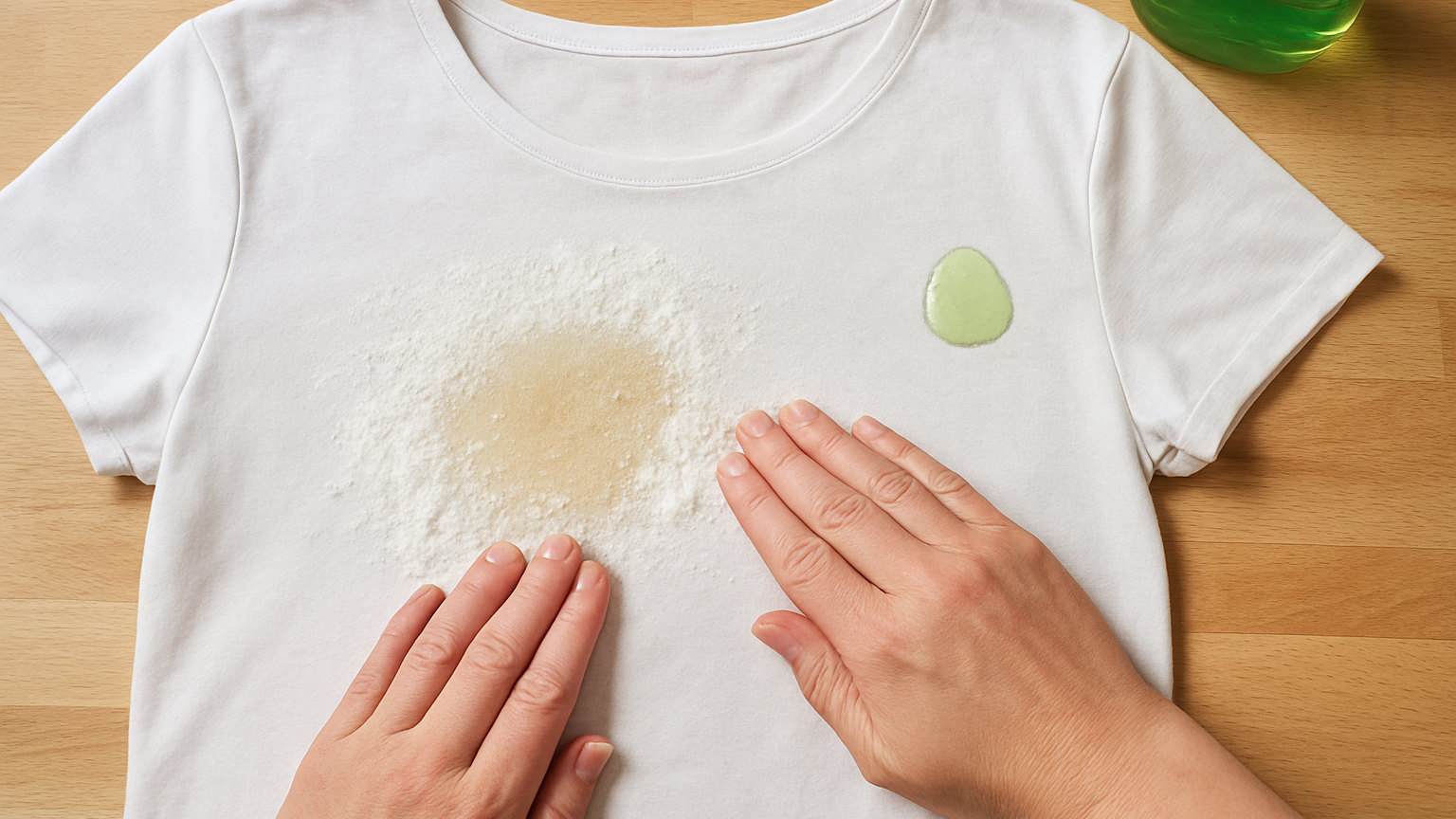
- Apply washing up liquid generously, far more than you would on a fresh mark.
- Work it in thoroughly with a soft brush or a fingertip, from both sides of the fabric.
- Leave it for thirty minutes to an hour rather than five minutes.
- Rinse in the warmest water the fabric allows.
- Repeat the whole process a second time before washing.
- Wash at the highest permitted temperature with a biological detergent.
- Air dry and assess. Do not tumble dry.
- Repeat over two or three washes if there is gradual improvement.
Dwell time and repetition are what work here. Scrubbing harder does not.
What else can be used?
- An eucalyptus based stain remover, which is a mild solvent and is effective on old grease and adhesive.
- A proprietary grease remover or pre-wash spray, applied and left for the stated time.
- Surgical spirit, dabbed on with a cloth from the reverse side, for stubborn spots on robust fabric.
- A paste of bicarbonate of soda, worked in and left for an hour, which absorbs and provides mild abrasion.
- Warm white vinegar in the wash, which helps cut residue.
Test any solvent on a hidden seam first, since some will affect dyes and some will damage synthetic fibres.
Does soaking help?
Yes, and it is underused. A long soak in hot water with a generous dose of detergent or soda crystals gives the surfactants hours rather than minutes to work. Soda crystals are particularly effective on grease and considerably stronger than bicarbonate of soda.
Avoid soda crystals on wool, silk and anything with elastane, since the alkalinity damages protein fibres and degrades elastic.
How do you treat a stain you cannot identify?
If it is translucent, darker when wet, and slightly greasy to the touch, treat it as oil. A stain that has spread outwards into a soft edged patch is usually oil rather than anything water based, which tends to leave a defined ring.
Start with washing up liquid and warmth, which is safe on almost everything and will not set the stain if you have guessed wrong.
What about stains that have spread?
Old oil migrates through fabric over months, so the visible mark is often larger than the original spill. Treat the whole affected area rather than the centre, and work from the outside in so you are not pushing it outwards further.
When is it permanent?
When three proper treatments produce no further improvement, and particularly on synthetic fabric that has been through repeated hot drying. Polyester holds oxidised oil more stubbornly than cotton, and a heat set mark on a synthetic shirt is frequently there for good.
Before giving up, try one long soak in hot water with soda crystals if the fabric allows. It is the strongest household option and occasionally clears what nothing else has.
Is it worth treating an old mark at all?
Usually yes, because the downside is small. Two rounds of degreaser and a warm wash cost very little and frequently reduce a set in mark to something barely visible, particularly on cotton. The decision only becomes difficult on a garment where a solvent might lighten the dye, and there a test on a hidden seam settles it.