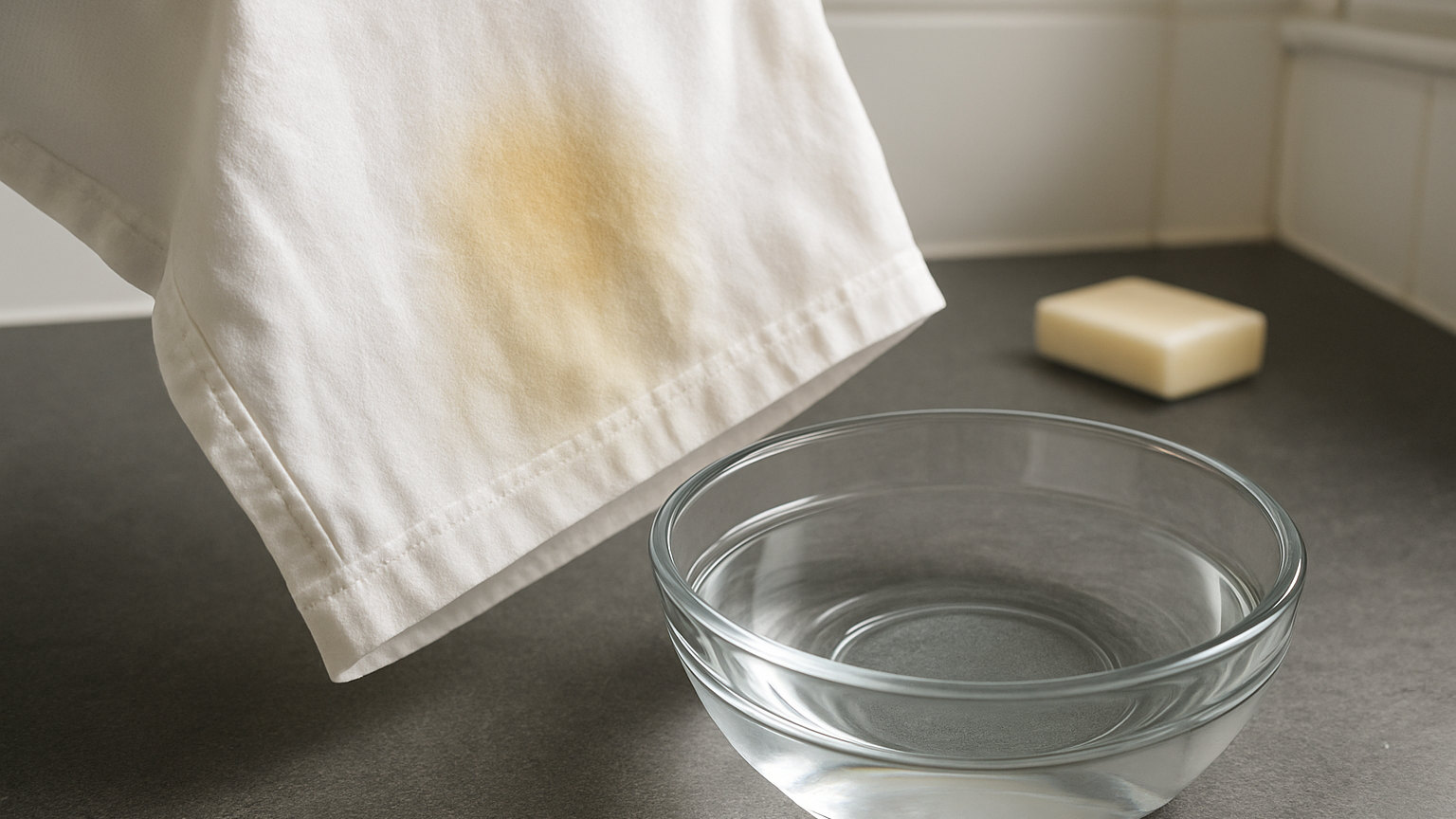
Suncream marks start as a greasy patch and frequently develop into a distinct orange or rust coloured stain over the following days. The orange is not dirt. It is a chemical reaction between certain ultraviolet filters in the cream, most often avobenzone, and iron in the water supply, and once it has happened it behaves like a rust mark rather than a grease one.
What should you do with a fresh mark?
- Blot off any excess cream with kitchen paper.
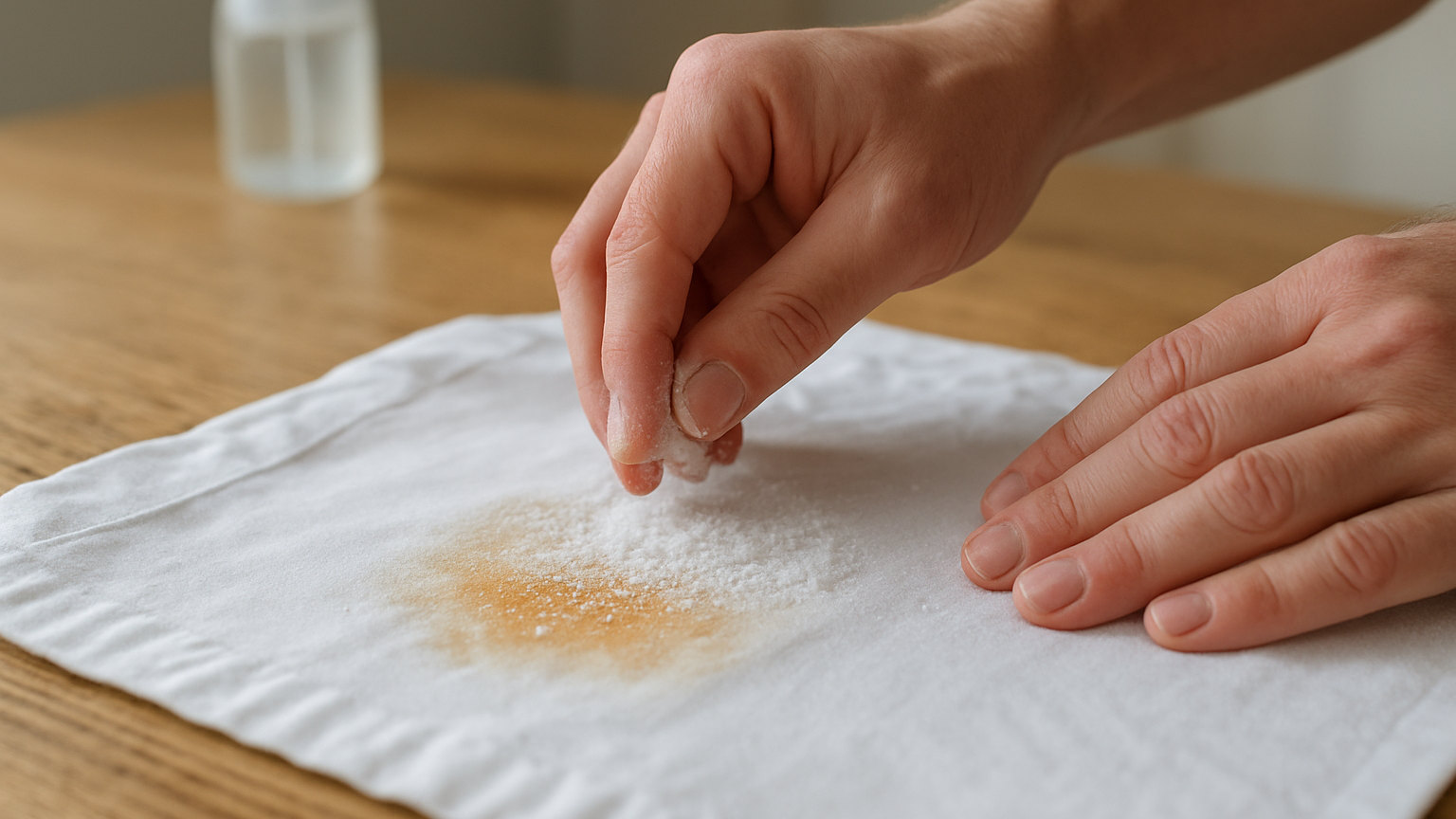
- Sprinkle with cornflour or talc and leave for thirty minutes to draw out the oil.
- Brush the powder away.
- Apply washing up liquid directly and work it in gently.
- Leave for ten minutes, then rinse in warm water.
- Wash at the warmest temperature the fabric allows.
- Check before drying and repeat if the fabric still feels slick.
Treating it promptly, while it is still a grease stain, avoids the orange stage entirely.
Why does it turn orange?
Avobenzone is a common broad spectrum filter, and it reacts with dissolved iron in water to form a rust coloured compound. Hard water areas with iron in the supply see it far more often. The reaction happens during washing, which is why the mark can be worse after a wash than before it.
Mineral filters based on zinc or titanium do not cause this, which is why some sun creams stain and others do not.
How do you remove an orange mark?
Treat it as a rust stain rather than a grease one. Lemon juice and salt applied to the mark and left in sunlight works on white cotton. A proprietary rust remover is more reliable and must be used exactly as directed, since these products are acidic and can damage fabric.
Oxygen bleach helps less here than on most stains, since the compound is metallic rather than organic. Chlorine bleach makes rust marks worse and should not be used.
What about white towels and swimwear?
These are where the problem shows most. Treat towels with a degreaser first, then a rust remover if orange marks appear, then wash at 60 degrees.
Swimwear cannot take hot water or harsh treatment because of the elastane. Rinse it in cool fresh water immediately after use, which prevents most of the problem, and treat any mark with washing up liquid and cool water. An orange mark on swimwear is often permanent.
Does it damage the fabric?
The reaction itself does not weaken the fibre significantly, but the treatments can. Rust removers are acidic, and repeated use on the same area will damage cotton over time. Use them once or twice rather than persistently.
How do you prevent it?
- Let suncream absorb fully before dressing, which takes fifteen to twenty minutes.
- Choose a mineral based product if staining is a recurring problem.
- Rinse swimwear and towels immediately in fresh cool water.
- Wash beach items separately and promptly rather than leaving them in a bag.
- Treat marks before they go through a wash, since the reaction happens in the water.
What about suncream on car seats and furniture?
It is a greasy mark on a surface that cannot be rinsed, so absorbent powder is the right first step. Leave it an hour, vacuum, then use a foam of washing up liquid and warm water on W or WS coded fabric. On leather, wipe with a damp cloth promptly and condition afterwards.
What about moisturiser and body lotion?
The same category of stain and usually easier, since most lotions lack the reactive filters. Absorbent powder, then washing up liquid, then a warm wash. They also cause the yellowing that appears on stored white clothing, so anything with lotion on it should be washed before it goes away for a season.
What about fake tan?
A different problem, since fake tan contains a dye that develops on contact with skin and on fabric. Treat the greasy carrier first with washing up liquid, then the colour with an oxygen bleach soak on white and colourfast items. Act quickly, because the colour continues to develop for several hours and is far harder once it has.