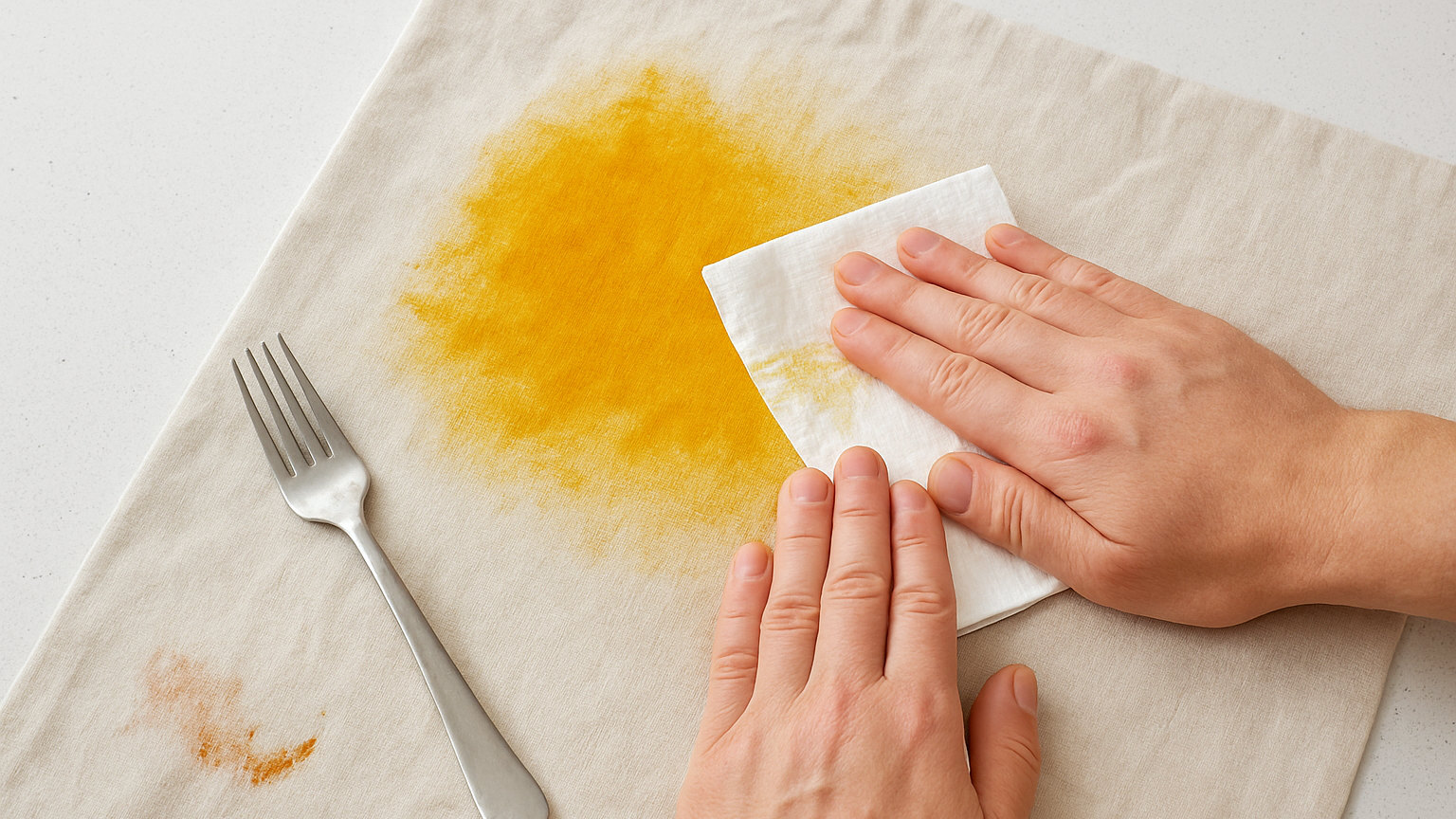
Turmeric is not really a stain in the normal sense. Curcumin, the compound that gives it colour, behaves as a genuine dye and bonds to fibres the way a fabric dye does. That is why washing up liquid and scrubbing achieve so little, and why the most effective remedy is ultraviolet light.
Why does sunlight work so well?
Because curcumin is photosensitive. Ultraviolet light breaks the molecule down into colourless compounds, and the effect is visible over a few hours rather than days. A yellow mark laid out in direct sun will fade substantially in an afternoon, often completely over two.
It works best on damp fabric, so treat and rinse the item first and put it out wet rather than letting it dry indoors.
What is the full method for fabric?
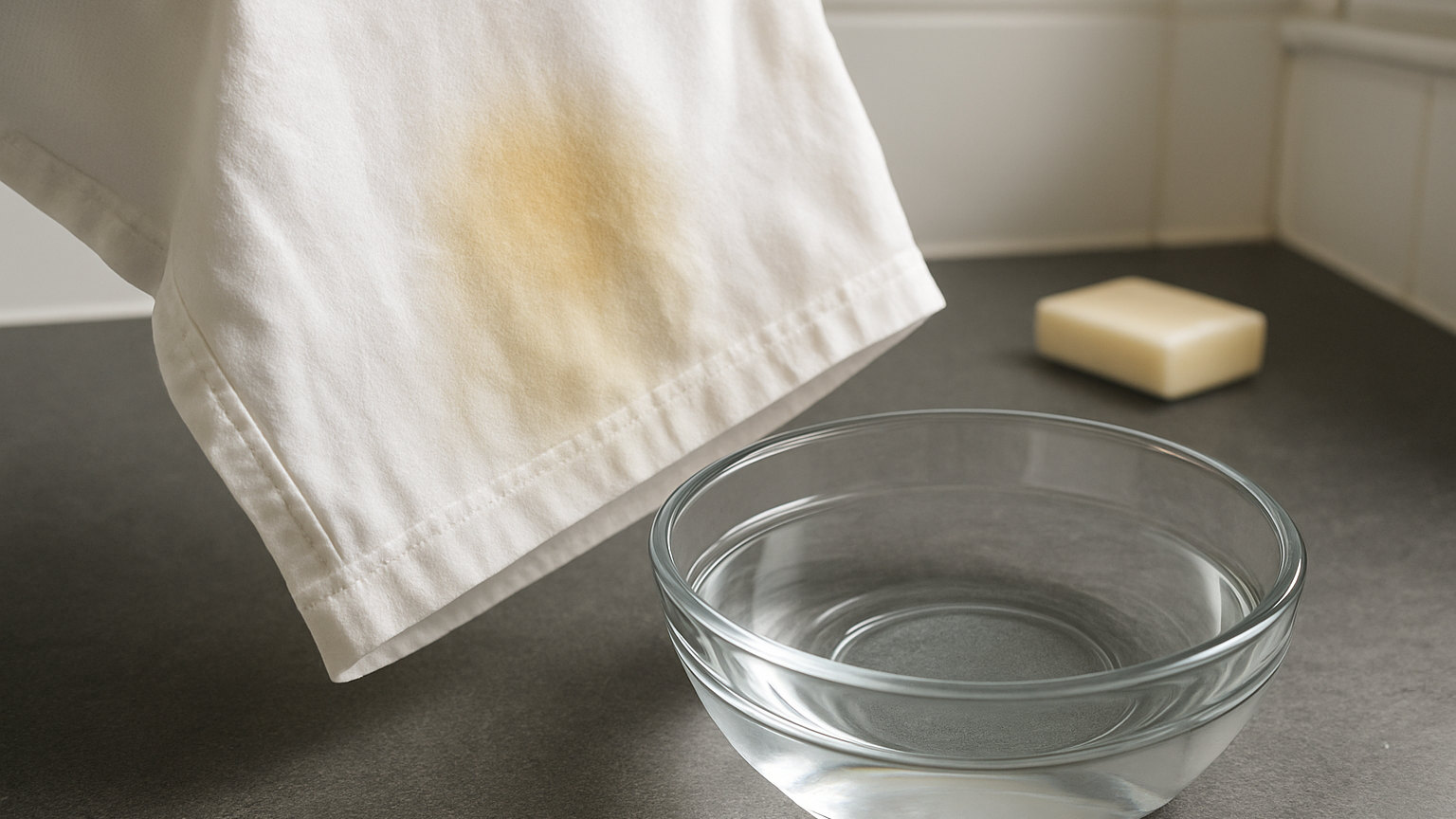
- Lift off any solid material and rinse the back of the fabric with cold water.
- Apply washing up liquid to the mark and work it in gently, since the spice is usually carried in oil.
- Leave it for ten minutes, then rinse.
- Wash normally at the warmest temperature the fabric allows.
- While still damp, lay the item in direct sunlight for several hours.
- Repeat the sun exposure over two or three days for a heavy mark.
The oil stage matters. Curry and spice pastes carry the pigment in fat, and removing the fat first lets the light reach the dye.
Why does turmeric sometimes turn red?
Because curcumin is a pH indicator. In alkaline conditions it shifts from yellow to a deep reddish brown, which is why applying bicarbonate of soda, soda crystals or chlorine bleach to a turmeric stain frequently makes it look dramatically worse.
If it happens, rinse thoroughly and apply a little white vinegar or lemon juice to bring the pH back down, which returns the colour to yellow. Then continue with the normal treatment.
Knowing this prevents the most common panic reaction to a curry stain.
What works on plastic containers?
The same principle. Wash with washing up liquid first, then leave the container outdoors in sunlight for a day or two. The yellow fades substantially and often completely.
A paste of bicarbonate of soda scrubbed in beforehand helps on textured plastic, though be aware of the colour shift, which will rinse away. Some people find that rubbing the inside with a little cooking oil before storing curry prevents the staining in the first place.
What about worktops and boards?
Act quickly, since porous surfaces take the dye permanently. On laminate and sealed stone, wash immediately with detergent and follow with a bicarbonate paste if a mark remains, then rinse and check.
On wooden boards, scrub with bicarbonate paste and rinse, then leave the board in sunlight. On unsealed natural stone, a turmeric stain may be permanent, and prevention by using a board is the realistic answer.
Do other spices behave the same way?
- Paprika and chilli powder – pigment in oil, less strongly bonded. Detergent and a warm wash usually clears them.
- Saffron – a strong yellow dye similar to turmeric, and it responds to the same sunlight treatment.
- Cumin and coriander – mostly oil rather than pigment, so treat as a grease stain.
- Mustard – contains turmeric as a colouring, so it behaves the same way and needs the same approach.
What should you avoid?
Chlorine bleach, which can fix the colour shift rather than removing it. Alkaline cleaners, for the same reason. Hot water before the oil has been dealt with. And tumble drying, which sets whatever is left and removes the option of sunlight on damp fabric.
Is a turmeric stain ever permanent?
Rarely on washable fabric, given patience and daylight. It is more often permanent on porous surfaces such as unsealed wood, grout and some plastics. Even there, repeated sun exposure over weeks reduces it considerably, which is worth trying before replacing anything.
What about turmeric on skin?
It fades on its own within a day or two as the skin renews, and washing with soap speeds it up a little. A scrub with lemon juice, or with a paste of bicarbonate of soda, lifts the worst of it. Wearing gloves when handling fresh turmeric root is the only real prevention, since the fresh root stains considerably more heavily than the dried powder.