Tomato and curry stains are both pigment carried in oil, which is why they resist a plain water rinse. The oil has to be dealt with first, or it holds the colour in the fibre and protects it from anything water based. The pigment then needs a separate treatment, and in the case of turmeric that is often sunlight rather than a product.
What is the first response?
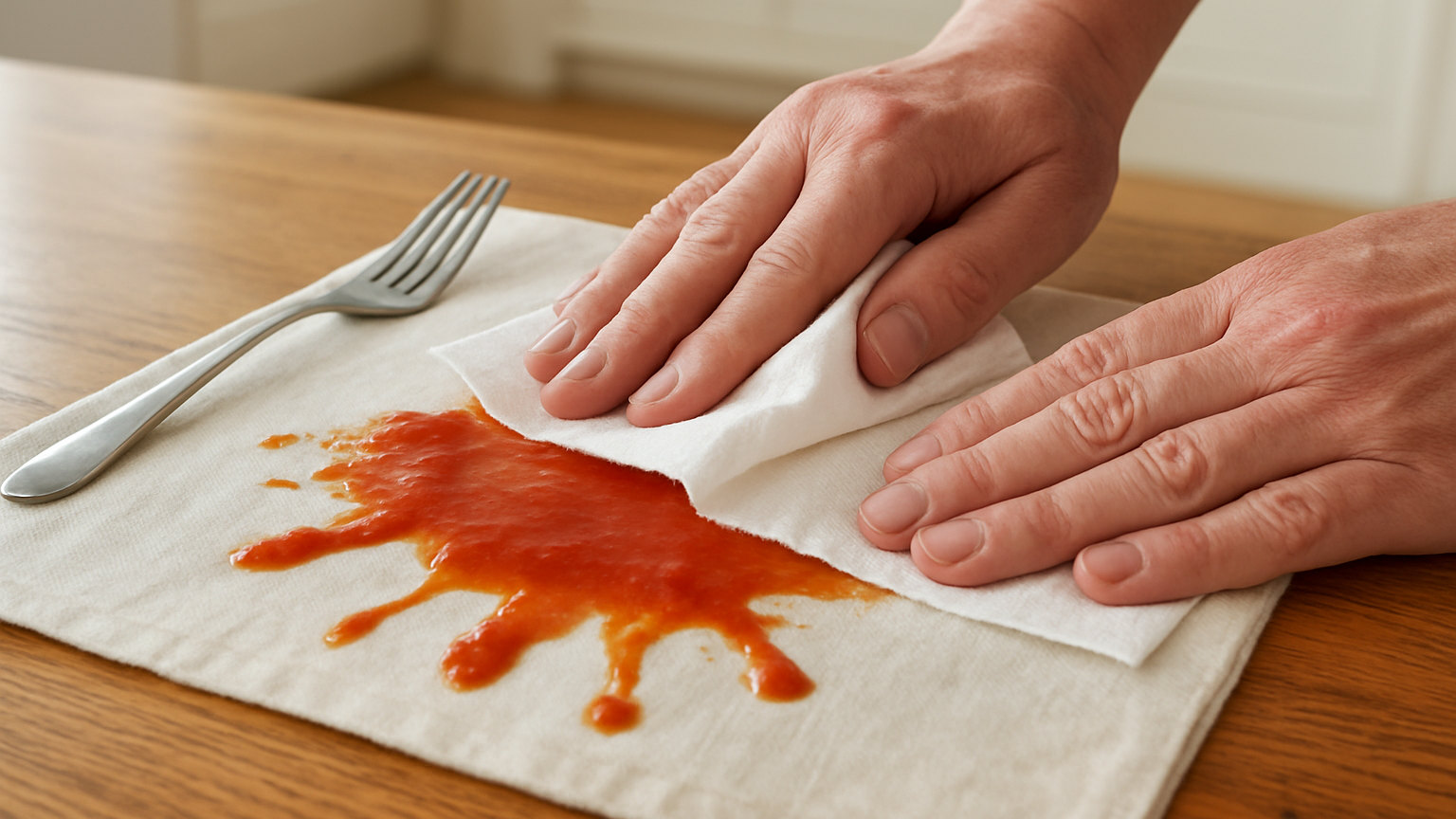
- Lift off any solids with a blunt edge, scraping rather than pressing.
- Flush the back of the fabric with cold running water to push as much out as possible.
- Apply washing up liquid directly to the mark and work it in gently with a finger.
- Leave it for five to ten minutes, which lets the detergent break down the oil.
- Rinse in cold water.
- Repeat the detergent step if an oily feel remains.
Washing up liquid is the right product here because it is formulated to cut grease, which is exactly what is holding the pigment in place.
Why does turmeric behave differently?
Because curcumin, the compound that makes turmeric yellow, is a genuine dye rather than a loose pigment. It bonds to fibres in the way a fabric dye does, which is why curry stains are so much harder than tomato ones and why scrubbing achieves so little.
The useful property of curcumin is that it breaks down under ultraviolet light. That makes sunlight the most effective treatment available, and it costs nothing.
How do you use sunlight on a curry stain?
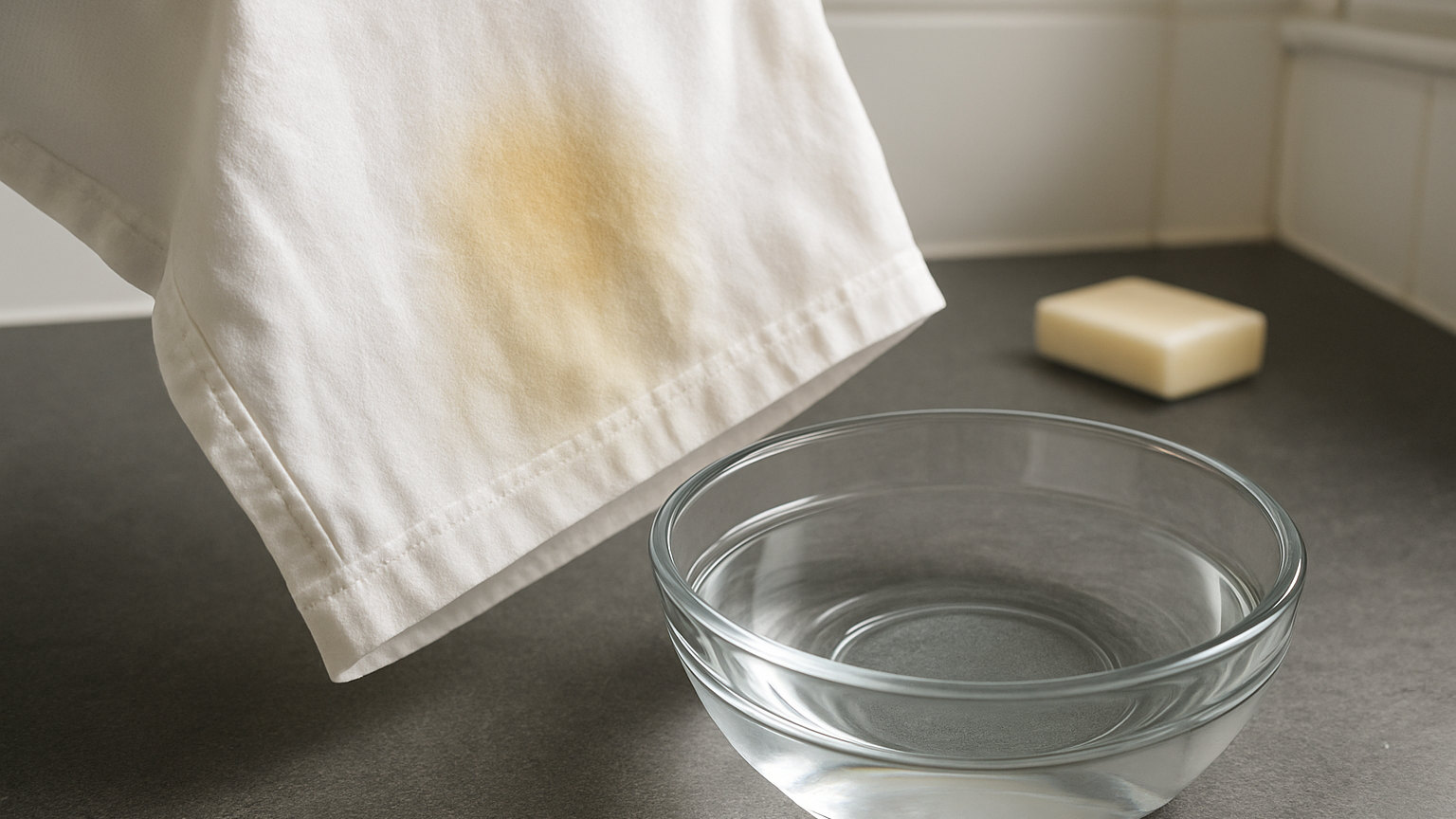
Treat the stain with detergent and rinse, then lay the item out damp in direct sunlight for several hours. The yellow fades visibly, often dramatically, over a single afternoon. Repeat over two or three days for a heavy mark.
It works best on damp fabric and on white or pale colours. On dark fabric the sunlight will also affect the dye, so keep the exposure shorter and check regularly.
What works on the tomato pigment?
Lycopene is less stubborn than curcumin and responds to oxidising treatment. After the detergent stage, soak white and colourfast items in warm water with an oxygen bleach booster for a few hours, then wash normally.
A small amount of white vinegar in the rinse helps on tomato specifically, since the acidity works against the pigment.
What is the method for carpet and upholstery?
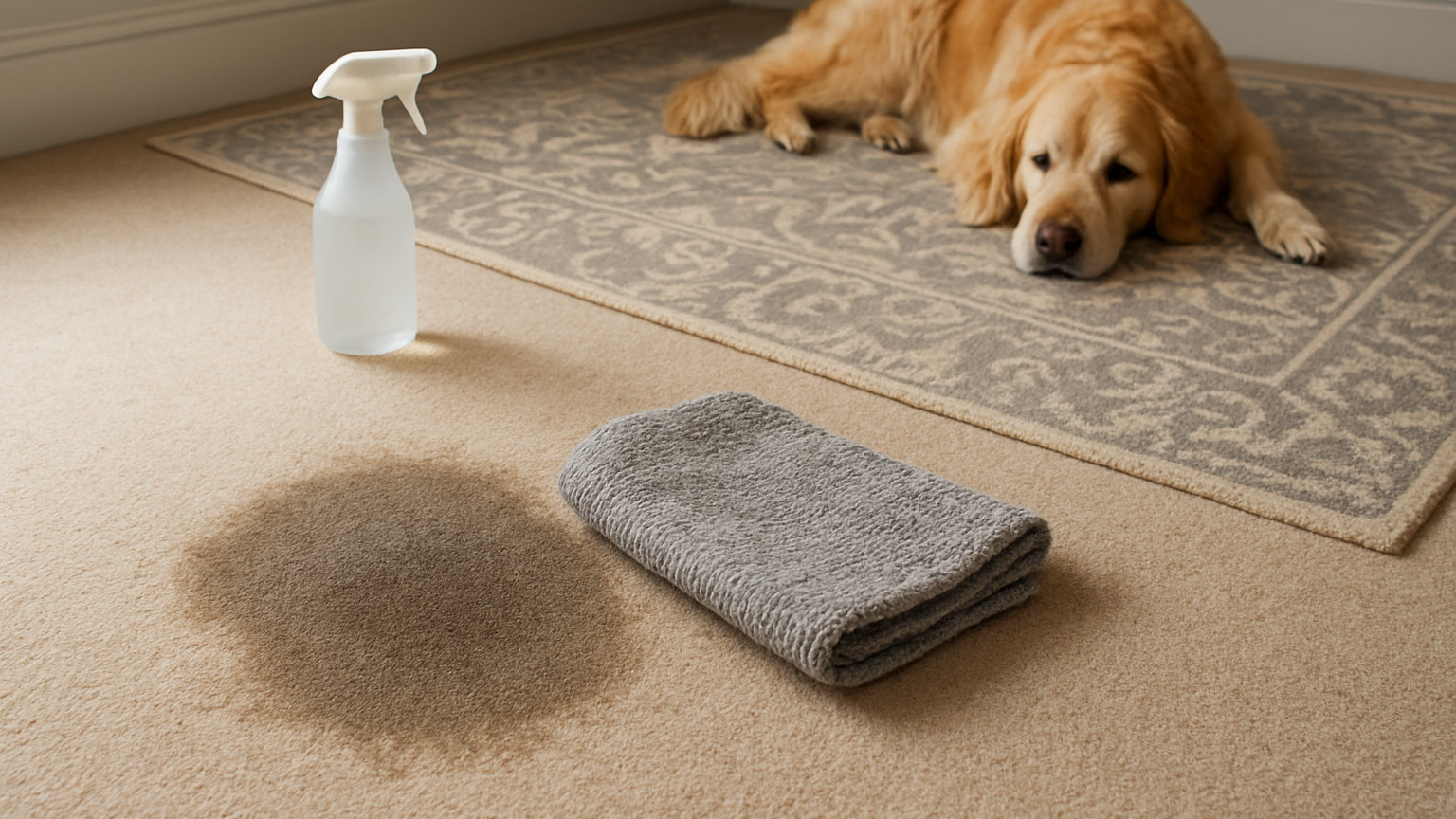
Blot up as much as possible without rubbing. Apply a solution of warm water with a drop of washing up liquid to a cloth rather than to the carpet, and dab from the outside of the mark inwards.
Rinse by blotting with a cloth dampened in clean water, then press a dry towel down under weight to draw the moisture out. Repeat in stages rather than soaking the area. For upholstery, check the cleaning code first, since an S coded fabric will ring if water is used.
What should you avoid?
- Hot water before the oil has been removed, which can set the pigment.
- Rubbing, which spreads both stains considerably.
- Tumble drying before the mark has gone entirely.
- Chlorine bleach on turmeric, which can turn the yellow a reddish brown.
- Giving up after one attempt, since both respond to repetition.
What about plastic containers and worktops?
Turmeric stains plastic readily and the same principle applies. Wash with washing up liquid, then leave the container outside in sunlight for a day. The yellow fades substantially. A paste of bicarbonate of soda rubbed in beforehand helps on textured plastic.
On worktops, act quickly, since porous stone and some laminates will take the colour permanently.
What if it has been through the wash already?
Curry stains frequently survive a wash and are still recoverable. Repeat the detergent and oil stage, since washing does not always remove the oil, then use sunlight over several days. Improvement is usually gradual rather than immediate.
What about tomato on plastic and worktops?
Tomato stains plastic containers readily, and the same two stage approach works: wash with detergent to remove the oil, then leave the container outside in sunlight for a day. On worktops, wipe immediately, since acidic tomato can etch natural stone as well as stain anything porous.