Blood on bedding is among the more recoverable versions of this stain, because sheets can be fully submerged and most bedding is cotton, which tolerates soaking, enzymes and oxygen bleach. The usual reason it becomes permanent is not the stain but the response: a hot wash before any treatment.
What should you do when you find it?
- Strip the bed and deal with the sheets before anything else.
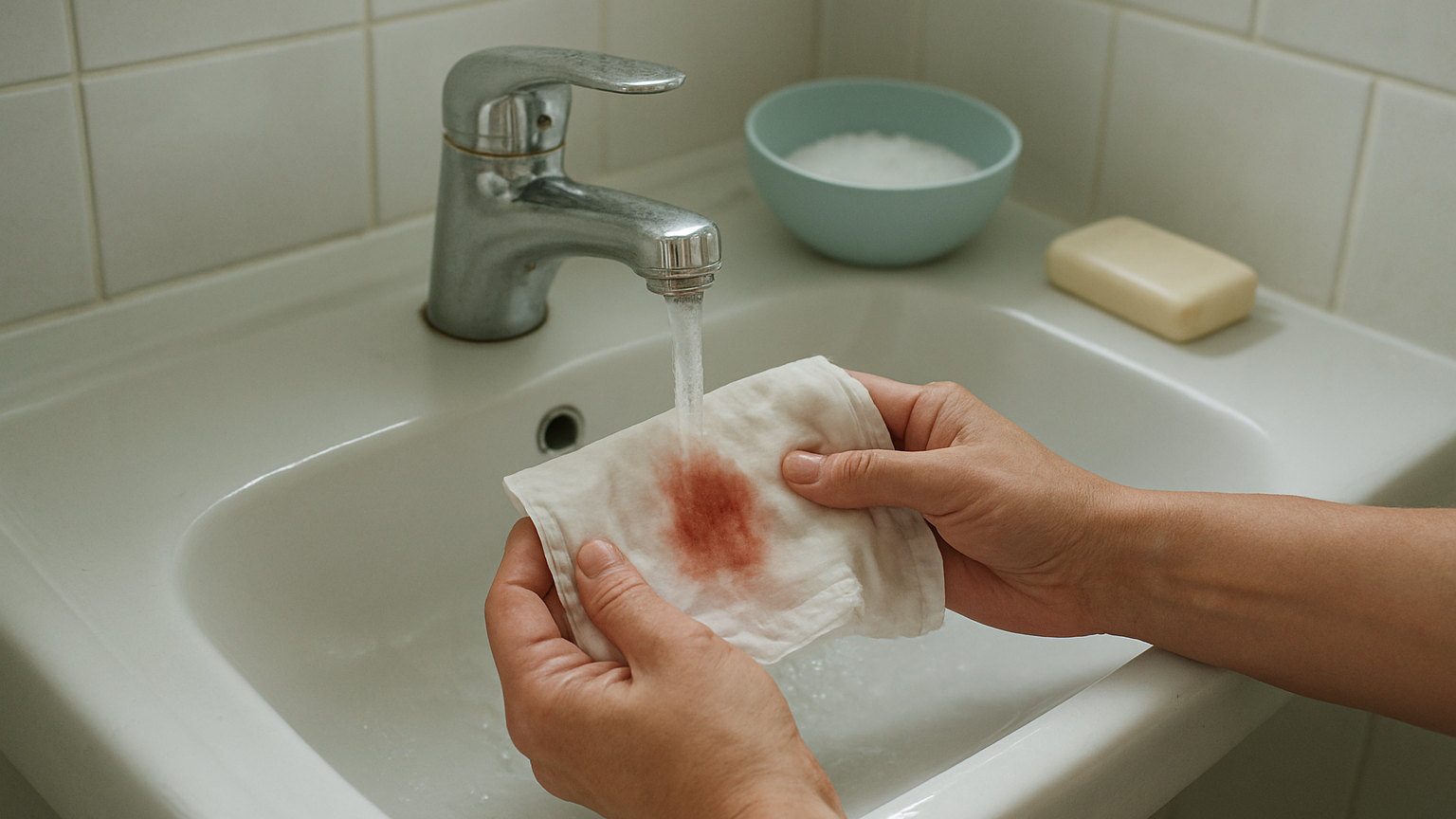
- Rinse the marked area under cold running water from the reverse side.
- Keep flushing until the water runs clear.
- Rub a biological detergent into the mark.
- Soak the whole item in cold water with a full dose of biological detergent for several hours or overnight.
- Wash at 30 or 40 degrees.
- Check the area while damp before drying.
Soaking the whole sheet rather than spot treating avoids a visible patch where the treated area comes up cleaner than the rest.
Why cold, when bedding is normally washed hot?
Because the protein sets in heat. Bedding is usually washed at 60 degrees for hygiene reasons, and that temperature will fix a blood stain permanently into the fibre.
Treat cold first, confirm the mark has gone, and then wash hot afterwards if you want the hygiene benefit. The order is what matters.
What works on white cotton sheets?
Everything, which makes them the easiest case. After the cold enzyme soak, apply a solution of one part three per cent hydrogen peroxide to two parts water directly to any remaining mark. It will fizz on contact, which is the reaction working.
Follow with an oxygen bleach soak and a wash at 60 degrees, then dry in sunlight. Old blood on white cotton frequently comes out completely with this sequence.
What about coloured and patterned bedding?
Test hydrogen peroxide on a hem before using it, since it will lighten some dyes. Oxygen bleach is colour safe in principle, though a long warm soak can affect a poorly dyed set.
Otherwise rely on repeated cold enzyme soaks, which are safe on almost everything and effective given time.
What about a mark found days later?
Still worth treating, provided the bedding has not been washed hot in the meantime. Soak for an hour in plain cold water to rehydrate, then overnight in cold water with a biological detergent. Repeat if there is partial improvement.
Dried blood that has never been heated responds well to a long soak even after weeks.
What about the mattress underneath?
Check it, since blood frequently goes through a sheet. Treat it separately with cold water, blotting and a bicarbonate paste, using as little moisture as possible, and dry it thoroughly with a fan before remaking the bed.
A washable mattress protector prevents this entirely and is the single most useful thing to have on a bed.
What about duvets and pillows?
Spot treat rather than soaking, since a wet filling is very difficult to dry out and will develop mould inside where nothing can reach it. Dab the affected area with cold water and a biological detergent applied to a cloth, blot firmly, and press a dry towel down under weight to extract as much moisture as possible.
Dry with a fan directed at the spot and check that the filling is dry right through to the core before the bed is remade. Feel the thickest part rather than the surface, since down and hollowfibre both hold damp below a dry looking exterior.
What should be avoided?
Hot water at any stage before the protein has been broken down. A tumble dryer before the mark is confirmed gone. Chlorine bleach, which can react with blood to leave a yellow mark and weakens cotton. And scrubbing, which damages the fabric without reaching the protein.
Should the bedding be washed hot afterwards?
Once the mark has gone, yes. Bedding benefits from a 60 degree wash for hygiene reasons, and there is no longer any protein left to set. The sequence is the point: cold enzyme soak first, confirm the stain has cleared while the fabric is damp, then wash hot. Doing it in the other order is what makes these stains permanent.