Grass stains are more complicated than they look. They contain chlorophyll, which is a pigment that binds readily to fibre, along with plant proteins, sap and soil. That combination is why a plain wash rarely removes them and why the most effective home treatment uses two different things in sequence.
What is the method?
- Brush off any loose soil and dried plant material dry.
- Rinse the back of the fabric with cold water.
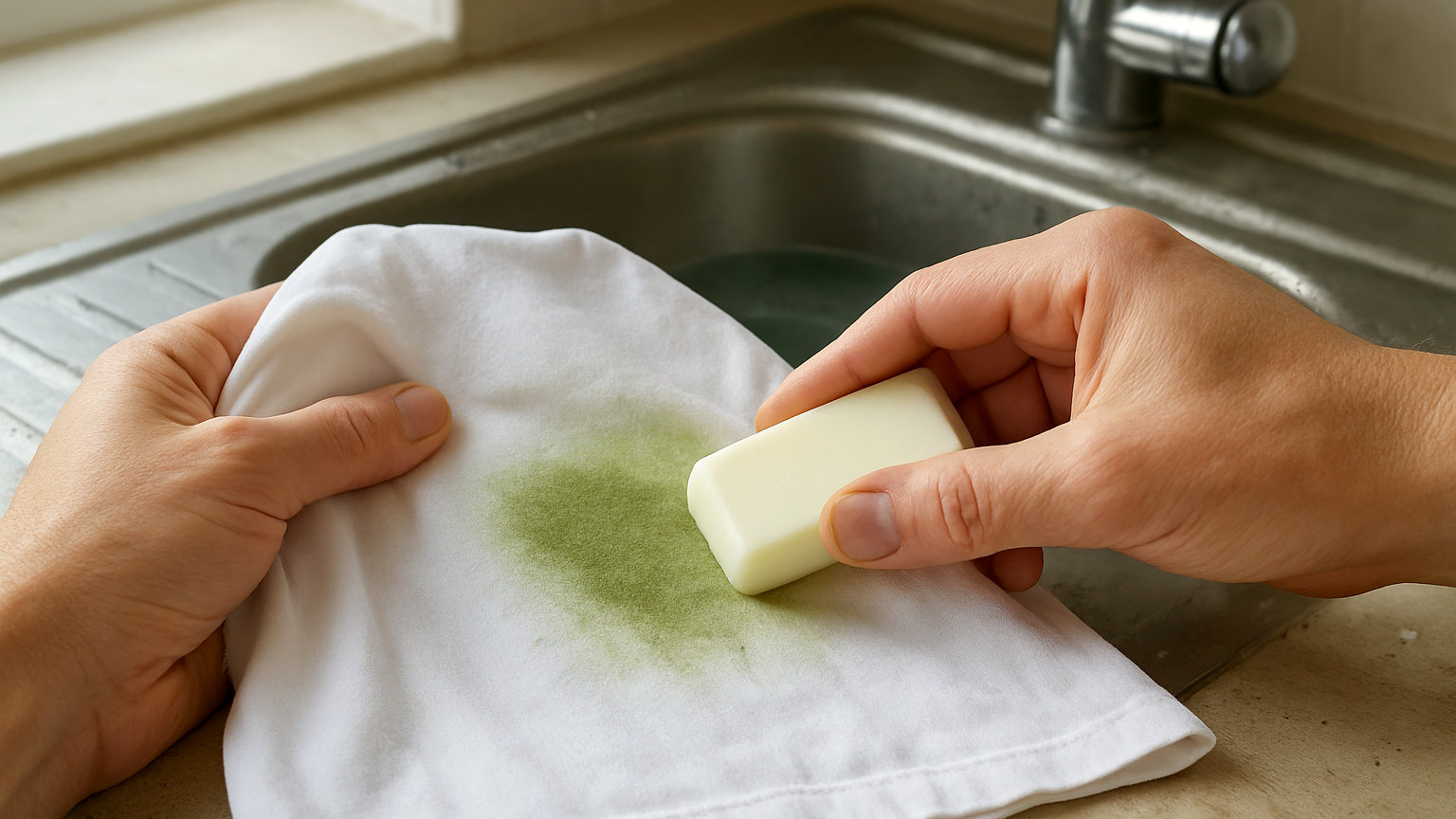
- Rub a biological detergent into the mark and leave it for fifteen minutes.
- Rinse again in cold water.
- Dab the remaining green with surgical spirit on a cloth, working over a pad of white kitchen paper.
- Rinse, then wash at the warmest temperature the fabric allows.
- Dry in sunlight, which lifts the last of the green.
The enzyme stage deals with the protein and sap; the alcohol dissolves the chlorophyll. Doing one without the other is why grass stains have a reputation for being stubborn.
Why cold water first?
Because grass contains protein, and protein sets in heat. A hot rinse or a warm wash before treatment locks both the protein and the pigment into the fibre.
Cold throughout the treatment stages, warmth only in the final wash once the protein has been broken down.
What works on white cotton?
The easiest case, because oxygen bleach is available. After the enzyme and alcohol stages, soak in warm water with a generous dose of oxygen bleach for several hours, then wash at 60 degrees and dry in sunlight.
White sports kit and cricket trousers come back remarkably well with this sequence, even from a heavy mark.
What about coloured and synthetic kit?
Test surgical spirit on a seam first, since it lifts some dyes. Polyester holds chlorophyll more stubbornly than cotton and may keep a faint green shadow.
For coloured cotton, rely on the enzyme soak, a second alcohol pass and sunlight, which is safe and slow rather than dramatic.
Does white vinegar help?
Modestly, and it is worth trying where alcohol is not available or where the fabric will not take it. A solution of one part white vinegar to two parts water, applied to the mark and left for thirty minutes, lifts some of the green.
It is weaker than surgical spirit and gentler, which makes it a reasonable option on delicate fabric.
What about knees on children trousers?
The most common location and usually grass mixed with mud. Let the mud dry completely and brush it off first, since wet mud smears into the weave and enlarges the problem considerably.
Then treat the grass underneath. Doing it the same evening rather than at the weekend makes a substantial difference, because chlorophyll bonds progressively.
What about grass on suede and leather?
Brush suede dry with a suede brush once any mud has dried, and use a suede eraser on what remains. Keep all liquid away.
On coated leather, wipe with a damp cloth and a little mild soap, then condition. On white leather trainers, a paste of bicarbonate of soda and washing up liquid scrubbed with an old toothbrush works well, followed by drying in sunlight.
When does it become permanent?
After heat. A grass stain that has been through a hot wash or a tumble dryer has both set protein and bonded pigment, and the result is usually a permanent green grey shadow. Repeated enzyme soaks improve it and rarely clear it.
Check every garment while damp before drying, which is the habit that saves most of these.
What about grass on a lawn mower day?
Heavy grass staining on trousers and trainers from mowing is a different scale of the same problem, and it responds to the same sequence with more repetition. Change out of the clothes and treat them the same day rather than leaving them in a basket, since chlorophyll bonds progressively and a week makes a substantial difference to the result.