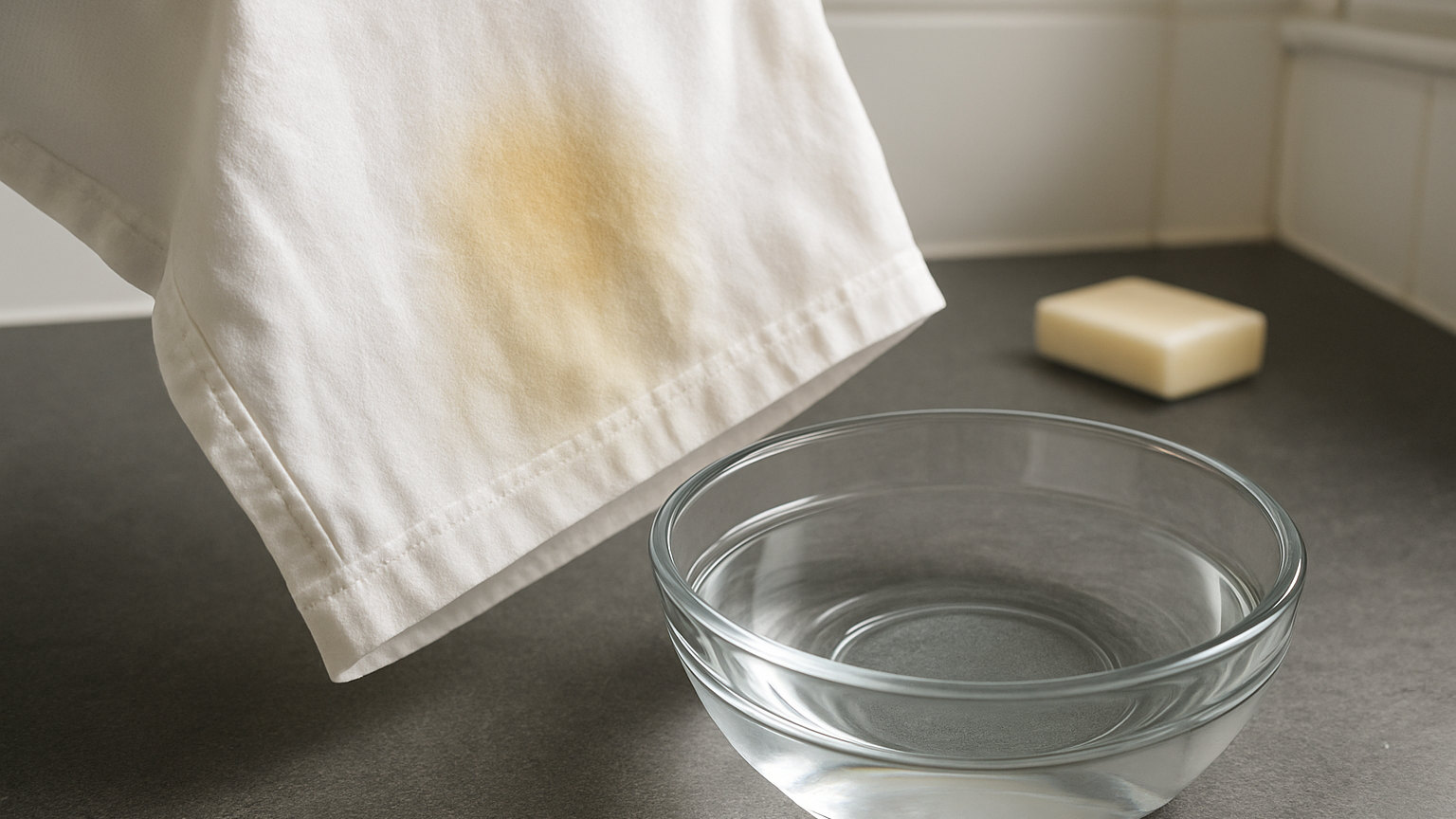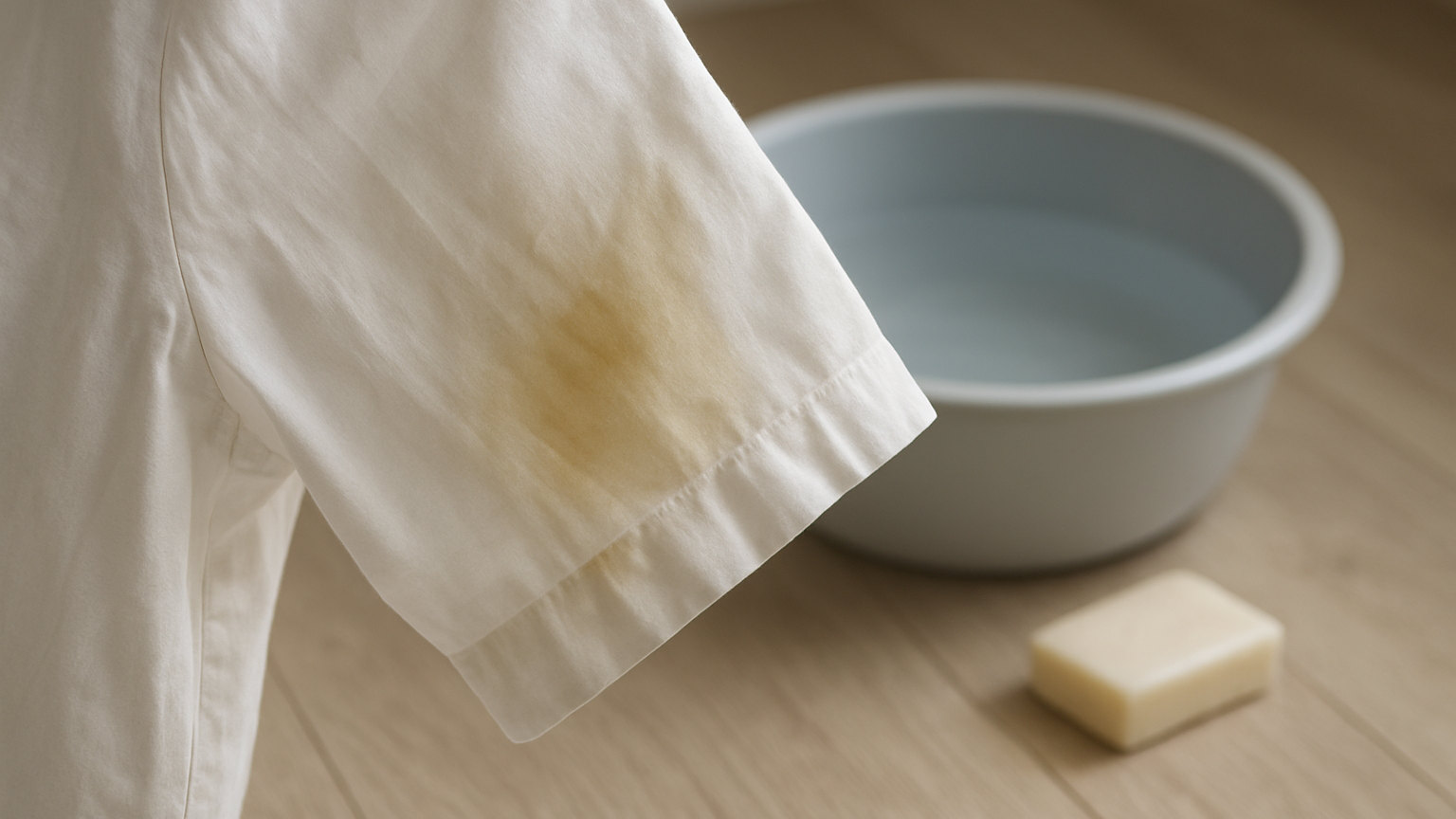
Sweat alone rarely yellows fabric. The characteristic yellow, stiff underarm is the product of a reaction between the aluminium salts in antiperspirant and the proteins and oils in perspiration. The simplest evidence is practical: people who switch to an aluminium free deodorant generally find that shirts bought afterwards do not develop the marks.
What is the difference between the two products?
An antiperspirant reduces sweating. It contains aluminium compounds that form a temporary plug in the sweat duct, physically limiting how much perspiration reaches the surface.
A deodorant does not reduce sweating at all. It controls the bacteria that break sweat down into the compounds that smell, usually with an antibacterial agent and a fragrance.
Many products are both, and the packaging usually says so.
How does the reaction happen?
Aluminium transferred onto fabric binds with proteins from skin and sweat to form a complex that is not water soluble. That complex survives a normal wash, accumulates with each wear, and oxidises over weeks into a yellow deposit.
The stiffness is the physical deposit; the colour is the oxidation. Both are products of the combination rather than of either component alone.
Does switching actually help?
For most people, noticeably. Aluminium free deodorants leave a much lighter residue that washes out in a normal cycle, so new shirts stay clean. Existing marks will not disappear, since the deposit is already in the fabric, though they stop getting worse.
The trade is that a deodorant does not reduce sweating, so anyone who relies on an antiperspirant for that reason may find the change unacceptable. It is worth a few months of trial rather than a decision in principle.
What about natural and crystal deodorants?
Crystal or alum deodorants do contain aluminium, in the form of potassium alum, though the molecule is larger and behaves differently. Reports on whether they cause the same staining are mixed.
Bicarbonate based natural deodorants contain no aluminium and generally do not stain, though some people find bicarbonate irritating to skin.
Are there other factors?
- Washing temperature. Cool washes leave the oils behind, which contributes to the yellowing.
- Wearing a shirt twice, which doubles the deposit before any washing happens.
- Chlorine bleach, which reacts with the residue and makes the colour worse.
- Storage, since oxidation continues in a wardrobe.
- Fabric, with cotton showing it more readily than polyester.
The antiperspirant is the main cause and these determine how quickly it shows.
What should you do if you keep using antiperspirant?
Apply less, let it dry fully before dressing, rinse the underarm of the shirt under cold water as soon as it comes off, and wash at 40 rather than 30 with a biological detergent. Never store a shirt that has not been washed since it was worn.
Underarm shields or a cotton vest under a shirt take the residue instead, and both are cheaper than replacing shirts.
Is aluminium in antiperspirant a health concern?
It has been the subject of recurring public debate, and the current position of major health bodies is that the evidence does not support the claimed links. Anyone with specific health concerns should raise them with a GP or pharmacist rather than relying on general information.
The staining question is separate and is a straightforward matter of chemistry.
What is the practical conclusion?
If shirts are yellowing and you would rather they did not, an aluminium free deodorant is the most direct change available. If you need the antiperspirant effect, the washing habits above will slow the problem considerably without eliminating it.
How long does the change take to show?
A few months, and only on shirts bought or cleaned after the switch. Existing residue is already bonded into the fabric and will keep oxidising regardless, so the fair test is a new shirt or one that has been through a full oxygen bleach soak first. Judging the change on a shirt that already has marks will suggest it has not worked when it has.