A household needs four types of cloth to cover every cleaning job, and beyond that the variety matters far less than the quantity. Running short is what leads to reusing a damp cloth, using a bathroom cloth in a kitchen, and all the problems that follow.
What are the four types?
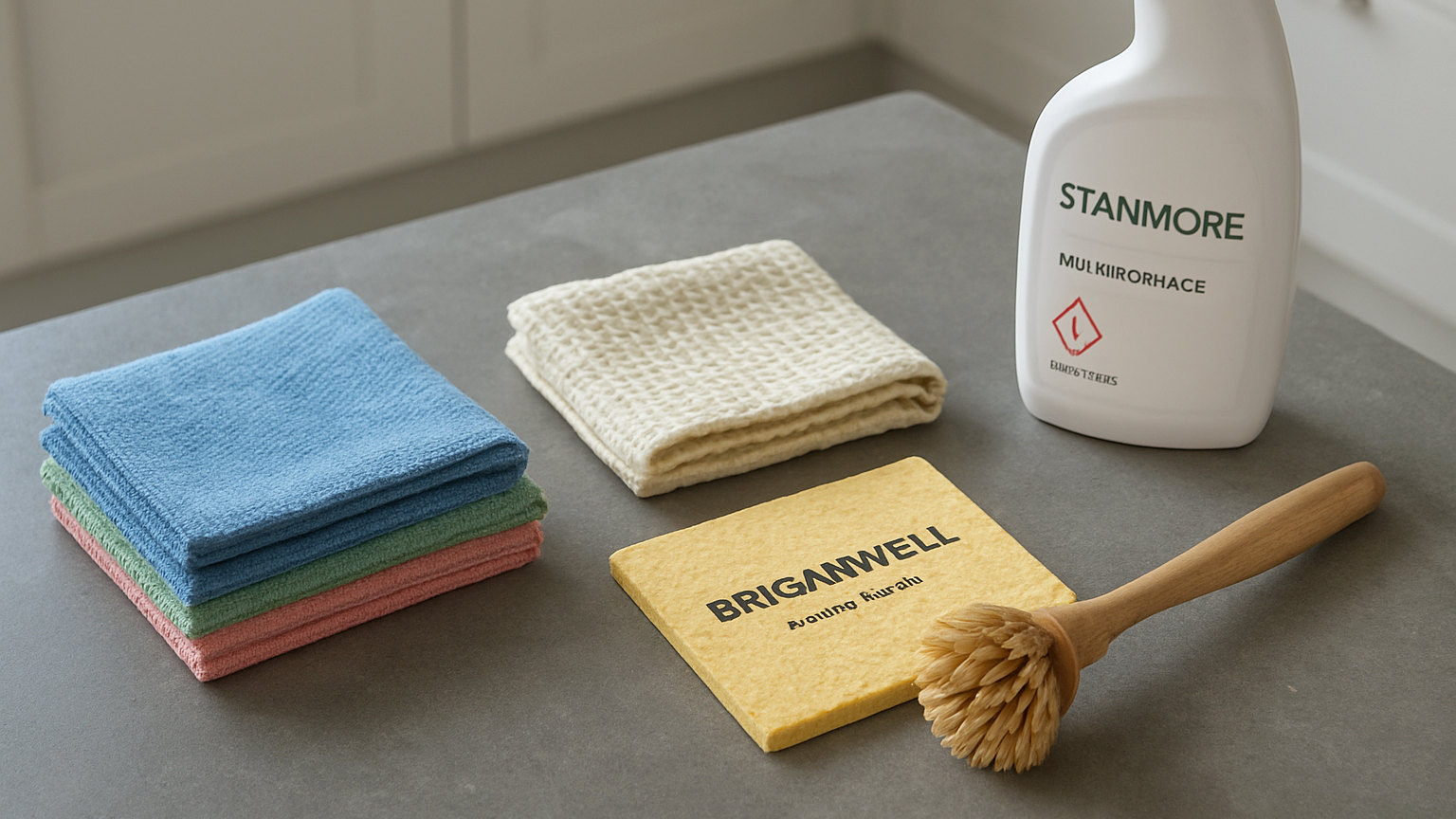
- General purpose microfibre – the workhorse, for surfaces, wiping and most cleaning. The largest share of the collection.
- Flat weave or waffle weave glass cloths – for windows, mirrors, stainless steel and anything that must be streak free.
- Dishcloths – cotton or microfibre, for washing up and food surfaces, changed daily.
- Cotton rags – old sheets and towels cut into squares, for oil, paint and anything you would throw away afterwards.
How many of each?
Roughly fifteen to twenty general purpose, in at least three colours. Four to six glass cloths. Seven or more dishcloths so there is a fresh one every day between washes. And a bag of rags, which cost nothing.
That is about two packs of microfibre and one of glass cloths, which is not expensive and lasts years.
Why does colour matter?
Because it removes the need to remember where a cloth has been. At minimum, keep one colour exclusively for the toilet and another for the kitchen. A third for bathroom surfaces and a fourth for general use completes the system.
The colours are arbitrary; the separation is the point.
What is worth adding?
- A plush dusting cloth or two, which picks up dust rather than moving it.
- A scrubbing cloth with a textured panel, for stuck on residue.
- A couple of polishing cloths kept for polished surfaces only.
- Flat microfibre mop pads, several, so they can be changed mid job.
What is not worth buying?
Novelty and single purpose cloths, which usually duplicate a general purpose one. Very cheap microfibre, which is often unsplit and has the appearance without the mechanism. Disposable wipes as a routine item. And large packs in one colour, which defeats the separation.
How do you test whether a cloth is any good?
Drag it lightly across dry skin. A properly split microfibre cloth catches slightly; a poor one slides. Drop water on it and it should absorb immediately rather than beading.
Check the weight in grams per square metre if it is given, since around 250 to 350 suits general cleaning, and look for a blend with a reasonable polyamide content.
How should they be stored?
Clean cloths folded and sorted by colour, somewhere accessible rather than at the back of a cupboard. Used cloths in a dedicated bin or mesh bag, never back with the clean ones.
A caddy with the day to day cloths in it, kept on each floor, removes the trips that stop cleaning happening.
What is the starter set?
- A pack of general purpose microfibre in mixed colours.
- A pack of glass cloths.
- A pack of dishcloths.
- A bag of rags made from old towels and sheets.
- A mesh bag or small bin for used cloths.
That is a complete cloth kit for a house and costs about the same as a handful of branded cleaning sprays.
What is the one thing to get right?
Owning enough. Every failure in a cloth system, from cross contamination to smells to cloths being used damp, traces back to running short. Cloths are cheap; being short of them is what costs.
Where should you buy them?
Multipacks from hardware shops, online or the janitorial suppliers that sell to trade are considerably better value than single cloths from a supermarket. Trade packs of twenty or fifty in assorted colours cost a fraction per cloth and are usually better quality than consumer packs.
How do you start if you have nothing?
Buy one mixed pack of general purpose microfibre and one pack of glass cloths, cut up two old towels for rags, and find a bag for used ones. That is a functioning system within a day, and anything else can be added when a particular job shows it is needed.