Both are tools for getting water off glass without leaving marks, and they work differently. A chamois absorbs; a squeegee pushes the water away in a single pass. For most households the squeegee is the more useful purchase, largely because of what it does in a shower rather than on windows.
What does a squeegee do well?
- Shower screens and tiles, used after every shower, which prevents limescale and soap scum forming at all.
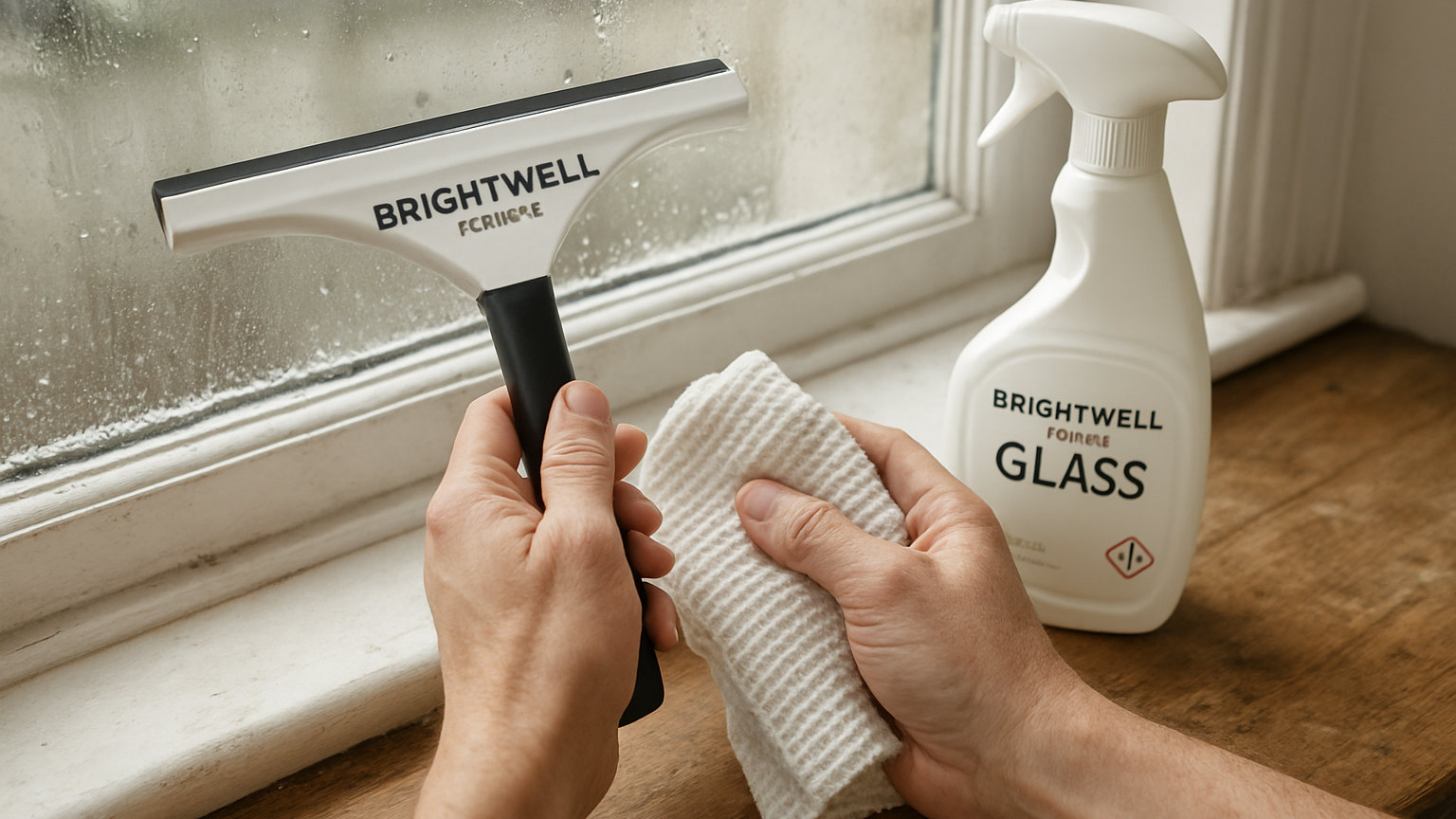
- Windows, where it gives a streak free finish faster than any cloth.
- Mirrors and splashbacks.
- Car windscreens and body panels after washing.
- Clearing water off a hard floor after a spill.
Why is the shower use the important one?
Because limescale and soap scum are deposited as water evaporates on a surface. Remove the water and neither forms. Thirty seconds with a squeegee after each shower prevents the deposit that would otherwise need an hour of acidic treatment to remove.
It is the single most effective habit in a bathroom, and it is prevention rather than cleaning.
How do you use one on windows?
- Wash the glass first with warm water and a drop of washing up liquid.
- Wet the squeegee blade, since a dry blade judders and skips.
- Start at the top and pull down in a single continuous stroke.
- Wipe the blade with a cloth after every stroke.
- Overlap each stroke slightly with the previous one.
- Dry the edges and the sill with a cloth.
Wiping the blade between strokes is the step people skip, and it is what leaves the lines.
What makes a good squeegee?
A rubber blade in good condition, which matters more than anything else. A nicked, hardened or perished blade will not seal against the glass and no technique compensates.
Blades are replaceable on better squeegees and worth changing when they stop clearing cleanly. Store one with the blade off the floor rather than resting on it, which deforms it.
What is a chamois for?
Absorbing water rather than pushing it. A genuine chamois is oil tanned leather, extremely absorbent and able to hold many times its weight in water, which makes it good for drying glass and car bodywork without streaks.
Synthetic chamois cloths are cheaper, easier to look after and perform respectably.
How do you look after a chamois?
Rinse it in clean water after use, wring it gently rather than twisting hard, and let it dry naturally away from direct heat. Never use detergent on a real leather chamois, which strips the oils and leaves it stiff and useless.
Store it slightly damp in a sealed container, or fully dry, but not damp and exposed, where it will go mouldy.
Which should you buy?
A squeegee, first, for the shower. It costs very little and removes more cleaning than any product.
Add a second for windows if you clean them yourself, and a waffle weave or flat weave microfibre cloth for detailing the edges, which does most of what a chamois does at lower cost and washes in a machine.
Has microfibre replaced the chamois?
Largely, for household use. A good flat weave glass cloth dries glass streak free, costs less, machine washes and lasts for years. The chamois retains a following in car care where its absorbency and softness are valued.
What is the two cloth method?
The alternative to both: one damp microfibre cloth to clean the glass, one dry flat weave cloth to buff it. It produces an excellent result on windows and mirrors and needs no special equipment at all.
For large windows a squeegee is faster; for a mirror the two cloth method is simpler.
What size squeegee should you buy?
A narrow one of around twenty five centimetres suits a shower screen and most domestic windows, and it is easier to control than a wide professional blade. A wider one covers glass faster and needs more skill to keep the pressure even. For a shower, a small handheld one that lives on a hook in the enclosure is what gets used.