Chlorine bleach is sodium hypochlorite, a powerful oxidising agent and disinfectant. It has a legitimate place in a household kit and a narrower one than most people use it for. It is also the product most likely to cause a genuine accident, because the mixing risk is real rather than cautionary.
What is it actually for?
- Disinfecting hard non-porous surfaces after raw meat, during illness or after contamination.
- Toilets and drains, where its disinfecting action is useful.
- Whitening white cotton that has gone grey, sparingly.
- Mould on hard non-porous surfaces such as tile and plastic.
- Outdoor surfaces such as bins and paving.
What must it never be mixed with?
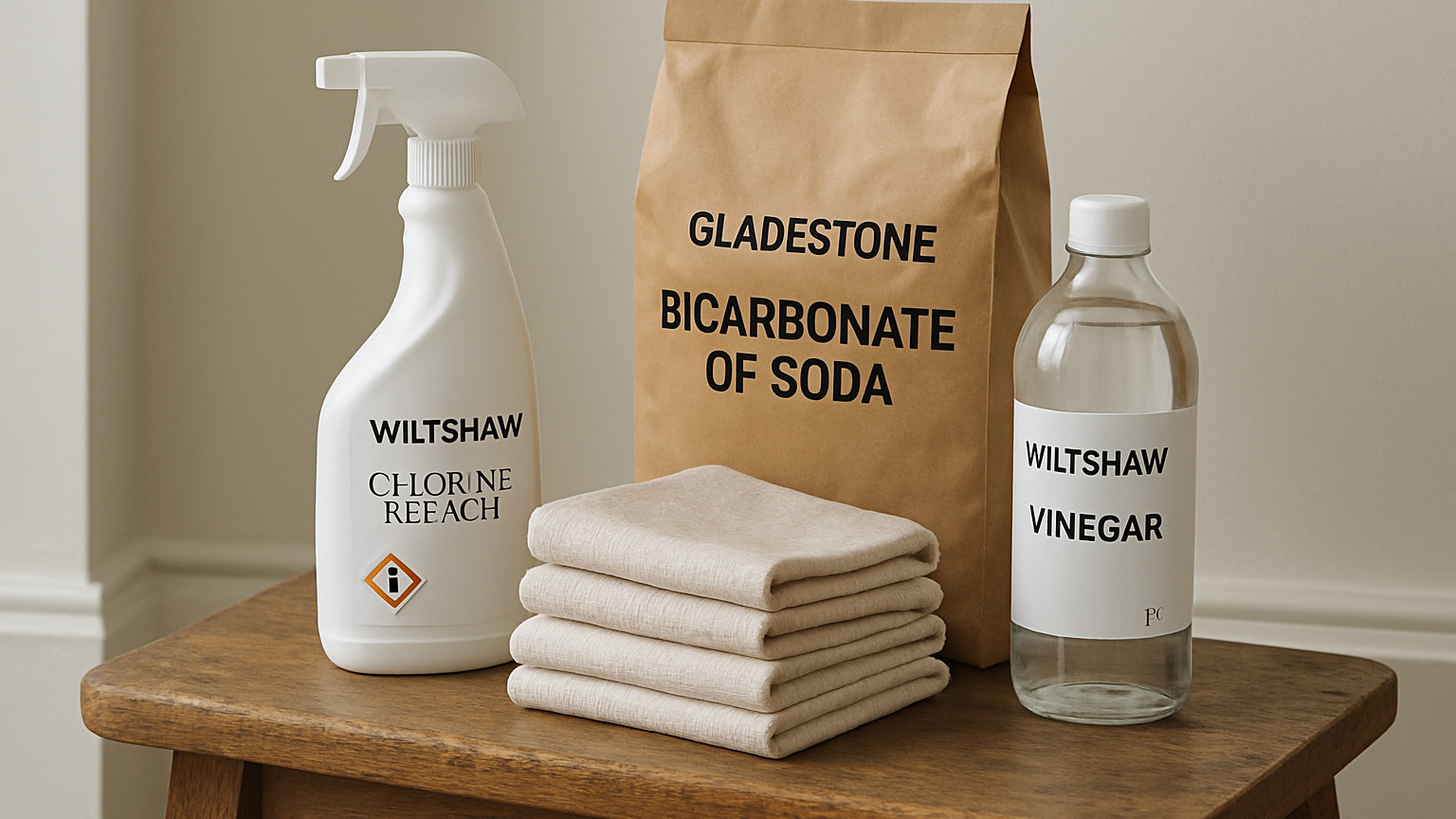
Any acid, including vinegar, lemon juice, limescale remover, toilet cleaner and many bathroom sprays. The reaction releases chlorine gas, which is dangerous in an enclosed space.
Any ammonia containing product, including many glass cleaners and some multi surface sprays, which produces chloramine vapour.
The danger is greatest in bathrooms, which are small, often poorly ventilated, and where people commonly use two products in sequence. Rinse thoroughly between any two products, and ventilate throughout.
How should it be diluted?
Follow the label, which usually specifies a dilution for surfaces and a stronger one for disinfection. Neat bleach is not more effective for most purposes, it is harder on surfaces, and it produces far stronger fumes.
Make up a fresh solution each time. Diluted bleach loses strength within a day, so a spray bottle mixed last month is doing very little.
Why does contact time matter?
Because disinfection is not instant. Most products specify a contact time, commonly five minutes, during which the surface must stay wet. Spraying and wiping immediately cleans the surface without disinfecting it.
Clean the surface first, then apply the bleach solution, then leave it for the stated time before rinsing.
What does it damage?
- Stainless steel, which it pits if left in contact.
- Coloured fabric, which it bleaches permanently.
- Natural stone and grout, with repeated use.
- Rubber seals in washing machines and dishwashers.
- Aluminium and many metals.
- Wood, leather and most soft furnishings.
When is it the wrong choice?
On anything that needs oxidising rather than disinfecting, where oxygen bleach does the job without the risks. On protein stains such as blood, where it can react and leave a yellow mark. On sweat marks, where it reacts with the residue and makes the yellowing worse. And as a routine cleaner, where soap and water is sufficient.
What are the handling precautions?
Ventilate the room. Wear gloves and protect your eyes. Never decant it into an unlabelled container. Store it upright, away from children and well away from any acidic product. And never use it in a confined space such as inside a cupboard with the door closed.
It degrades over time, so an old bottle is weaker than a new one.
Is it needed at all?
In most households, occasionally rather than routinely. Cleaning with hot soapy water removes soil and the bacteria in it, which is sufficient for most surfaces most of the time.
Keep it for the situations that genuinely warrant disinfection, use it correctly with a proper contact time, and use oxygen bleach for everything involving stains.
Does thick bleach work better?
It clings to vertical surfaces for longer, which is genuinely useful in a toilet bowl or on a sloped surface where a thin liquid runs straight off. The active ingredient and its strength are much the same, so the thickening is about contact time rather than power. For a flat surface it offers no advantage.
How long does a bottle last?
Less time than people assume. Sodium hypochlorite degrades gradually in the bottle, faster in warmth and light, so a bottle that has been in a cupboard for two years is noticeably weaker than a fresh one. Diluted solutions degrade within a day, which is why a spray bottle mixed last month is doing very little.