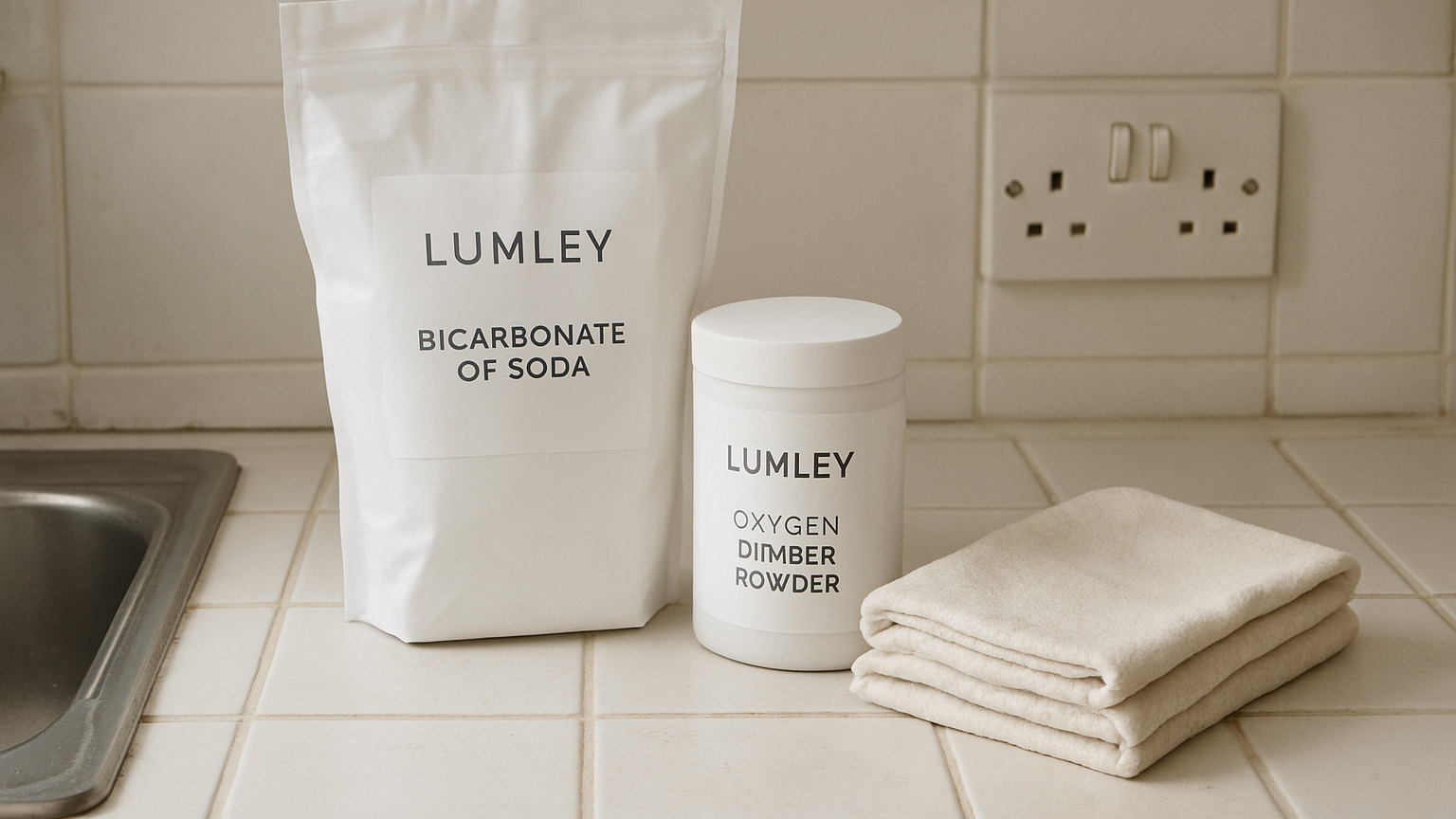
Oxygen bleach is sodium percarbonate, which releases hydrogen peroxide when dissolved in water. It works by oxidising the compounds that give a stain its colour, breaking them into colourless ones. The stain is destroyed rather than removed, which is why it succeeds where detergent fails.
How is it different from chlorine bleach?
Chlorine bleach is sodium hypochlorite, a far more aggressive oxidiser. It bleaches everything it touches including fabric dye, it weakens fibres, it damages many surfaces and it produces dangerous gases when mixed with acids or ammonia.
Oxygen bleach is colour safe, it does not damage fibres in normal use, it breaks down into water, oxygen and soda ash, and it does not produce hazardous fumes. It is slower and gentler, which is the trade.
What does it work on?
- Tannin stains – tea, coffee, red wine, fruit juice.
- Food and drink marks generally, including old and oxidised ones.
- Yellowed and greyed whites.
- Grout and tile discolouration.
- Mould staining on washable fabric.
- Table linen, which it transforms.
- Nappies, bedding and towels.
What does it not work on?
Grease, which needs a surfactant or an alkali. Limescale, which needs acid. Ink and dye, which need a solvent. And rust, which needs a specific rust treatment and is made worse by some bleaches.
It also does little on a stain that has been heat set into synthetic fabric.
How should it be used?
- Dissolve it fully in warm water before adding the item.
- Use water as warm as the fabric or surface allows.
- Submerge the item completely.
- Leave it for several hours or overnight.
- Wash or rinse normally afterwards.
- Dry in sunlight if possible, which continues the process.
Why does temperature matter?
Because sodium percarbonate needs warmth to release hydrogen peroxide effectively. In cold water it does very little; in warm water it activates properly; in hot water it works fastest and is consumed quickest.
Around 40 to 60 degrees is the useful range for most purposes, within whatever the fabric allows.
Why does it need time?
Because oxidation is a gradual reaction. A thirty minute soak achieves a fraction of what an overnight one does, and the difference on an old stain is substantial.
The most common reason people conclude it does not work is a soak that was too short or water that was too cool.
Where should it not be used?
- Wool and silk, which are protein fibres damaged by it.
- Leather.
- Anything with a delicate or unstable dye without testing first.
- Bare aluminium, since the solution is alkaline.
Test on a hidden seam for an hour before committing a coloured garment to an overnight soak.
How should it be stored?
Sealed and dry. It absorbs moisture from the air and loses potency, so an open tub in a humid utility room will be noticeably weaker after a year. Buy it in quantities you will use and keep the lid on.
If a product that once worked no longer seems to, check the age before concluding the stain is permanent.
Is the branded version worth it?
Rarely. Most branded stain removers and laundry boosters are sodium percarbonate with fillers and fragrance. Bought as plain powder it costs a fraction as much and is the same active ingredient.
Does it disinfect?
It has some antimicrobial effect, particularly at higher concentrations and temperatures, and it is not marketed or tested as a disinfectant in domestic form. Where disinfection genuinely matters, use a product that states a contact time and a standard rather than relying on an oxygen bleach soak.
What does sunlight add?
A great deal, and it costs nothing at all. Ultraviolet light breaks down many of the same coloured compounds that oxygen bleach oxidises, so drying a treated item outdoors while it is still damp continues the process for free. Alternating a soak with a day in the sun over several days clears old marks that one treatment alone leaves as a shadow.