Washing up liquid is a concentrated degreaser. It is designed to lift animal and vegetable fat off surfaces and hold it in water so it can be rinsed away, and that makes it the right first response to a great many household problems well beyond the sink.
How does it work?
Through surfactants. A surfactant molecule has one end attracted to oil and one attracted to water. The oil loving end buries itself in the grease and the water loving end faces outwards, so the fat is surrounded and can be carried away in water.
Without a surfactant, oil and water do not mix at all, which is why rinsing a greasy pan under a tap achieves nothing.
Where is it the right choice?
- Grease stains on fabric, applied neat and left ten minutes before washing.
- Greasy marks on carpet and upholstery, as a foam applied to a cloth.
- Hobs, extractor hoods and kitchen surfaces.
- Oven door glass, alongside bicarbonate.
- Windows and glass, a few drops in warm water.
- Cleaning cloths and brushes.
- Makeup, shoe polish and anything oil based.
How much should you use?
Far less than most people do. A few drops in a bowl of water, or a small blob applied neat to a stain. Excess is difficult to rinse out, leaves a residue that attracts dirt, and produces foam that gets in the way.
On a stain, working a small amount in thoroughly and leaving it for five minutes achieves more than a large amount rinsed off immediately.
Does more foam mean more cleaning?
No. Foam is largely cosmetic and is added because people associate it with cleaning power. The surfactants do the work whether or not they foam, and excess foam actually cushions the load in a washing machine and reduces the mechanical action.
That is also why washing up liquid must never go in a dishwasher or a washing machine, where it produces enough foam to flood a kitchen.
Where should it not be used?
- In a dishwasher or washing machine, for the reason above.
- On unsealed wood, where it strips oil and raises the grain.
- On leather, which it dries out.
- Undiluted on delicate finishes without a test.
- As a car shampoo, since it strips wax.
Does the brand matter?
Mainly in concentration. A concentrated product needs less per wash, so the cost per bowl of water is often similar to a cheaper thinner one despite the price difference. For stain work, a concentrated product applied neat is more effective.
For cleaning use, a clear or pale product is preferable to a strongly coloured one, which can tint pale fabric if not rinsed thoroughly.
Is it a disinfectant?
No, and it does not claim to be. It removes soil and the bacteria in it physically, which is what cleaning does. Where disinfection is genuinely needed, a separate product is used after cleaning rather than instead of it.
What is the key technique?
Dwell time. Applying it and rinsing immediately is the most common mistake, because the surfactants need several minutes in contact with the grease to surround it. Five minutes of waiting removes more than five minutes of scrubbing.
On a warm surface it works faster, which is why grease comes off a warm hob and resists a cold one.
How do you make a spray from it?
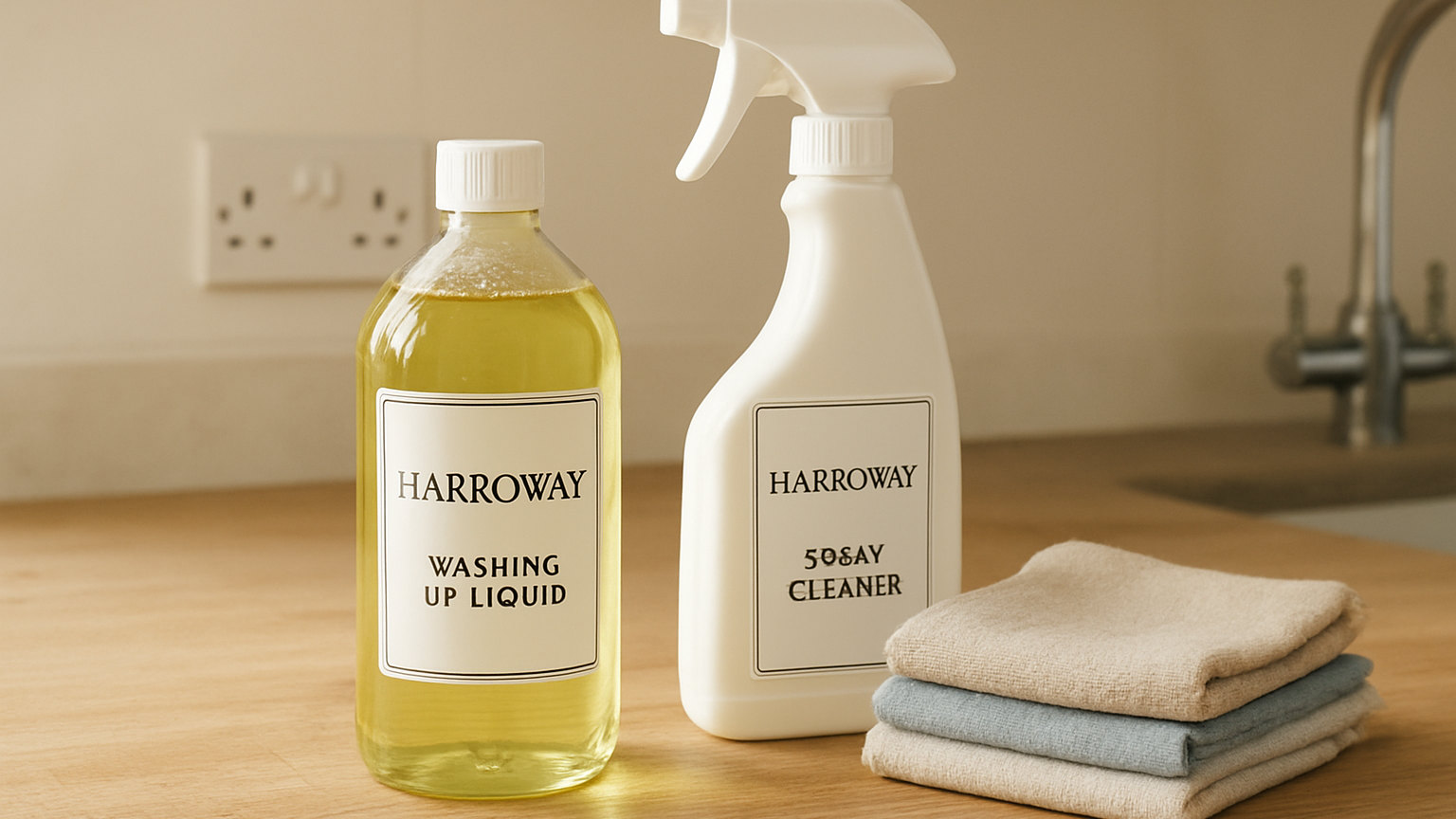
A few drops in a spray bottle of warm water gives a general purpose cleaner that handles most everyday kitchen surfaces at almost no cost. Make it weak rather than strong, since anything left behind attracts dirt, and mix a fresh bottle every few weeks rather than letting one stand for months.
Does it matter which temperature water you use?
Considerably. Fat becomes more fluid as it warms, so the surfactants can surround it more easily, and the same amount of product achieves noticeably more in hot water than in cold. That is the opposite of the rule for protein stains such as blood and milk, where cold water is essential, which is why knowing what kind of soil you are dealing with matters more than which bottle you reach for.