A degreaser removes fat and oil, and it does so by one of two mechanisms. Surfactant based products surround the grease and carry it into water. Alkaline products chemically convert the fat into something water soluble. They suit different jobs, and using the wrong type explains most disappointment.
How do surfactant degreasers work?
Each surfactant molecule has an oil loving end and a water loving end. The oil loving end embeds in the grease, the water loving end faces outwards, and the fat is carried away in the water.
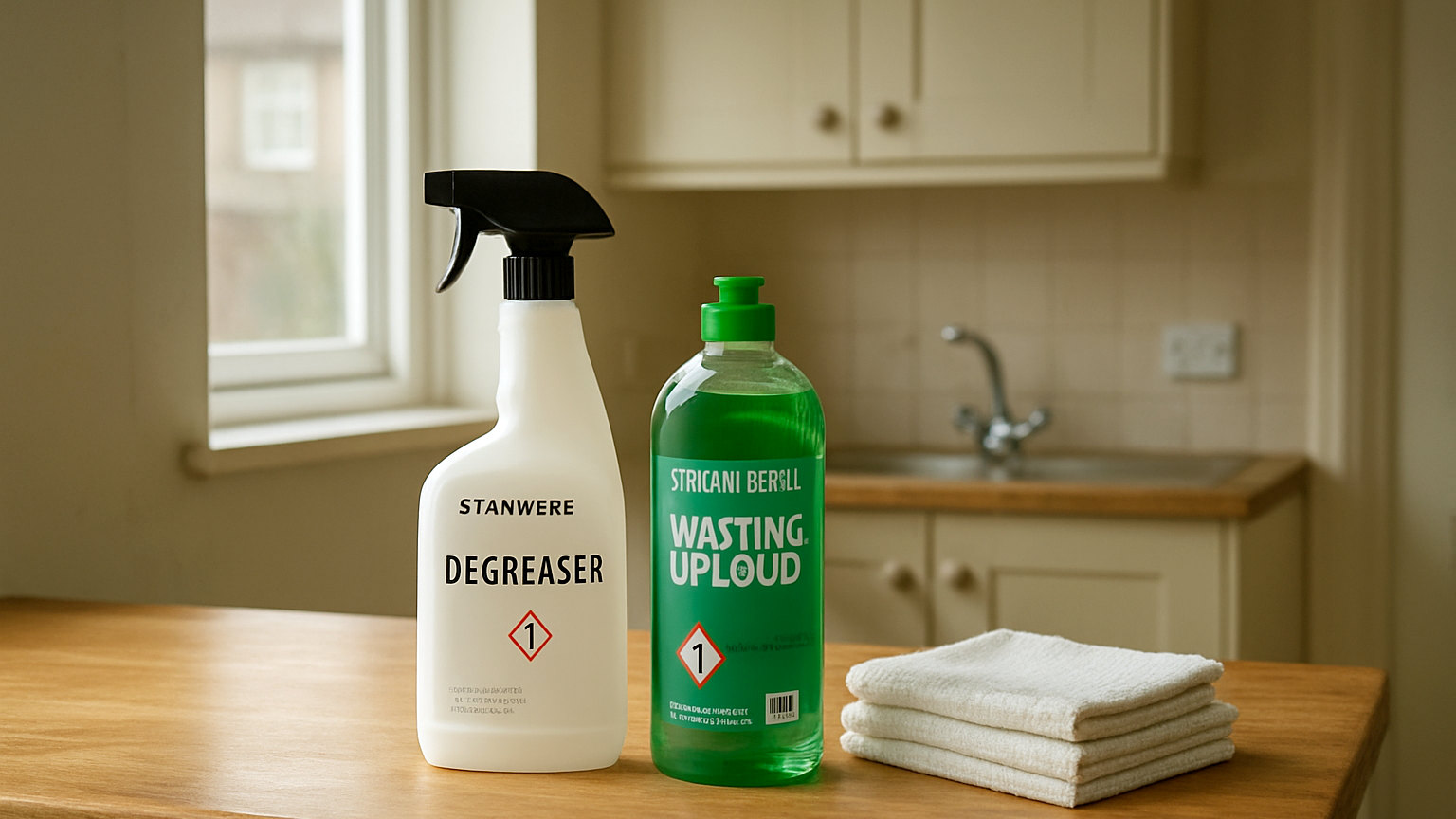
Washing up liquid is the everyday example. It is gentle, safe on almost every surface, and it needs the grease to be reachable rather than baked hard.
How do alkaline degreasers work?
Through saponification. A strong alkali reacts with fat and converts it chemically into a soap, which then dissolves in water. That works on deposits that surfactants cannot penetrate, including baked on and carbonised grease.
Soda crystals, oven cleaners and heavy duty kitchen degreasers all work this way. They are more effective and more restricted in where they can be used.
Which should you use where?
- Fresh grease on any surface – washing up liquid.
- Grease stains on fabric – washing up liquid, applied neat.
- Extractor hood filters – soda crystals in hot water, unless aluminium.
- Oven interiors and shelves – alkaline, whether bicarbonate paste or a caustic gel.
- Kitchen cupboard doors and walls – a spray degreaser, applied to a cloth.
- Engine oil and machine grease – a citrus or solvent based degreaser.
Why does warmth matter?
Because fat becomes more fluid as it warms, and a fluid fat is far easier to lift or convert. The same product works noticeably better on a warm surface than a cold one.
That is why grease wipes off a warm hob and resists a cold one, and why hot water in a soak outperforms warm.
Why does dwell time matter?
Because the chemistry takes minutes rather than seconds. Applying a degreaser and wiping immediately removes the surface layer and leaves the rest.
Apply, leave it for five to ten minutes on light soil and thirty minutes or overnight on heavy deposits, then wipe. Waiting achieves more than scrubbing.
What about solvent degreasers?
These dissolve grease directly rather than lifting or converting it, and they suit mineral oils that surfactants struggle with. Citrus based degreasers, white spirit and specialist workshop products fall into this group.
They leave an oily residue that then needs washing off, and they need ventilation and care around plastics and painted finishes.
What should you be careful of?
- Aluminium, which strong alkalis attack and discolour.
- Painted and lacquered surfaces, which alkaline degreasers can strip.
- Natural stone, which needs a pH neutral product.
- Skin, since alkaline degreasers are drying and irritating. Wear gloves.
- Mixing, particularly with any acidic or bleach product.
Do you need a dedicated one?
For most households, washing up liquid and soda crystals cover it between them. A spray degreaser is convenient for kitchen walls, cupboard doors and extractor hoods, where a spray format genuinely helps.
For a workshop, a garage or anyone dealing with mineral oil, a citrus based degreaser is worth having as well.
What is the practical rule?
Warm, wet and wait. Warm the surface if you can, apply the product properly rather than misting it, and give it time. Those three things matter more than which product is in the bottle.
How do you know which type you have?
Read the safety warnings rather than the front of the bottle. An alkaline degreaser will carry irritant warnings and advice about gloves and eye protection. A surfactant based product will be comparatively mild. Anything listing a solvent or warning about flammability is in the third category and needs ventilation.
What about absorbent powders?
For a fresh grease spill on a surface that cannot be rinsed, such as carpet, upholstery or unsealed stone, cornflour or talc left for an hour draws a proportion of the oil out before any liquid is introduced. It is a first step rather than a treatment, and it makes the degreasing stage considerably more likely to succeed.