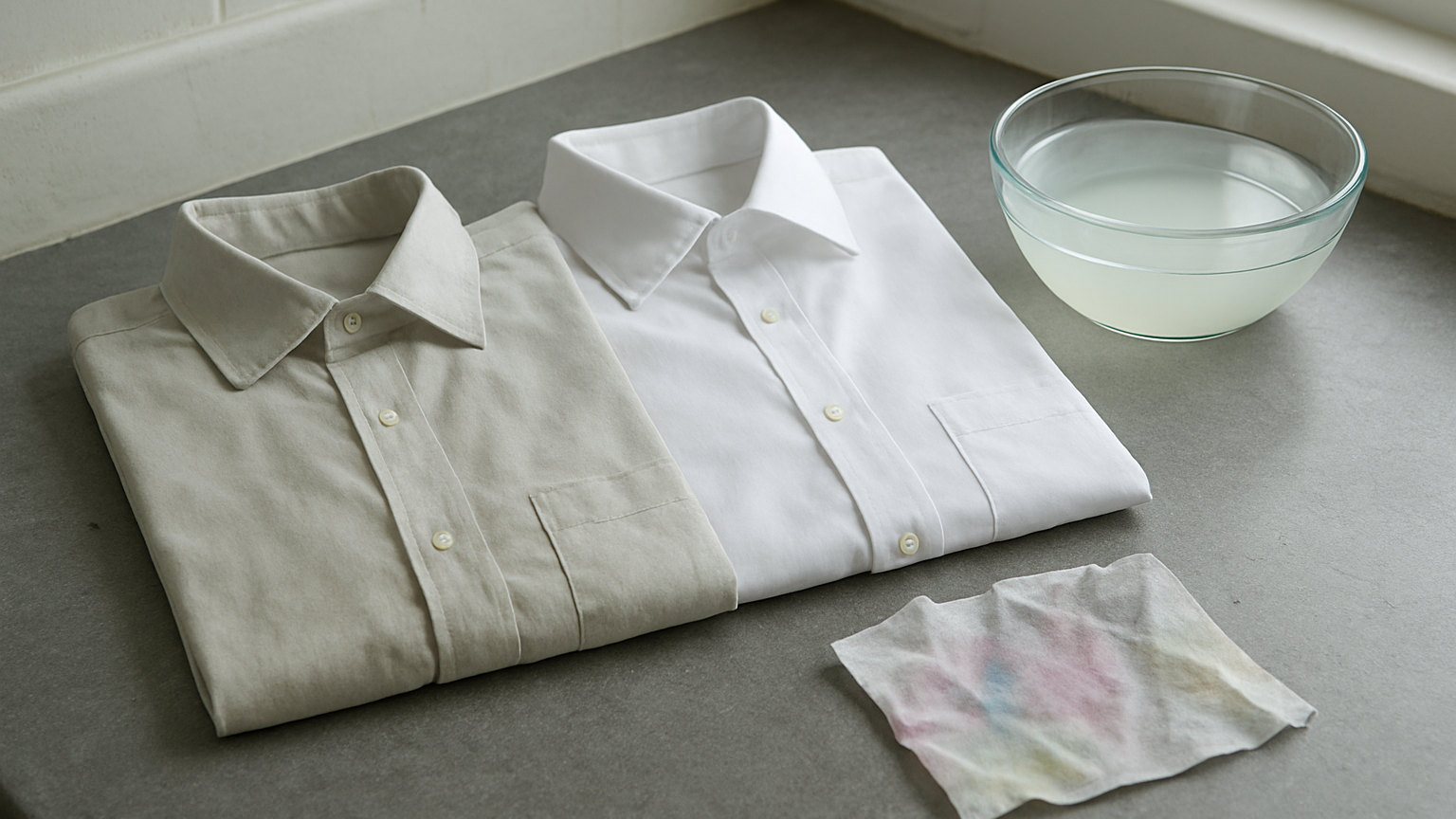
Optical brighteners are fluorescent compounds added to most detergents that do not clean anything at all. They deposit onto the fabric and absorb invisible ultraviolet light, re-emitting it as visible blue. Because the eye reads a slight blue cast as whiter, the fabric appears brighter than it physically is.
Is that a trick or a genuine benefit?
Both, depending on how you look at it. The fabric is not cleaner, and no discolouration has been removed. But white cotton naturally yellows slightly with age, and the blue emission counteracts that yellow cast, so the garment does genuinely look better.
The same principle is behind the old practice of adding a laundry blue to the rinse water, which tinted white fabric very slightly blue to cancel out yellowing.
How can you tell they are there?
Under an ultraviolet light, fabric washed in a detergent containing brighteners glows noticeably. So does a white shirt under the lights in a nightclub, which is exactly this effect.
It also explains why whites can look bright under some lighting and dull under others. Brighteners need ultraviolet in the light source, so they perform well in daylight and poorly under warm indoor lighting.
Why are they a problem on dark clothes?
Because they deposit on everything in the drum, not just on whites. On black and navy fabric the residue produces a faint pale bloom that flattens the colour and makes garments look washed out and slightly grey.
It builds up over repeated washes and is a genuine cause of dark clothes losing their depth, quite separately from actual dye loss. It is the main reason dark specific detergents exist, since their principal feature is the absence of brighteners.
Which detergents contain them?
Most mainstream powders and liquids, and almost all products marketed for whites. Detergents that leave them out are usually labelled for colours, for darks, for babies, or as sensitive or eco formulations.
The ingredients list will mention fluorescent whitening agents or optical brighteners where they are present, though the labelling is not always prominent.
Do they affect skin?
They are among the ingredients most often blamed for laundry related skin irritation, since they are designed to remain on the fabric rather than being rinsed away with the rest of the wash water. The evidence for them causing problems is mixed, and ordinary detergent residue from overdosing is a far more common culprit in practice.
Anyone with eczema or sensitive skin is usually advised to use a detergent without brighteners or fragrance and to add an extra rinse, which is sensible regardless of where the fault lies.
Are there alternatives for whitening?
Yes, and they act on the fabric rather than on the light. Oxygen bleach removes the compounds that cause discolouration rather than masking them. Sunlight breaks down yellowing directly. A proper wash temperature and detergent dose prevents the greying that makes brighteners seem necessary.
Those three together produce whites that are genuinely whiter rather than optically whiter, and the result holds up under any lighting.
Should you avoid them?
On darks, yes, and a dark specific detergent is worth having for that load alone. On whites, they are harmless to the fabric and produce a result most people like, so there is no strong reason to avoid them unless skin sensitivity is a concern.
The practical approach is two detergents: a powder with brighteners and oxygen bleach for whites, and a colour or dark detergent without either for everything else. That is a small amount of extra storage for a noticeable improvement in both.
Do they wash out?
Slowly, over several washes with a detergent that does not contain them. A dark garment that has picked up a pale bloom will improve after three or four washes with a dark specific detergent, and faster if you add an extra rinse. On white cotton the deposit is renewed with every wash, which is why whites washed in a brightener free detergent look duller almost immediately by comparison.