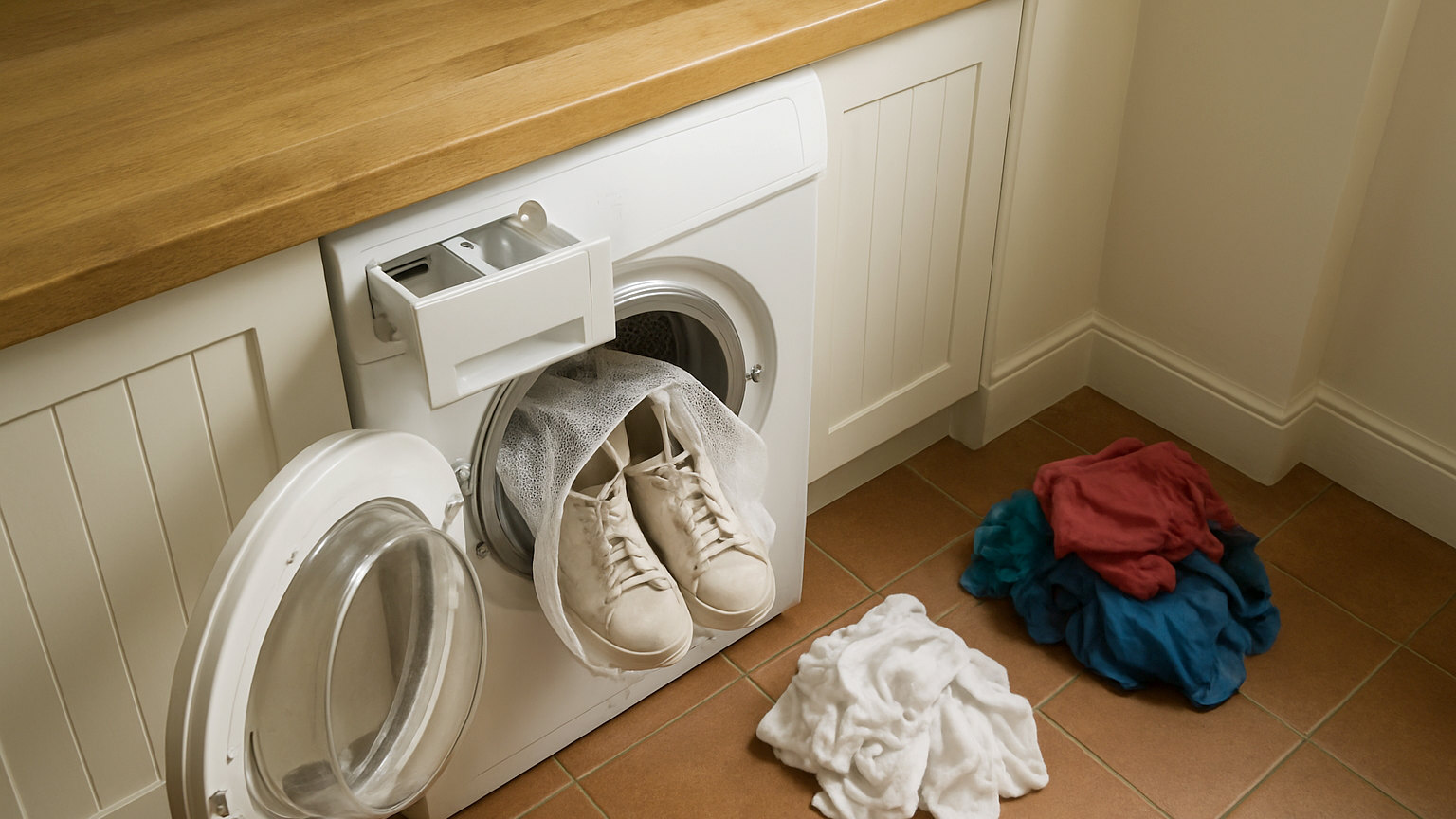
You can wash whites and colours together, and nothing dramatic will usually happen. The cost is cumulative rather than immediate: a small amount of dye transfers on every cycle, and after several months of mixed loads the whites have taken on a grey or beige cast that no amount of washing will remove. That gradual loss is why the advice to separate exists.
What actually goes wrong?
Three things, in order of how often they occur.
- Gradual dye transfer, invisible per wash and unmistakable over a year.
- A sudden colour run from a new or unwashed item, which affects the whole load at once.
- Compromised washing, because whites want a hotter wash with a bleaching powder and colours want a cool wash without one, so a mixed load is a compromise for both.
When is mixing genuinely acceptable?
When the alternative is running a half empty machine. A small household producing two loads a week has a real argument for combining, since an underfilled drum wastes water, energy and detergent.
Mixing is also reasonable for pale colours with off-white and cream items, where any transfer is not visible, and for anything that is already several years old and past worrying about.
How do you mix with the least damage?
- Wash cold or at 30 degrees, since heat dramatically increases dye release.
- Group by shade rather than treating it as whites versus everything. Whites with pale greys and creams; mid tones together; darks together.
- Keep new items out entirely until they have been washed separately a few times.
- Use a colour detergent with dye transfer inhibitors rather than a whites powder.
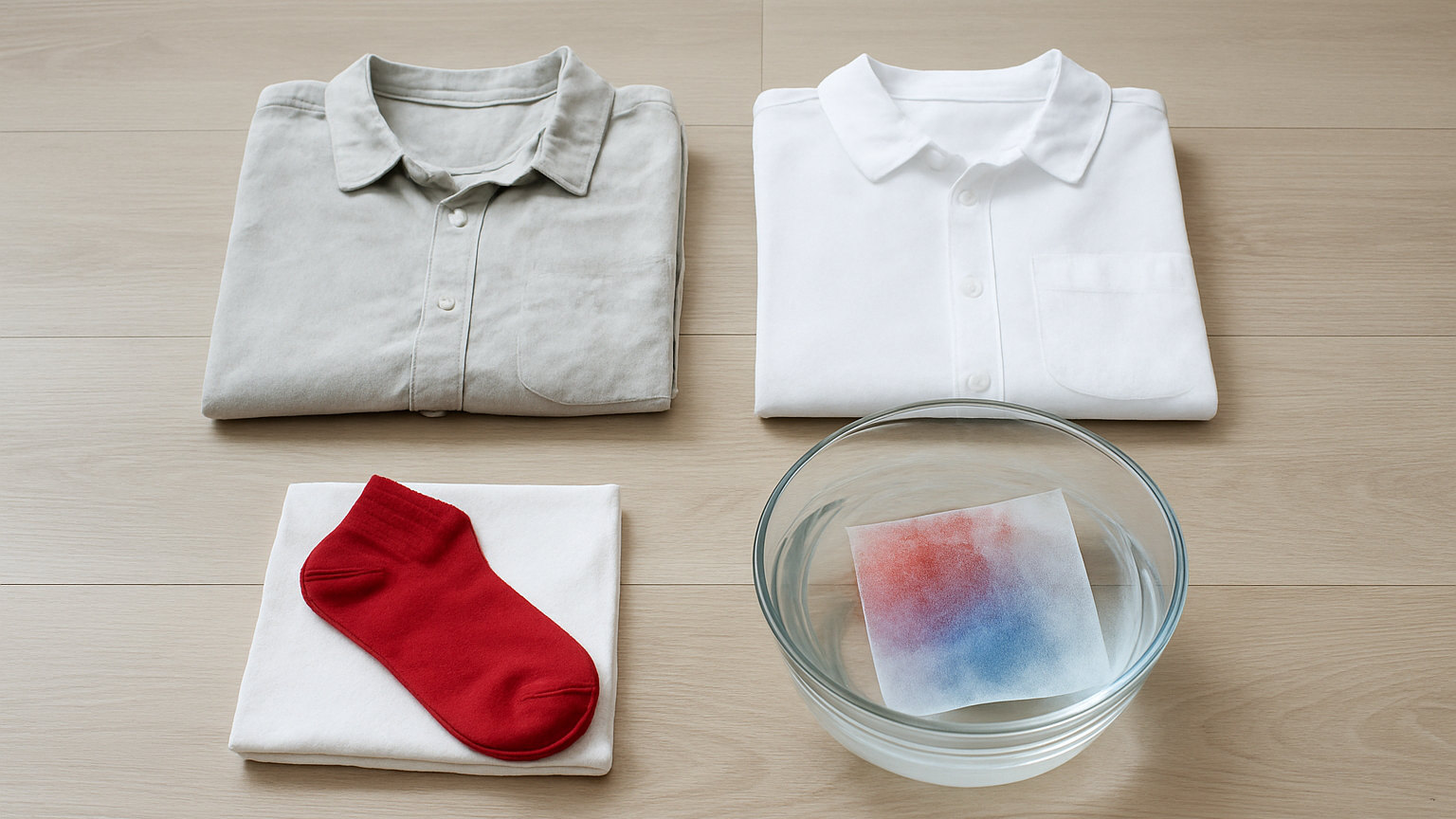
- Add a colour catcher sheet.
- Do not overload, since crowded loads rinse badly and dye settles back onto fabric.
- Empty the drum immediately, since dye migrates in standing water.
What should never be mixed with whites?
Anything new, anything red or deep pink, indigo denim, anything hand dyed, and anything you have not tested. Also towels, which shed lint heavily onto everything else, and heavily soiled items such as sports kit or work clothes, which add soil that has to be carried by the same wash water.
What is the compromise that works?
Keep one genuinely white load and be relaxed about the rest. White shirts, white bedding, white towels and underwear go together at 60 with a powder detergent, once a week or fortnight. Everything else goes in mixed coloured loads at 30 with a colour detergent.
That preserves the items where whiteness actually matters without demanding four separate loads from a household that produces two.
Does it matter for synthetics?
Polyester holds dye more tightly than cotton and also picks up transferred dye less readily, so a white polyester shirt is more forgiving in a mixed load than a white cotton one. It is also more prone to holding on to any dye it does absorb, which makes a colour run harder to reverse.
What is the honest summary?
Separating whites is worth doing and is not a rule that has to be followed rigidly. The households that suffer are the ones washing hot, with everything mixed, and never testing new items. A cool wash, a colour catcher and one dedicated whites load a week removes almost all of the risk while still running full loads.
What about sorting when space is tight?
Three baskets is usually enough, and it moves the sorting to the point where clothes are taken off rather than to the moment you want to put a wash on. Whites, darks, and everything else. A fourth small bag for delicates and anything new handles the exceptions. In a flat with no room for baskets, a divided laundry bag achieves the same thing in the footprint of one.
Does it matter with modern detergents?
Less than it once did, since dye transfer inhibitors in colour detergents genuinely reduce the problem. They do not eliminate it, and they do nothing about a heavy bleed from a new garment.