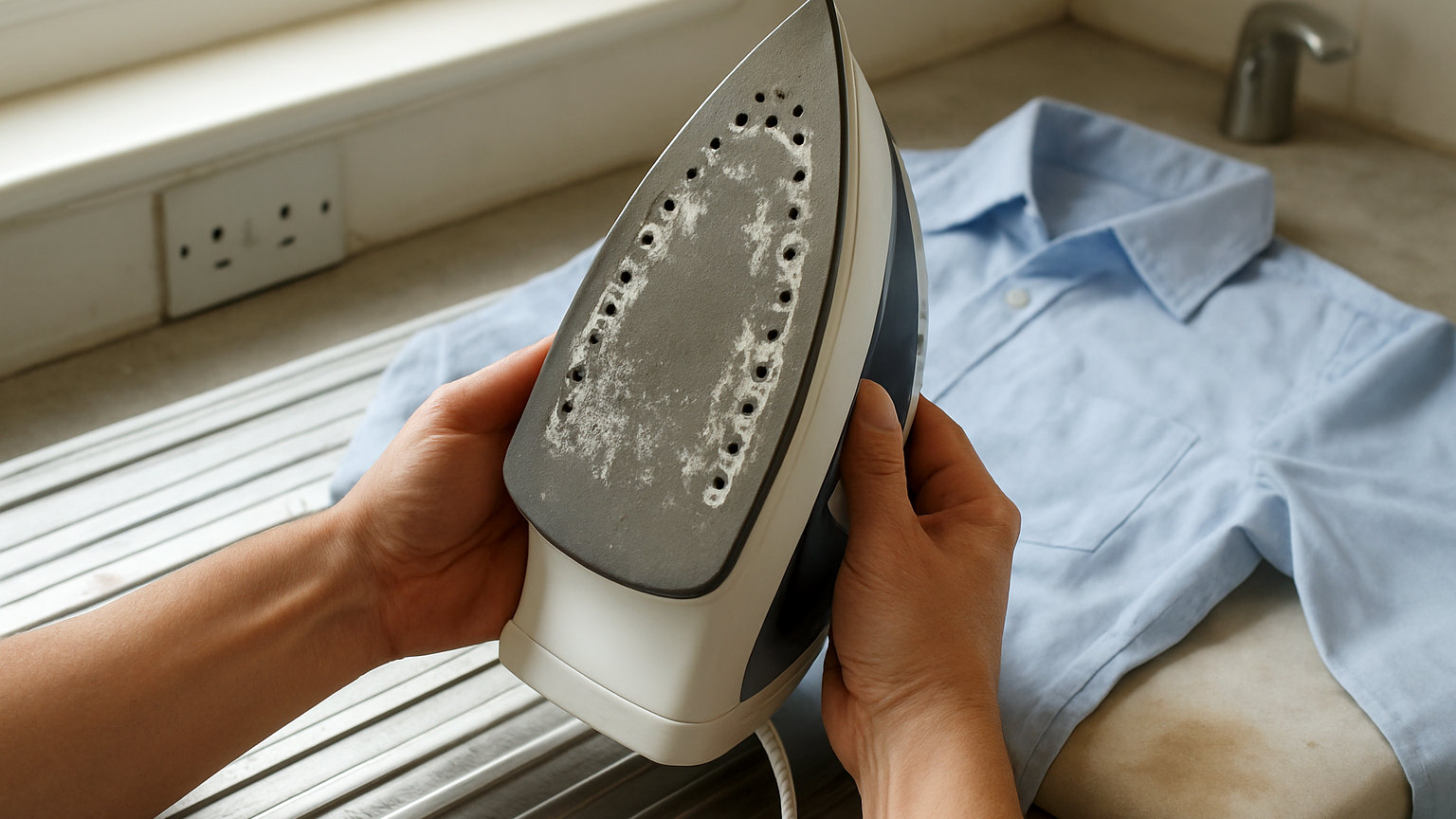
Limescale builds inside the steam chamber of an iron every time hard water is heated in it. The results are a steadily weakening steam output, spitting, and eventually brown or white flakes deposited onto whatever you are ironing. All three point to the same cause and the same fix.
How do you know it needs descaling?
- Steam output has dropped noticeably from when the iron was new.
- The iron spits water on a high setting where it did not before.
- White or brown flakes appear on clothing during ironing.
- The steam vents look blocked or crusted around the rim.
- The iron makes a gurgling or knocking noise when steam is released.
In a hard water area, most irons need it every one to three months. In a soft water area, once or twice a year.
What does the self clean function do?
It is the first thing to try and it works well. The iron heats the water in the chamber to boiling and then releases it all at once through the vents, flushing scale and residue out with it.
- Fill the tank to the maximum line with water.
- Heat the iron to its highest setting and let it reach temperature.
- Unplug it and hold it horizontally over a sink or a bowl.
- Press and hold the self clean button, rocking the iron gently back and forth.
- Let everything drain out. Expect discoloured water and visible flakes.
- Refill with clean water and repeat if the discharge is still dirty.
- Plug it back in and iron an old cotton cloth to clear the vents and dry the plate.
Check the manual, since the exact procedure varies and some irons require the self clean to be done while plugged in.
Can you use vinegar?
With caution, and only if the manufacturer does not prohibit it. Many now do, because acid can damage the internal coatings, the anti-scale components and the seals, and using it will usually void the warranty.
Where it is permitted, a solution of one part white vinegar to two parts water is filled into the tank, the iron is heated, and the steam is released continuously over an old towel until the tank empties. This must be followed by two or three tanks of clean water flushed through, or the smell and the acid will transfer onto clothes.
Citric acid solution is a gentler alternative and is used the same way.
What about built-in anti-scale systems?
Many irons have a removable anti-calc cartridge or a collector that traps scale. These need rinsing or replacing on the schedule in the manual, and an iron with a blocked collector will lose steam output even though the chamber itself is clear.
Steam generator irons usually have a separate boiler with its own rinsing routine, often prompted by a warning light. Ignoring that light is the most common reason a steam generator fails early.
Should you use filtered or distilled water?
Check the manual before assuming. Some manufacturers specify tap water, because their anti-scale systems are designed around the minerals in it and pure distilled water can cause spitting in certain designs. Others recommend a mix of tap and distilled in hard water areas.
Jug filtered water is a reasonable middle ground in most cases, and it reduces scale without being fully demineralised.
What if the brown marks keep coming back?
Brown discharge is usually a mixture of scale and residue from starch or fabric conditioner that has got into the chamber. Repeat the self clean two or three times in succession, and stop using spray starch anywhere near the steam vents.
If flakes persist after several flushes, and the iron is old, the internal scale deposit may be beyond clearing. At that point the iron is nearing the end of its useful life, and continuing to use it risks marking clothes.
What prevents it?
Empty the tank after every session rather than leaving water standing in a warm chamber. Run the self clean monthly in a hard water area. And store the iron upright so any residual water drains away from the vents.