Tights are knitted from a single continuous filament, which is why one broken thread runs. There is nothing to stop it. That structure means most of the care is about preventing snags rather than about washing technique, though the two are connected, because a machine is full of things that snag.
What is the safest way to wash them?
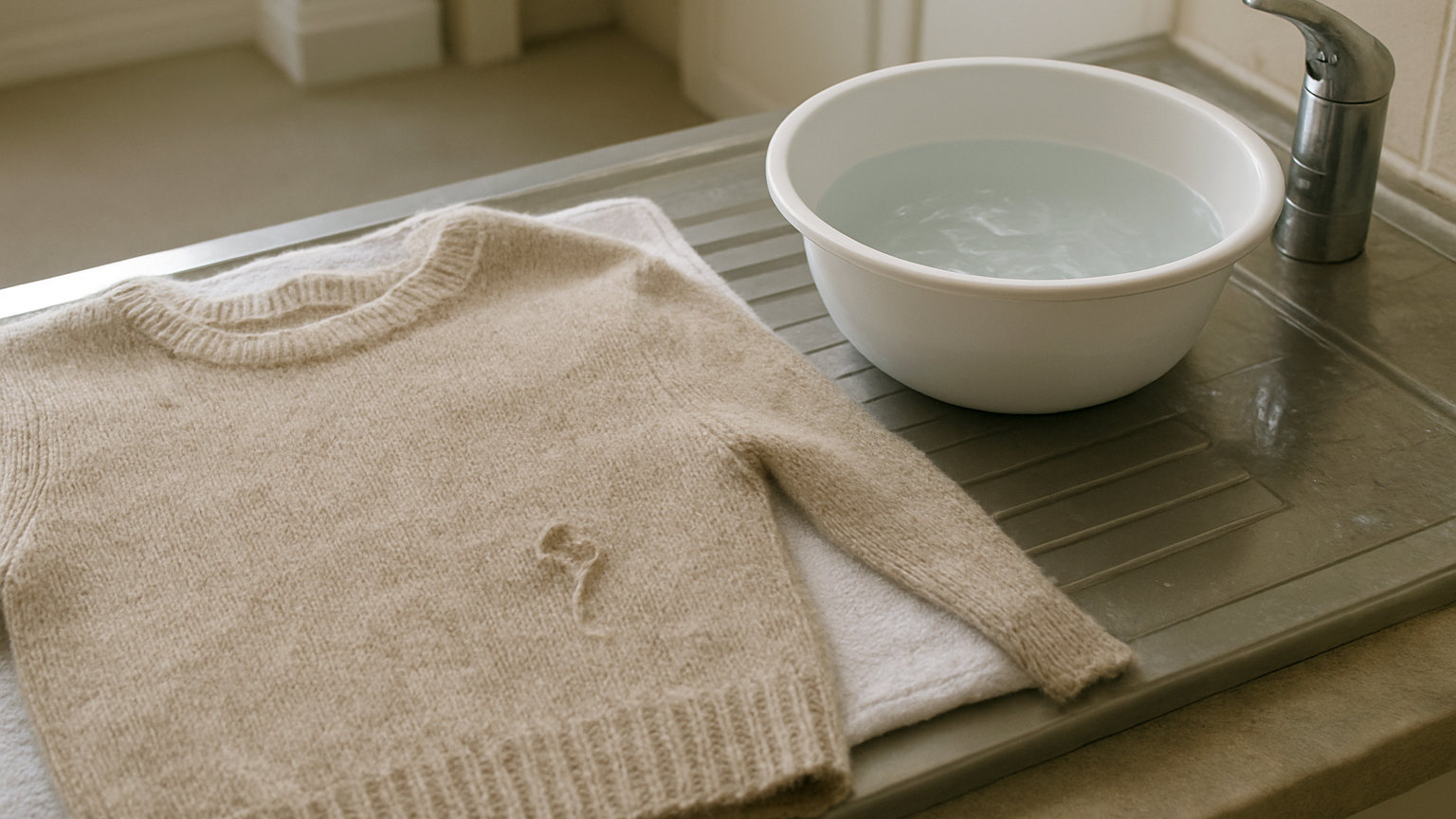
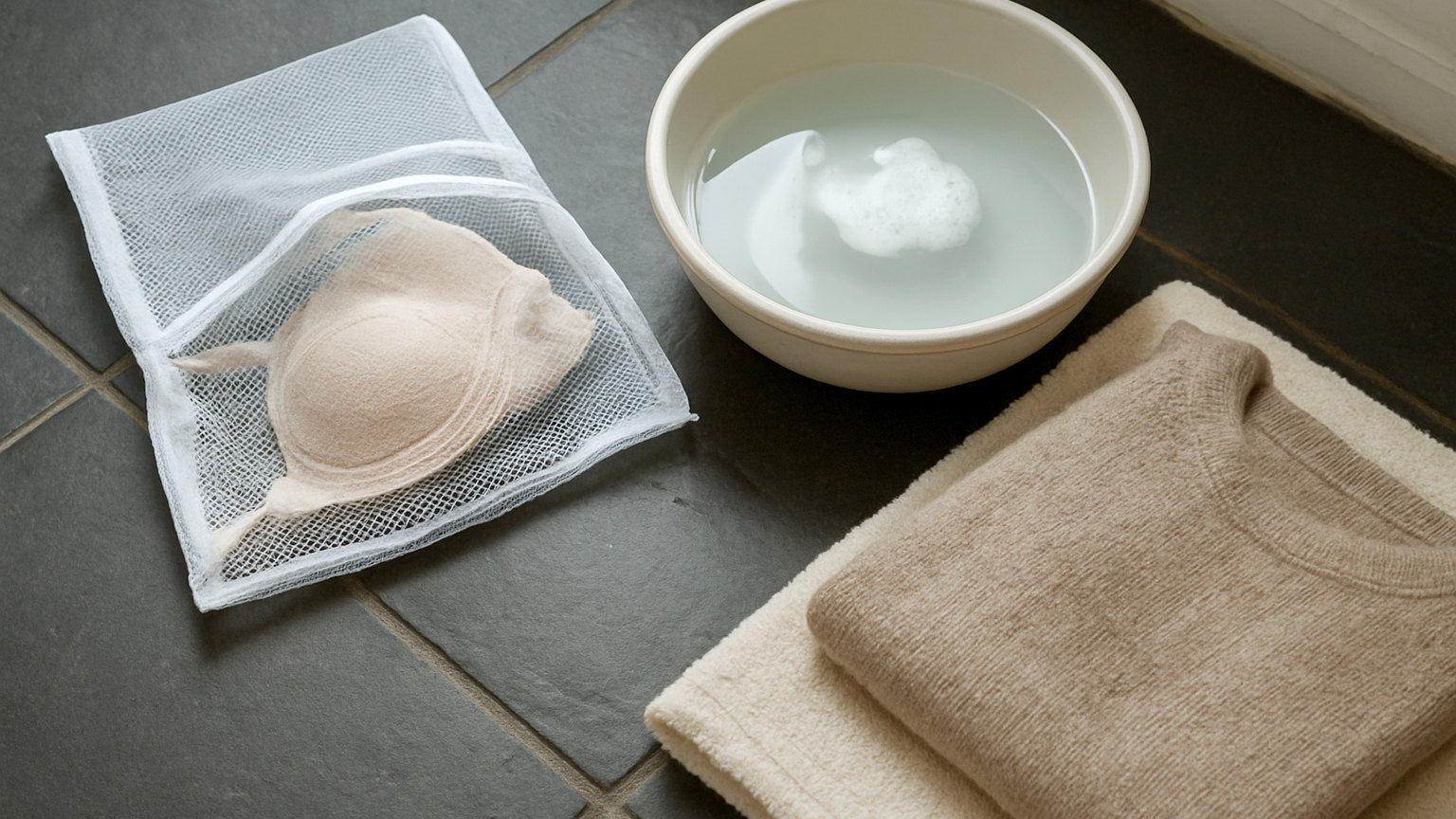
By hand, and it takes about two minutes. Fill a basin with cool water and a small amount of mild detergent, submerge the tights, and squeeze the water gently through them. Do not rub or twist. Rinse in water at the same temperature, press the water out gently and roll them in a towel.
Cool water matters. Heat degrades the elastane that gives them their stretch and shape.
Can they go in the machine?
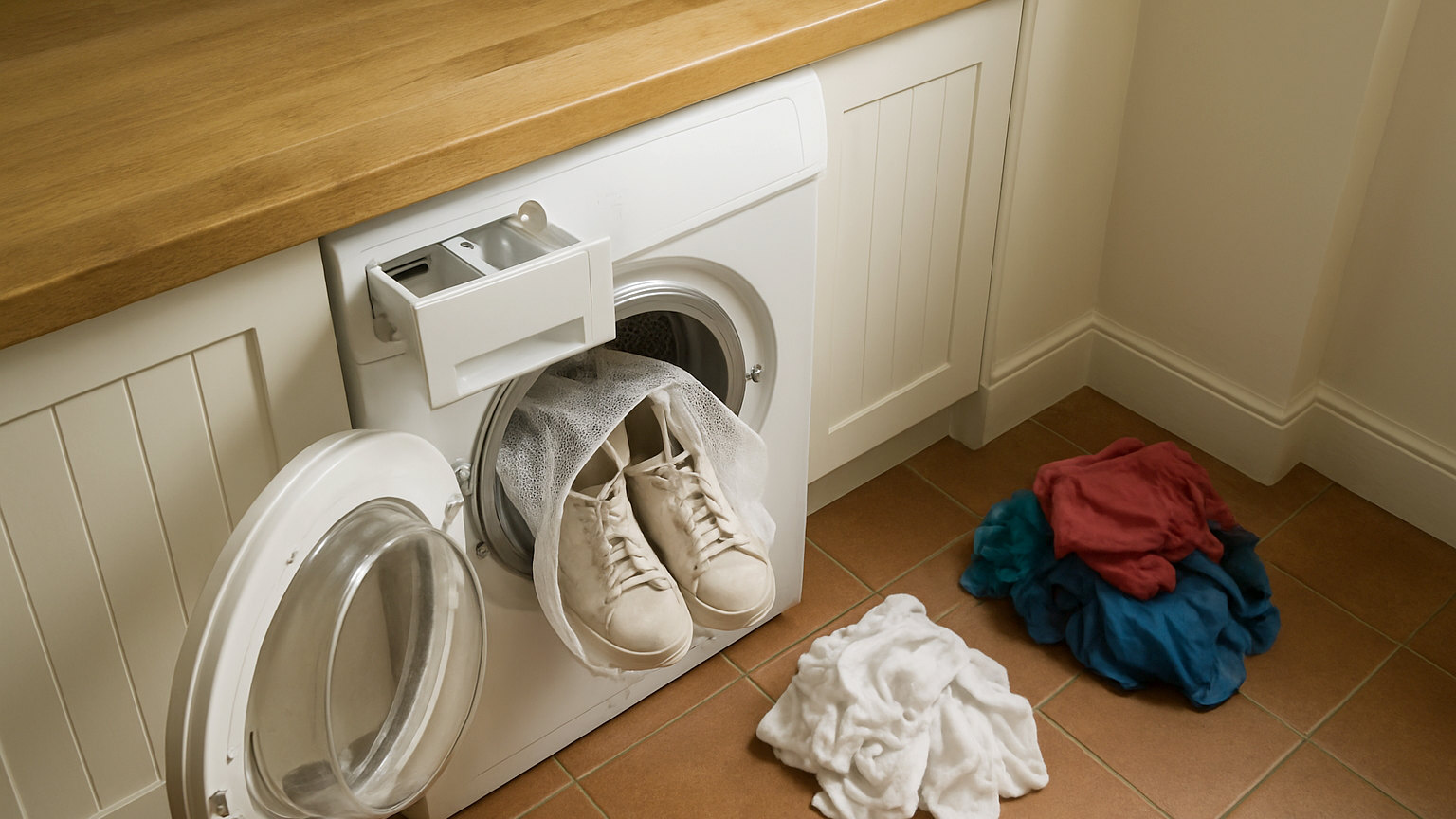
They can, inside a mesh bag, on a delicates cycle at 30 degrees or cooler with a low spin. The bag is not optional. Without one, tights tangle around everything, get caught on zips and hooks, and are frequently drawn past the door seal or into the filter.
Never wash them with anything that has a zip, a stud, velcro or a rough edge. Never tumble dry them.
Why does the dryer ruin them?
Because heat destroys elastane, and tights are largely elastane. A hot cycle takes a visible amount of stretch and recovery out of a pair, and the tumbling snags them on the drum and on anything else in the load. This is the fastest way to turn good hosiery into loose baggy hosiery.
How should they be dried?
Flat on a towel or draped over a rail, away from heat and direct sunlight. Hanging them by the waistband is acceptable; pegging them by the toe stretches the foot. They dry quickly, usually within a couple of hours.
Does freezing new tights help?
It is a persistent piece of advice and there is very little behind it. The idea is that freezing strengthens the fibres, and there is no good evidence it does. Some people swear by dampening new tights and freezing them overnight, and any benefit is likely to come from the rinse rather than the cold.
Washing a new pair gently before wearing does help slightly, by relaxing the fibres and removing manufacturing residue.
What causes most ladders?
- Rings, watches and rough nails when putting them on.
- Dry hands and heels, where rough skin catches the filament.
- Jewellery, zips and velcro on clothing worn over them.
- Rough edges inside shoes, particularly around the heel counter.
- Pulling them on too fast rather than gathering the leg first.
Gather the leg down to the toe, ease the foot in, and work them up in stages. Most damage happens in the first thirty seconds of wearing.
Can a ladder be stopped?
Yes, if you catch it early. A dab of clear nail varnish at both ends of the run seals the broken filament and stops it travelling. Hairspray works in an emergency and is less durable. Apply it while the tights are off, let it dry fully, and accept that it is a repair rather than a fix.
A small snag that has not yet run can sometimes be eased back by stretching the surrounding fabric gently.
How should they be stored?
Rolled rather than folded sharply, in a drawer with nothing rough in it. A small fabric box or a zipped pouch keeps them away from hooks, buckles and the splintered corner of a drawer, all of which cause damage while the tights are simply sitting there.
Keep separate pairs apart rather than piling them together, since one pair with a snag will catch on another.
How long should a pair last?
Considerably longer than most people manage, and the limiting factor is almost always a snag rather than wear. Rotating several pairs, washing by hand and storing them properly will extend the life of good hosiery from a handful of wears to a season or more.