Kitchen sink blockages are almost always fat. Warm fat poured down a drain cools in the pipe, solidifies, and then catches everything else that passes: food particles, coffee grounds, tea leaves and detergent scum. Understanding that tells you what will actually clear it.
What should you try first?
- Boil a full kettle and pour it slowly down the drain in stages, with a squirt of washing up liquid first.
- Wait a couple of minutes and try the tap.
- Repeat once if there is any improvement.
The detergent emulsifies the fat and the hot water melts it. This clears a large proportion of partial blockages and costs nothing.
Avoid boiling water on plastic waste pipes if they are old or already stressed, and use very hot rather than boiling if in doubt.
What is the soda crystals method?
Pour a generous handful of soda crystals down the plughole, followed by a kettle of very hot water. Leave it for thirty minutes or overnight, then flush with more hot water.
Soda crystals are sodium carbonate, strongly alkaline, and they saponify fat into something water soluble. They are cheap, effective on grease and far kinder to pipes than caustic drain cleaner.
The bicarbonate and vinegar combination that circulates widely fizzes impressively and does very little, since the two neutralise each other immediately.
How do you use a plunger properly?
- Block the overflow with a wet cloth, which is essential or the pressure escapes.
- If it is a double sink, block the other plughole too.
- Run enough water to cover the plunger cup.
- Seat the cup over the plughole and push down slowly to expel air.
- Pump firmly and quickly fifteen or twenty times without breaking the seal.
- Pull away sharply on the last stroke.
Most people fail because they have not blocked the overflow.
How do you clean the trap?
The U-bend under the sink is where blockages collect and it comes apart by hand on most modern plastic wastes.
Put a bucket underneath, unscrew the two collars, and lift the trap out. Empty it, clean it with a bottle brush and hot soapy water, check the seals are in place, and refit hand tight.
Run the tap and check for leaks before putting anything back in the cupboard.
What about further down?
If the trap is clear and it still blocks, the obstruction is in the waste pipe. A drain auger or a flexible plumbing snake fed through the open trap will reach several metres and is inexpensive.
Where a washing machine or dishwasher also drains into that waste, a blockage there will affect both, and water backing up into the sink when the dishwasher drains is a clear sign.
Are chemical drain cleaners worth it?
They are a last resort. Caustic drain cleaners work, they are hazardous to handle, they damage some pipes and seals with repeated use, and they leave a plumber dealing with a pipe full of caustic liquid if they fail.
Never mix two products, and never use an acid based one after an alkaline one. If you do use one, follow the instructions exactly, wear eye protection and gloves, and ventilate.
How do you prevent it?
- Never pour fat or oil down the sink. Let it set and bin it, or keep a jar for it.
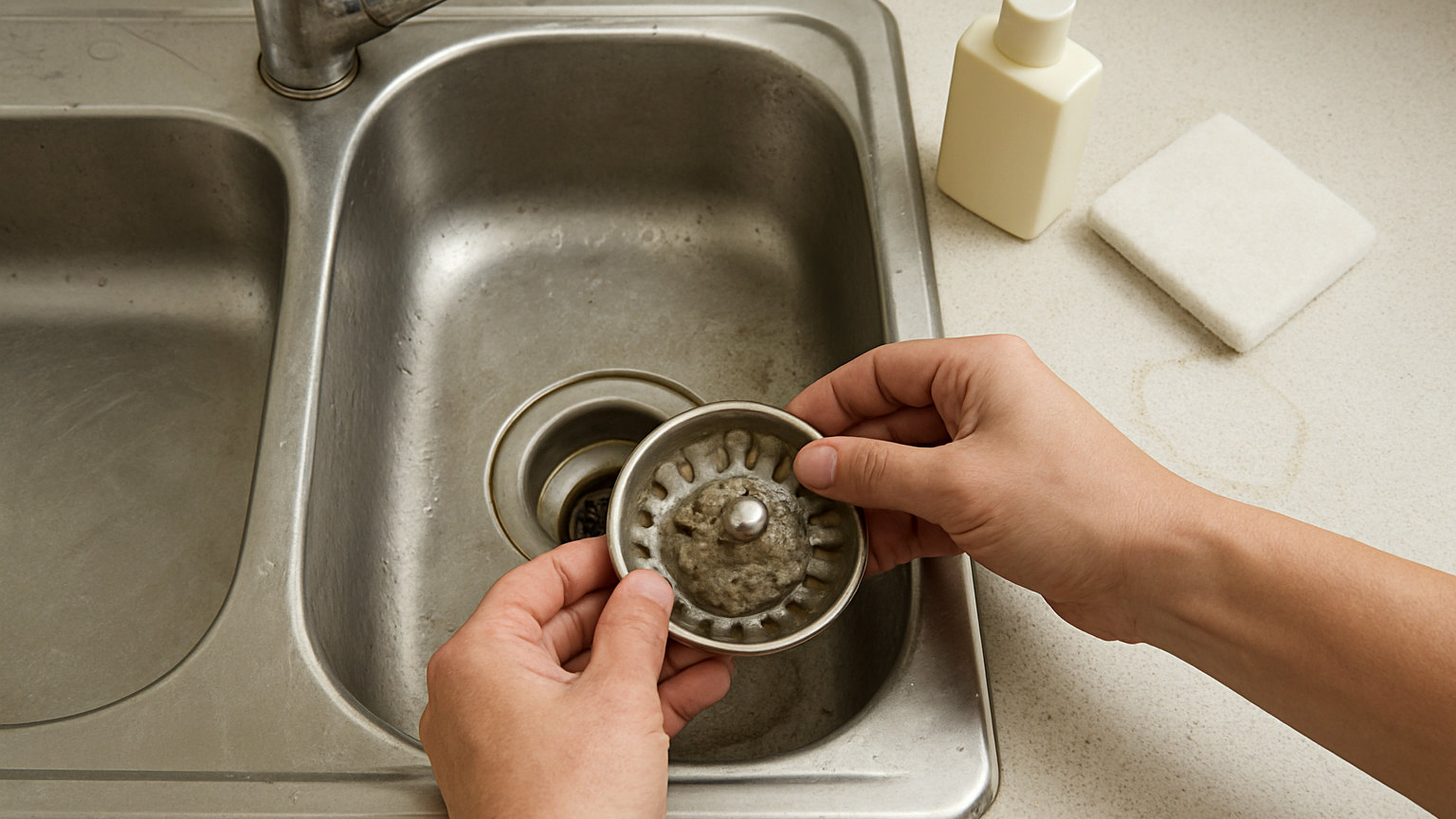
- Use a sink strainer and empty it into the bin.
- Scrape plates properly before washing or loading.
- Run hot water with detergent through the drain weekly.
- Soda crystals monthly as maintenance.
- Keep coffee grounds and tea leaves out, which bind with fat.
When should you call a plumber?
When the trap is clear and an auger has not reached it, when more than one appliance or fixture is affected, when water is backing up from an outside drain, or when there is any sign of a leak under the sink.
What if it drains slowly rather than blocking?
That is a partial blockage and it is far easier to deal with than a full one. Treat it now with hot water, detergent and soda crystals rather than waiting, since a slow drain always becomes a blocked one eventually. A sink that has gradually got slower over months is telling you fat is accumulating.