A washing machine handles detergent and hot water constantly and still accumulates a greasy grey residue known as biofilm, made up of detergent, fabric conditioner, body oils and lint. It builds in the places water sits rather than in the drum itself, which is why running more washes does not clean it.
What are the four parts that matter?
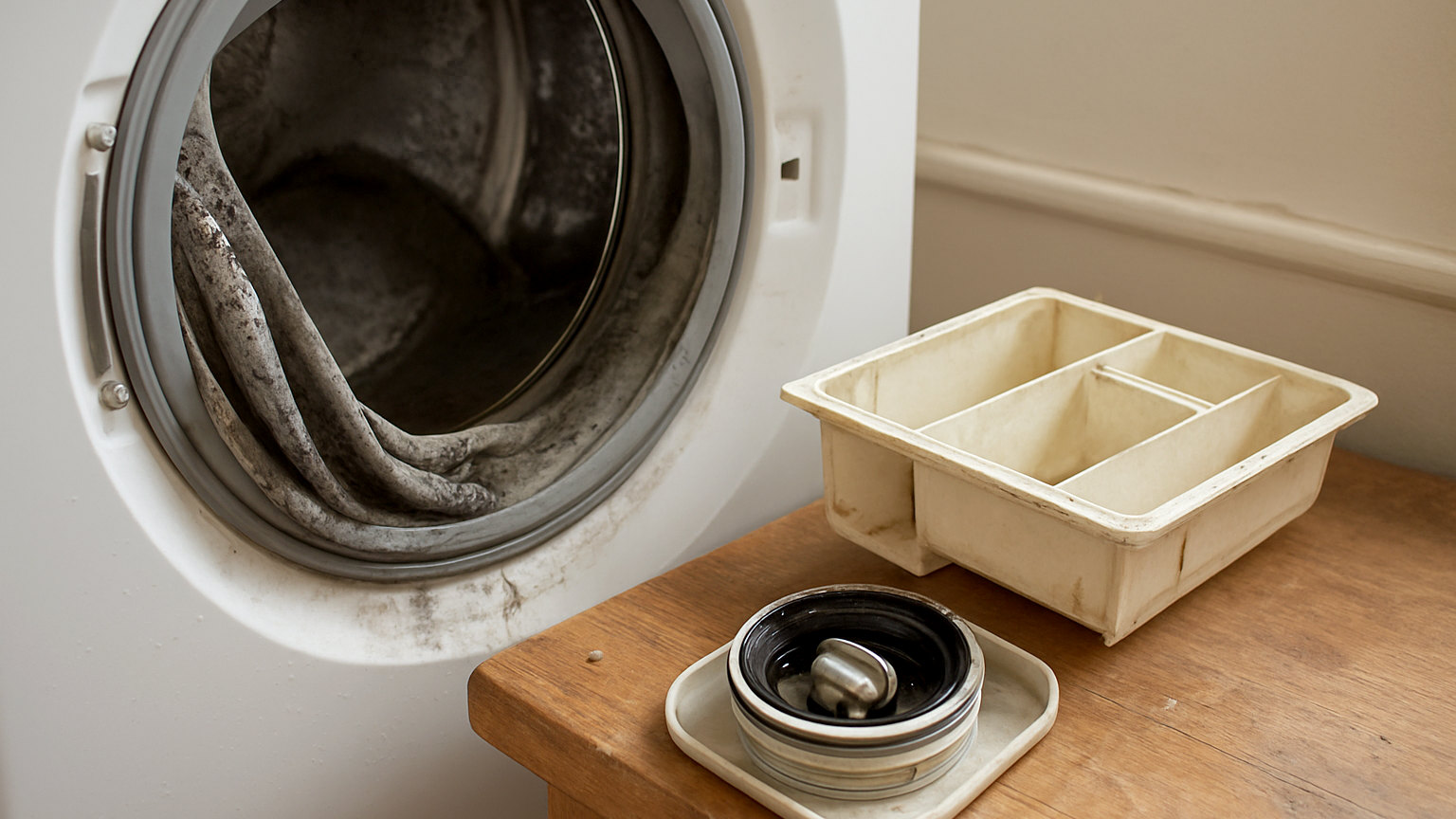
- The door seal, particularly the fold at the bottom where water collects.
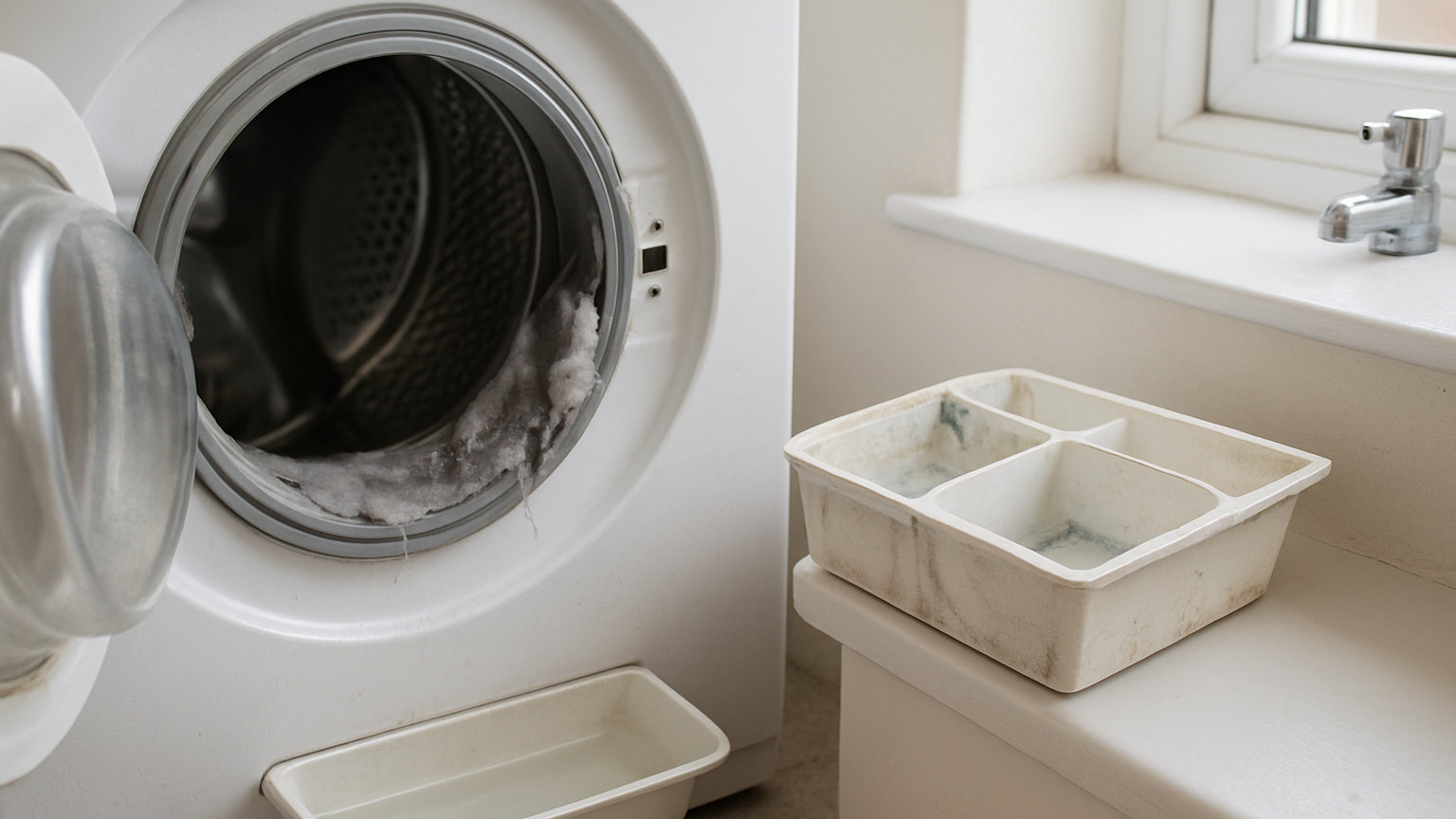
- The detergent drawer and the housing behind it.
- The filter, usually behind a flap at the bottom front.
- The drum and the internal pipework, which a hot maintenance wash addresses.
Cleaning the drum alone is the version most people do and the least useful, since the drum is rinsed with detergent several times a week.
What is the full routine?
- Pull back the door seal and wipe every fold with hot soapy water or a white vinegar solution.
- Remove the detergent drawer completely and wash it in hot water.
- Clean the housing the drawer sits in, using an old toothbrush on the roof of it.
- Open the filter flap, drain the water into a shallow tray, and clean the filter.
- Wipe the door glass and the rim.
- Run an empty cycle at 90 degrees or on the drum clean programme.
- Leave the door and the drawer open afterwards to dry.
What should go in the maintenance wash?
Either a proprietary washing machine cleaner, or a large dose of powder detergent, or two cups of white vinegar in the drum. Powder detergent is the most effective of the three because it contains oxygen bleach, which liquid detergents do not.
Do not use vinegar and a detergent in the same cycle, since they neutralise each other. Run the machine empty with nothing in the drum.
Why does the temperature matter?
Because biofilm and the bacteria in it survive cool washes comfortably. Modern washing at 30 degrees with liquid detergent is the main reason machines smell, since neither the temperature nor the detergent chemistry is doing anything to the residue.
One hot cycle a month, at 60 degrees or above, clears it. Ninety is better where the machine offers it.
How often should each job be done?
- Door seal – wipe weekly, clean thoroughly monthly.
- Detergent drawer – monthly.
- Filter – every two to three months, or immediately if draining is slow.
- Maintenance wash – monthly.
- Behind and underneath – once or twice a year.
What causes the build up?
Washing cool, using too much detergent, using fabric conditioner, and leaving the door shut between washes. Fabric conditioner in particular is a waxy product that coats the drum and the pipework and gives bacteria something to feed on.
Overdosing detergent is the other main culprit, since excess is not rinsed away and simply accumulates.
What should you avoid?
Bleach in the drum, which damages seals and can react with detergent residue. Abrasives on the drum or the door glass. And putting the machine on a hot cycle with a load in it in the hope of cleaning both, which will not work and may damage the clothes.
What if it still smells afterwards?
Check the filter, which is the part most often skipped and the one most likely to be holding something unpleasant. Then check under the rubber lip of the door seal at the very bottom, which needs pulling back firmly.
A smell that survives a thorough clean and two hot cycles may be a blocked or sagging drain hose, which is worth looking at before assuming the machine is at fault.
Does the drum itself need cleaning?
Rarely by hand, since it is flushed with detergent and water several times a week. What does need attention is the outlet at the bottom of the drum, where the water leaves, because that is where lint and biofilm accumulate out of sight. A hot cycle deals with it. Anything visible on the drum surface, such as rust spots or scratches, is worth having looked at rather than scrubbed.
What about the outside?
Wipe the lid and the control panel with a damp cloth and dry them, avoiding anything abrasive on printed markings. The top of a machine under a worktop collects dust and spilled detergent, and dried detergent powder attracts moisture and corrodes the finish over time.