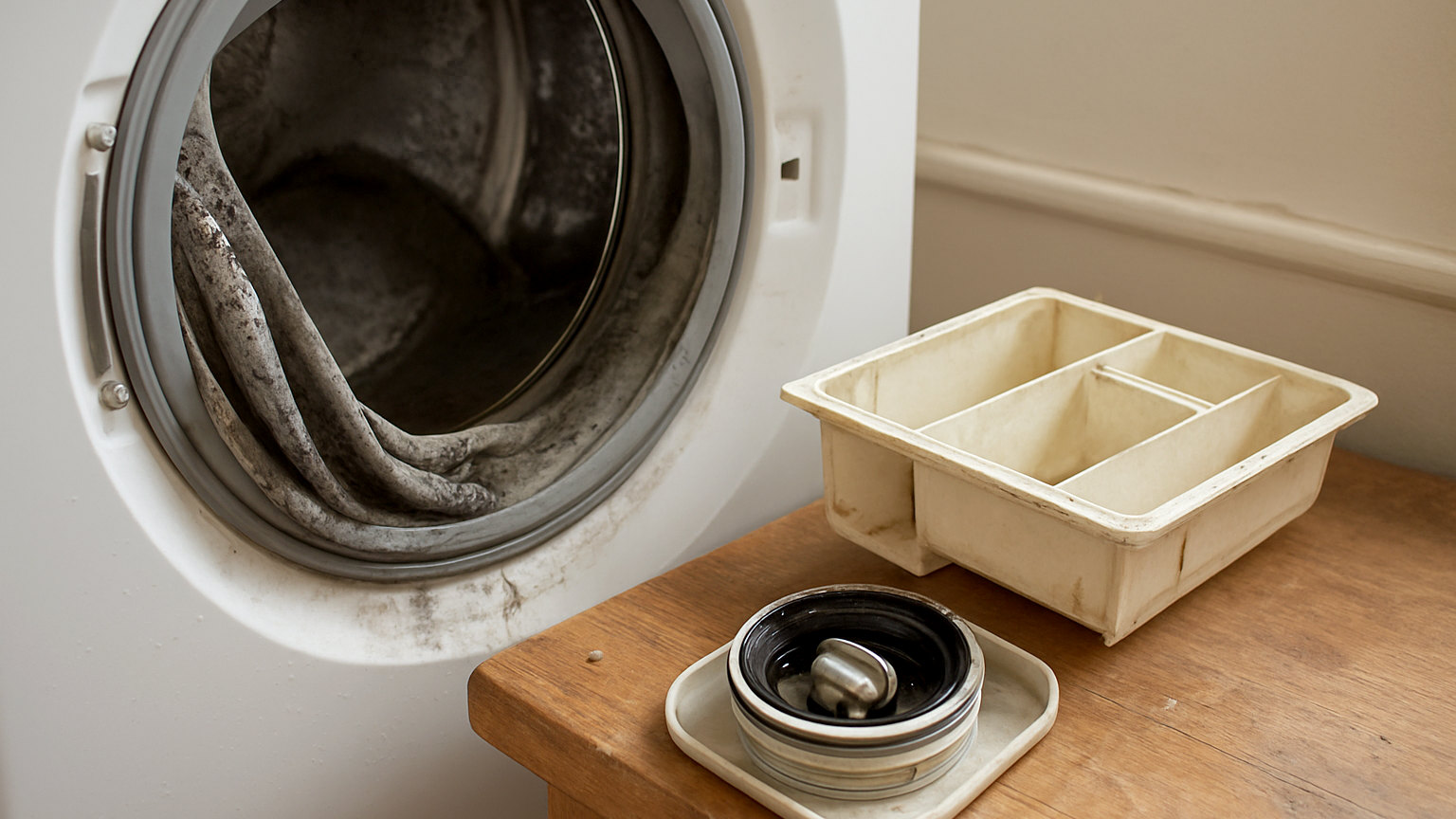
The detergent drawer is the easiest part of a washing machine to clean and the part where the worst residue accumulates. Detergent and fabric conditioner that does not flush away sits in the compartments and in the housing behind, where it turns into a grey or black sludge that eventually finds its way onto clothing.
How do you remove the drawer?
On almost every front loading machine the drawer comes out completely. Pull it fully open, then look for a coloured tab, a button or a lever in the middle of the fabric conditioner compartment. Press or lift that and pull the drawer the rest of the way out.
Some machines require the drawer to be pulled out at a slight angle. The manual will say, and forcing it is the way drawers get broken.
What is the method?
- Take the drawer right out.
- Remove the fabric conditioner siphon insert, which lifts out on most models.
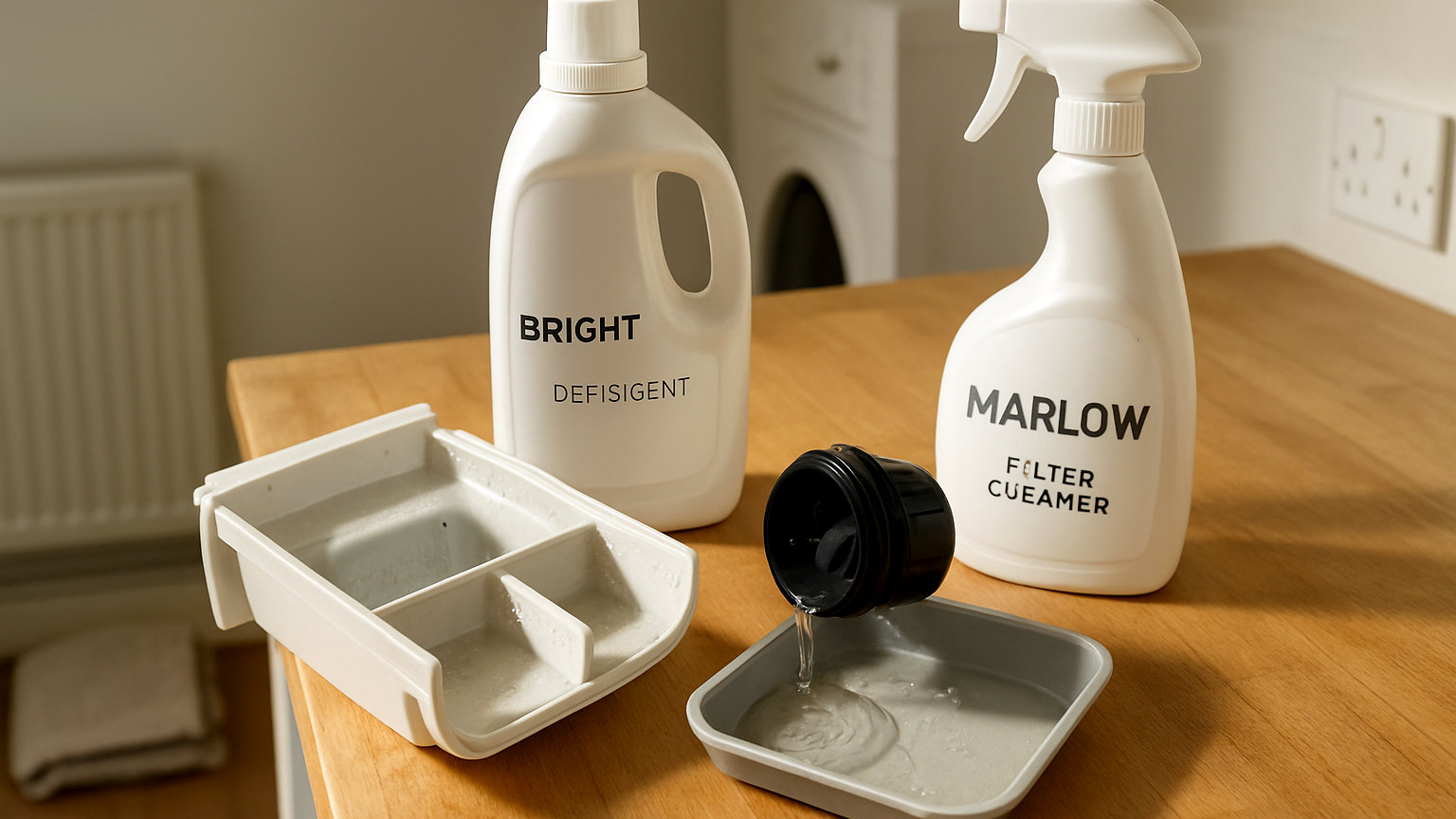
- Soak the whole thing in hot water with washing up liquid for fifteen minutes.
- Scrub with an old toothbrush, paying attention to the siphon tube and the corners.
- Clean the housing the drawer sits in, especially the roof of it.
- Rinse everything and dry before refitting.
Why does the housing matter more?
Because that is where the water jets in, and it is where the worst build up forms on the roof of the cavity out of sight. Reach in with a torch and you will usually find a thick black deposit hanging above where the drawer sits.
A toothbrush and a cloth will reach most of it. Some people use a bottle brush or a small paint brush. Flush it afterwards with a jug of hot water, with the drawer out and a tray underneath to catch what comes through.
What is the black sludge?
A mixture of undissolved detergent, fabric conditioner, limescale and mould. Fabric conditioner is the main contributor, since it is a waxy emulsion that clings rather than rinsing away, and it feeds the growth that follows.
Machines used exclusively with liquid detergent and conditioner at 30 degrees develop it fastest.
Why does the conditioner not flush away?
The fabric conditioner compartment works by siphon: it fills with water and empties automatically when the level rises. If the siphon insert is blocked with residue, or fitted incorrectly, the compartment will not empty and the conditioner either sits there or goes in at the wrong stage.
Water standing in the conditioner compartment after a wash is the classic sign of a blocked siphon. Take the insert out and clean it.
How do you reduce the build up?
- Use less detergent, which is the most common cause.
- Stop using fabric conditioner, or use it much more sparingly.
- Run a hot maintenance wash monthly.
- Leave the drawer slightly open between washes so it dries.
- Use powder rather than liquid occasionally, since powder contains oxygen bleach.
Should detergent go in the drawer at all?
For powder, yes. For liquid, a dosing ball placed directly in the drum is frequently better, since it delivers the detergent where it is needed and bypasses the drawer entirely. That removes the main source of the residue.
Check the manual, since a few machines are designed to be used one way or the other.
How often should it be done?
Monthly, alongside the door seal and the maintenance wash. It takes five minutes including the soak, and a drawer done monthly never develops the deposit that takes half an hour to shift.
What if the drawer will not come out?
Do not force it. Check the manual for the release, which on some machines is a recessed button rather than an obvious tab and on others requires the drawer to be lifted slightly as it is pulled. A drawer that is genuinely stuck is usually jammed with hardened detergent, and pouring a jug of hot water into it and waiting ten minutes will often free it.
Can it go in the dishwasher?
Many can, on a low temperature cycle, and the results are mixed because dishwasher detergent does not deal with the waxy conditioner residue particularly well. A soak in hot water with washing up liquid followed by a toothbrush is quicker and more thorough.